Proximity switch sensors, often simply called proximity sensors, are non-contact electronic devices designed to detect the presence or absence of an object within a defined sensing range without any physical contact. Their operation hinges on the principle of generating an electromagnetic field or beam and monitoring for changes caused by a target object. This fundamental characteristic makes them exceptionally reliable, durable, and suitable for harsh industrial environments where mechanical wear, contamination, or frequent operation would degrade contact-based switches. The core detection principles can be categorized into several main types, each with distinct mechanisms and ideal applications.
The most prevalent type is the inductive proximity sensor. It operates by generating a high-frequency oscillating electromagnetic field via a coil and oscillator circuit located in its sensing face. When a metallic object (the target) enters this active field, eddy currents are induced on the surface of the metal. These eddy currents draw energy from the sensor's oscillator, causing a reduction in the oscillation amplitude. This change is detected by a threshold circuit, which subsequently triggers a solid-state switch to change the output state (e.g., from OFF to ON). The sensing distance depends on the actuator material's properties; ferrous metals like iron and steel are detected at the rated sensing distance, while non-ferrous metals like aluminum, copper, or brass have a reduced sensing range. Inductive sensors are the workhorses of industrial automation, extensively used for position detection of metal parts, counting, speed monitoring on rotating shafts, and as end-of-travel limit switches in machinery.
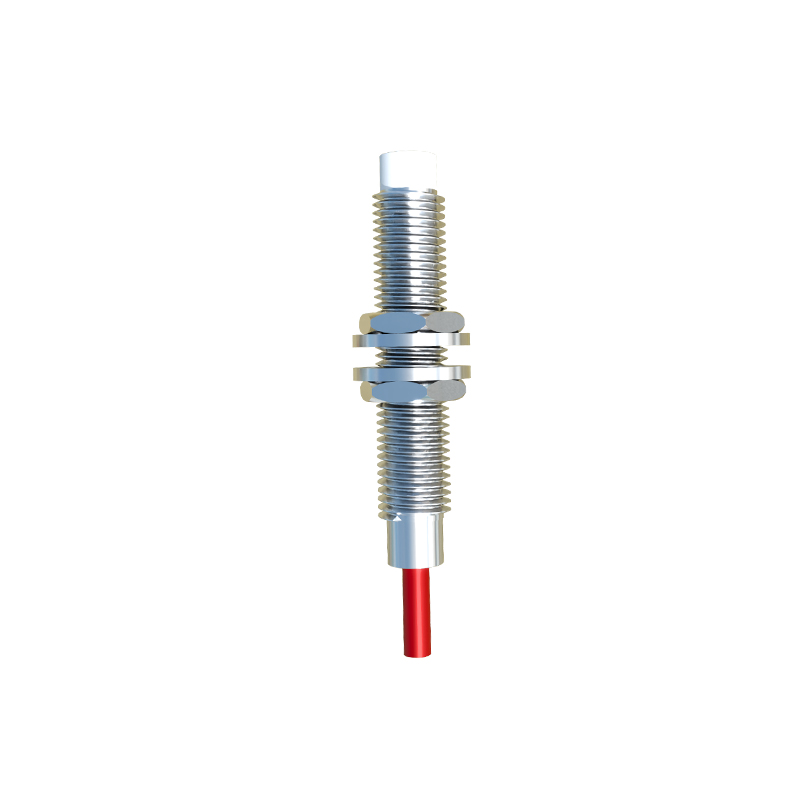
Capacitive proximity sensors function on a different principle: they detect changes in capacitance. The sensor's active surface forms one plate of a capacitor, with the ground plane or surrounding environment acting as the other plate. The oscillator circuit is tuned to a specific capacitance value at standby. When any object—be it metal, plastic, wood, liquid, or granular material—approaches the sensing face, it alters the dielectric constant of the space between the plates, thereby changing the circuit's capacitance. Once this change reaches a predetermined threshold, the output state switches. This ability to detect nearly any material makes capacitive sensors versatile. Common applications include level detection for liquids and bulk solids in tanks or silos, presence detection of non-metallic objects (like glass or cardboard boxes), and moisture content sensing.
For detecting objects at greater distances or non-metallic materials where capacitive sensing is not ideal, photoelectric sensors are employed. While not always classified under the same umbrella as inductive/capacitive "proximity switches," they are a crucial non-contact technology. They operate by emitting a beam of light (visible red, infrared, or laser) from a transmitter and using a receiver to detect the light's status. The detection principle varies by type: through-beam sensors have separate transmitter and receiver units, detecting an object when it interrupts the beam; retro-reflective sensors use a single unit and a reflector, detecting an object when it blocks the reflected beam; and diffuse (proximity-mode) sensors have the emitter and receiver in one housing, detecting an object when it reflects the emitted light back to the receiver. Photoelectric sensors excel in long-range detection, transparent object sensing, and color differentiation.
A fourth major category is the ultrasonic proximity sensor. These devices emit high-frequency sound waves (ultrasonic pulses) and measure the time it takes for the echo to return after reflecting off a target object. The distance to the object is calculated based on the speed of sound. Ultrasonic sensors can detect virtually any material, regardless of color, transparency, or surface texture, and are largely unaffected by dust, smoke, or ambient light. They are primarily used for distance measurement, level control in challenging conditions (e.g., foamy liquids), and object detection where other technologies may fail.
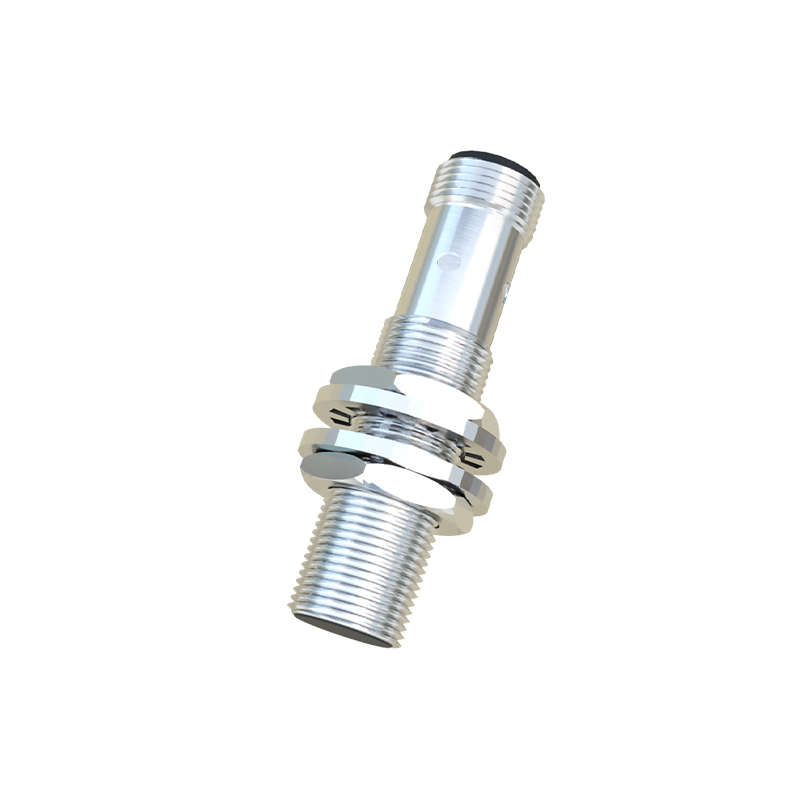
The output of a proximity sensor is typically a switched DC signal. Common configurations include NPN (sinking) and PNP (sourcing) transistor outputs for DC sensors, and relay or solid-state AC outputs. 2-wire AC/DC sensors are also common, simplifying wiring. Key performance parameters include nominal sensing distance (Sn), repeat accuracy, hysteresis (the difference between the switch-on and switch-off points), switching frequency, and environmental ratings like IP (Ingress Protection) for dust/water and temperature range.
In application, selecting the correct sensor type is critical. An inductive sensor is ideal for reliably detecting a metal gear tooth. A capacitive sensor is chosen to sense the fill level of plastic pellets in a hopper. A photoelectric diffuse sensor might detect a transparent bottle on a conveyor. An ultrasonic sensor monitors the consistent level of a corrosive chemical. Proper installation is equally important; ensuring adequate clearance from metal surrounds (to prevent shielding effects), considering the target material's size and approach angle, and protecting the sensor from physical damage and electrical interference are all essential for reliable operation.
In conclusion, the detection principle