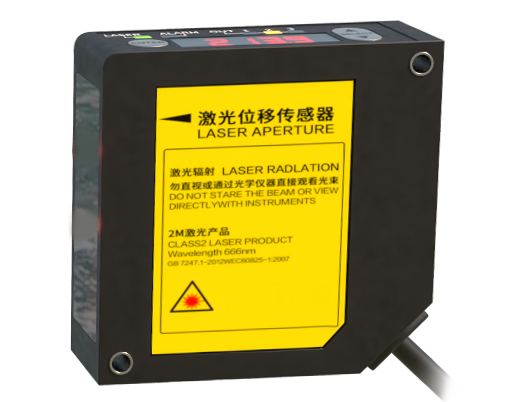
In the realm of industrial automation and precision engineering, laser sensor measurement systems have emerged as a cornerstone technology, enabling unparalleled accuracy, speed, and reliability in a multitude of applications. These systems utilize the principles of laser triangulation, time-of-flight, or interferometry to capture precise dimensional data, detect minute defects, and monitor processes in real-time. Unlike traditional contact-based measurement tools, laser sensors operate non-invasively, eliminating the risk of part damage or wear, which is critical in high-value manufacturing environments such as semiconductor fabrication, automotive assembly, and aerospace component production.
The core of a laser measurement system typically comprises a laser diode emitter, a high-resolution optical receiver (like a CCD or CMOS sensor), and sophisticated signal processing electronics. When the laser beam is projected onto a target surface, the reflected light is captured by the receiver. By analyzing the position or phase shift of this light, the system can calculate distance, height, thickness, or profile with micron-level precision. Advanced models incorporate features such as automatic calibration, environmental compensation for temperature and humidity, and integration with industrial communication protocols like EtherCAT, PROFINET, or IO-Link, ensuring seamless operation within smart factory ecosystems.
One of the key advantages of laser sensors is their versatility. They are deployed in diverse scenarios: for instance, in quality control, they scan surfaces for scratches, dents, or coating inconsistencies; in robotics, they provide guidance for precise pick-and-place operations or weld seam tracking; in logistics, they measure parcel dimensions for automated sorting. Moreover, the advent of blue laser technology has enhanced performance on challenging surfaces, such as shiny metals or transparent materials, by reducing speckle noise and improving focus stability.
However, implementing these systems requires careful consideration. Factors like target material reflectivity, ambient light interference, and vibration must be addressed through proper sensor selection and installation. Regular maintenance, including lens cleaning and software updates, is essential to sustain accuracy. As Industry 4.0 progresses, laser sensors are increasingly paired with AI algorithms for predictive analytics, enabling not just measurement but also trend analysis and anomaly detection, thereby driving proactive maintenance and reducing downtime.

In conclusion, laser sensor measurement systems represent a transformative force in modern industry, offering a blend of precision, efficiency, and adaptability. Their continuous evolution, driven by advancements in optics and digital processing, promises to further elevate manufacturing standards, support sustainable practices through reduced waste, and pave the way for next-generation automated solutions. Engineers and technicians are encouraged to stay abreast of these developments to leverage their full potential in optimizing operational workflows.