In the realm of industrial automation and consumer electronics, proximity sensors are fundamental components that enable machines to perceive their environment without physical contact. Among the diverse array of sensors available, the 14PM series of inductive proximity sensors stands out for its robustness, reliability, and versatility. This article delves into the technology behind the 14PM sensor, its key operational principles, common applications, and essential troubleshooting guidelines.
At its core, the 14PM is an inductive proximity sensor. This technology operates on the principle of electromagnetic induction. The sensor generates a high-frequency oscillating electromagnetic field from its active face. When a metallic target object enters this detection field, eddy currents are induced on the surface of the target. These eddy currents draw energy from the sensor's oscillator, causing a reduction in the oscillation amplitude. The sensor's internal circuitry detects this change and triggers a solid-state output switch, typically providing a clean, bounce-free signal to a programmable logic controller (PLC) or other control system. A defining characteristic of the 14PM series is its cylindrical, threaded metal housing, often designated by sizes such as M12, M18, or M30, which provides excellent mechanical strength and environmental protection, commonly rated at IP67 or higher for resistance to dust and temporary immersion.
The performance of a 14PM sensor is specified by several critical parameters. The nominal sensing distance, or Sn, is a standardized value under ideal conditions (usually a mild steel target of a defined size). It is crucial to note that the effective sensing range can be affected by the target material; for instance, non-ferrous metals like aluminum or copper have a reduced sensing factor. The hysteresis, expressed as a percentage of the sensing distance, is the difference between the switch-on point as the target approaches and the switch-off point as it recedes, preventing output chatter when a target is at the detection boundary. Furthermore, these sensors are available in various output configurations: NPN (sinking) or PNP (sourcing), normally open (NO) or normally closed (NC) contacts, and two-wire, three-wire, or four-wire designs, allowing for seamless integration into diverse electrical systems.
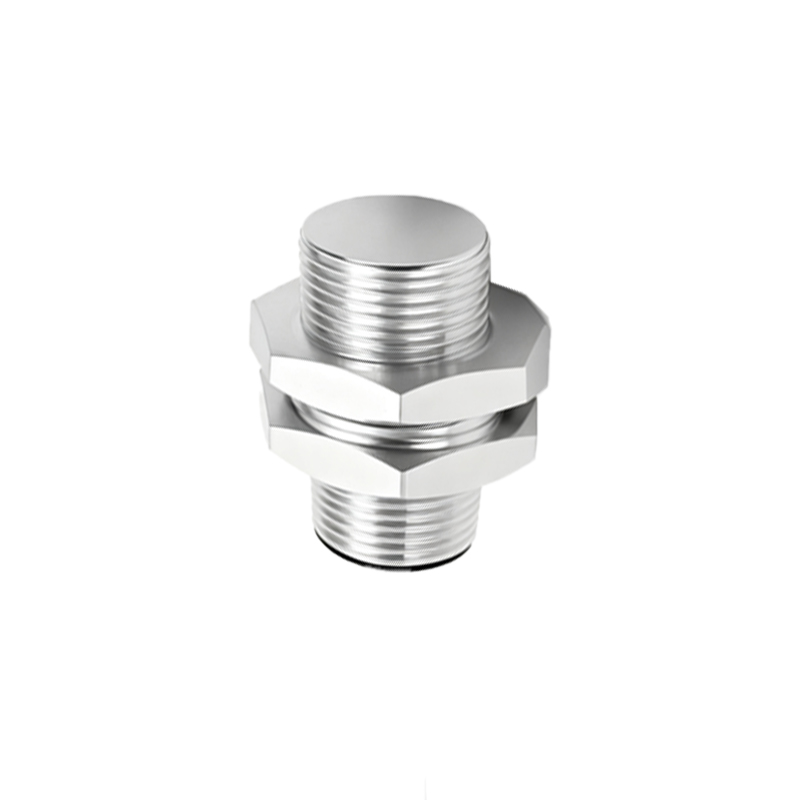
The applications for 14PM proximity sensors are extensive across manufacturing and processing industries. They are ubiquitously employed for precise object detection on conveyor lines, verifying the presence or absence of components in assembly stations. In machine tools, they serve as limit switches or tool position verification sensors. Their rugged construction makes them ideal for harsh environments, such as detecting metal parts in stamping presses, monitoring valve positions in hydraulic systems, or counting metallic products in packaging machinery. The immunity to ambient light, oil, and non-metallic debris gives them a significant advantage over optical sensors in many industrial settings.
Despite their durability, proper installation and maintenance are paramount for optimal performance and longevity. A common installation error is mounting the sensor too close to surrounding metal structures, which can cause false triggering or a reduced effective sensing range—a phenomenon known as shielding. Maintaining the recommended lateral and axial clearance from adjacent metal is essential. Electrical noise from variable frequency drives (VFDs) or welding equipment can also interfere with sensor operation. Employing shielded cables, proper grounding practices, and installing noise filters can mitigate these issues. For troubleshooting, a systematic approach is recommended. First, verify the power supply voltage is within the sensor's specified range. Next, check the wiring connections against the datasheet diagram for the specific model (NPN vs. PNP). Using a multimeter, monitor the output signal while bringing a known-good target (e.g., a steel wrench) into the sensing field. If the output does not change state, the sensor may be faulty or the load (like a PLC input) may be incompatible. Physical damage to the sensing face or housing from impact or chemical exposure can also lead to failure.
In conclusion, the 14PM inductive proximity sensor is a workhorse of industrial automation. Its non-contact operation, high switching frequency, and resilience under tough conditions make it an indispensable tool for engineers and technicians. A thorough understanding of its operating principles, careful selection based on application requirements (sensing distance, material, output type), and adherence to proper installation and troubleshooting procedures will ensure reliable performance, minimizing downtime and contributing to efficient, automated system operation. As Industry 4.0 and smart manufacturing evolve, these fundamental sensors continue to provide the critical data points necessary for intelligent control and monitoring.