In the realm of industrial automation and motion control, the steering gear, or servo motor, is a fundamental actuator responsible for precise angular or linear positioning. A critical component ensuring its reliable and safe operation is the proximity sensor. This article delves into the working principles of proximity sensors as applied to steering gear systems, exploring their function, types, and integration.
At its core, a proximity sensor is a non-contact device that detects the presence or absence of a target object within a specified sensing range without any physical contact. In the context of a steering gear, these sensors are strategically placed to monitor the position of the gear's output shaft or a connected mechanical component. Their primary role is to provide feedback or initiate control actions, such as signaling the end of a rotational travel (limit switching), confirming home position, or preventing over-travel that could cause mechanical damage.
The principle of operation varies significantly based on the sensor technology employed. The most common types used with steering gears include inductive, capacitive, and magnetic (Hall-effect or reed switch) proximity sensors.
Inductive Proximity Sensors: These are predominantly used for detecting metallic targets, typically a metal flag or the gear housing itself. The sensor contains an oscillator circuit that generates a high-frequency electromagnetic field at its active face. When a ferrous or non-ferrous metal object enters this field, eddy currents are induced on the surface of the target. This causes a change in the oscillation amplitude or frequency within the sensor. An evaluation circuit monitors this change and triggers a solid-state output switch (PNP or NPN). For a steering gear, an inductive sensor can reliably detect when a metal cam attached to the output shaft rotates into its sensing zone, indicating a specific angular position.
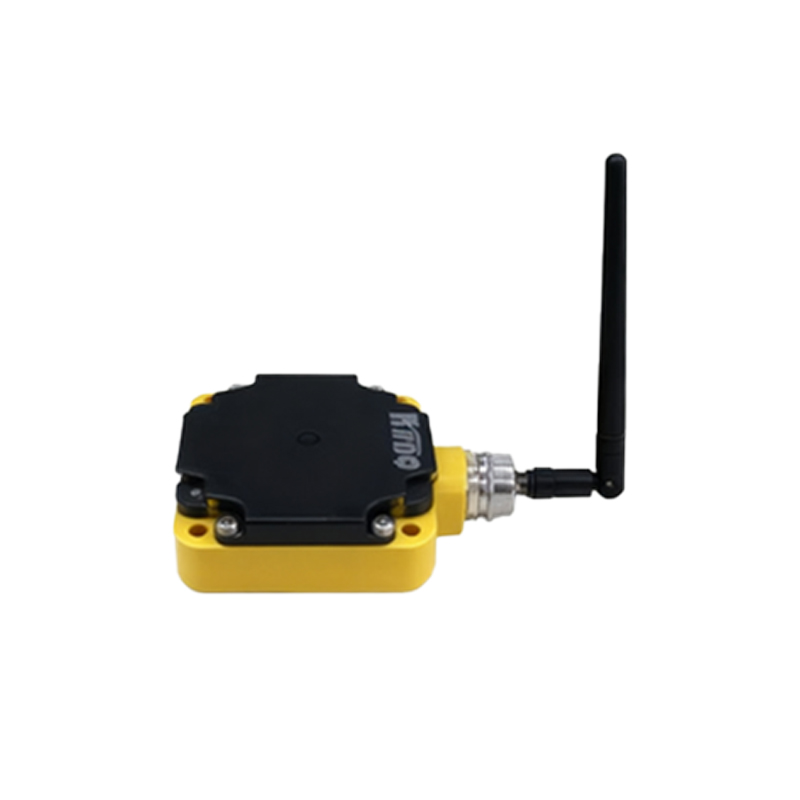
Capacitive Proximity Sensors: These sensors can detect both metallic and non-metallic materials (plastics, liquids, wood). They function by generating an electrostatic field. The sensor and the target act as two plates of a capacitor. As the target approaches, the capacitance between the sensor face and the target increases. When this capacitance reaches a preset threshold, the sensor's internal circuit activates the output. In steering gear applications, capacitive sensors might be used in environments where non-metallic components need detection or where dust or other contaminants are present, as they can often sense through certain non-metallic tank walls or enclosures.
Magnetic Proximity Sensors: These are ideal for detecting permanent magnets. The two main subtypes are Hall-effect sensors and reed switches. A Hall-effect sensor produces a voltage difference (the Hall voltage) when exposed to a magnetic field, which is then processed to switch an output. Reed switches consist of two ferromagnetic reeds sealed in a glass tube; an external magnetic field causes the reeds to attract and make contact. In steering gear systems, a small permanent magnet is often mounted on the rotating shaft. As the magnet passes by the fixed magnetic sensor, it triggers a signal. This method is highly reliable, resistant to dirt and oil, and excellent for detecting precise rotational positions, making it very common for establishing a "home" or "zero" position.
The integration of a proximity sensor into a steering gear control loop is straightforward. The sensor's output is connected to the controller's digital input (e.g., a PLC, microcontroller, or dedicated servo drive). When the sensor is activated, it sends a high or low signal. This signal can be used to halt motion, change direction, trigger a sequence, or provide positional verification. For instance, during a homing routine, the steering gear rotates until the home position sensor is triggered, providing an absolute reference point for all subsequent movements.
Key selection criteria for these sensors in steering gear applications include sensing distance, target material, switching frequency (response speed), environmental robustness (IP rating), output type, and physical size. The required sensing distance is usually short, dictated by the mechanical design. The target material dictates the choice between inductive, capacitive, or magnetic types. A high switching frequency is necessary for high-speed applications to ensure the sensor can reliably detect fast-moving targets.
In summary, proximity sensors are indispensable for the safe and precise operation of steering gears. By employing electromagnetic, electrostatic, or magnetic field principles, they provide crucial non-contact feedback on mechanical position. Understanding the distinct operating principles of inductive, capacitive, and magnetic proximity sensors allows engineers to select the optimal technology for a given steering gear application, ensuring enhanced reliability, safety, and performance in automated systems.