In industrial automation, robotics, and precision measurement systems, laser sensors have become indispensable tools for non-contact detection, profiling, and dimensional analysis. A critical, yet often under-optimized, parameter in their application is the standoff distance. This article delves into the technical intricacies of laser sensor standoff, its impact on performance, and best practices for selection and integration.
Understanding Standoff Distance
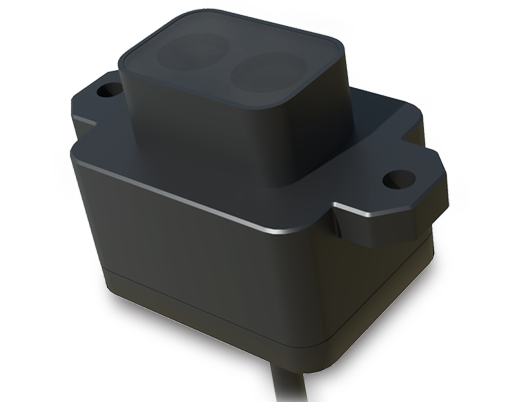
The standoff distance, simply defined, is the nominal working distance from the sensor's front housing to the target surface. It is a fixed specification determined by the sensor's optical design. It should not be confused with the measurement range, which is the span over which the sensor can accurately detect distance changes *from* the standoff point. For instance, a sensor with a 100mm standoff and a ±30mm range can measure targets between 70mm and 130mm from its housing.
The Critical Role of Standoff in Performance
Choosing the correct standoff is paramount for system performance. An improperly selected distance can lead to significant errors.
* Spot Size and Resolution: Laser triangulation sensors project a spot onto the target. At the optimal standoff, this spot is smallest and most intense. As the target moves away from this ideal distance within the measurement range, the spot defocuses and enlarges. A larger spot reduces lateral resolution, making it difficult to detect fine edges or surface texture accurately. For measuring small features or sharp steps, maintaining the target near the specified standoff is crucial.
* Signal Strength and Noise: The intensity of the reflected light collected by the receiver is strongest at the designed standoff. Operating at the extremes of the measurement range can lead to a weaker signal, increasing the signal-to-noise ratio and potentially causing dropouts or jitter in the output, especially on dark, absorbent, or shiny surfaces.
* Angular Tolerance: Most laser sensors have a specified allowable tilt (e.g., ±10°). The effective angular tolerance is often maximized at the standoff distance. If a target is tilted and near the edge of the measurement range, the incident angle may exceed the sensor's capability, causing a loss of signal.
* Environmental Integration: Standoff directly affects mechanical design. A longer standoff may be necessary to physically clear obstacles, moving parts, or to position the sensor away from heat sources, debris, or potential collisions. It also influences the sensor's field of view and potential shadowing in multi-sensor setups.
Factors Influencing Standoff Selection
Selecting the ideal standoff is a balancing act influenced by several factors:
1. Target Characteristics: The surface material, color, and finish are primary drivers. For highly reflective or specular surfaces (e.g., polished metal), a longer standoff is often beneficial as it reduces the received light intensity to a manageable level, preventing receiver saturation. For dark, matte, or absorbent surfaces (e.g., black rubber, carbon fiber), a shorter standoff helps maximize the reflected signal.
2. Required Measurement Range: The application's necessary range of motion or part tolerance dictates the minimum measurement range. The standoff must be chosen so that the entire expected target variation falls within the sensor's specified measurement range from that standoff.
3. Accuracy Specifications: For high-accuracy applications (micrometer-level), it is advisable to operate as close to the central part of the measurement range (near the standoff) as possible, where linearity errors are typically minimized.
4. Mechanical and Access Constraints: The physical layout of the machine or cell may limit where a sensor can be mounted. A sensor with a 300mm standoff might be the only solution to reach over a conveyor frame, whereas a compact cell might require a 30mm standoff sensor.
Best Practices for Implementation
* Consult Datasheets Thoroughly: Manufacturer datasheets provide essential graphs for spot size vs. distance, linearity error, and signal strength. These are invaluable for predicting real-world performance.
* Prioritize Stability: Ensure the sensor is mounted rigidly. Vibrations or thermal drift that alter the effective standoff will introduce measurement error.
* Consider Dynamic Targets: For fast-moving targets, the effective standoff can change rapidly. Ensure the sensor's response time and tracking speed are sufficient, and that the standoff is set to allow the entire dynamic range to remain within the measurement window.
* Test with Actual Samples: Before finalizing a design, prototype with actual target materials under expected environmental conditions (ambient light, temperature). This is the most reliable way to validate standoff choice.
* Utilize Programmable Models: Many modern laser sensors offer software-configurable parameters, such as exposure time or response filtering, which can be tuned for a specific standoff and target to optimize performance.
In conclusion, the standoff distance is not merely a mounting consideration but a fundamental design parameter that directly influences the accuracy, reliability, and robustness of a laser sensing system. A methodical approach to its selection—one that harmonizes optical specifications, target properties, and mechanical constraints—is essential for unlocking the full potential of laser measurement technology in demanding industrial applications. Treating standoff as a critical variable during the system design phase prevents costly rework and ensures consistent, high-quality data acquisition.