In modern industrial environments, the accumulation of dust and particulate matter on equipment surfaces poses significant challenges to operational efficiency, product quality, and system longevity. Traditional manual cleaning methods are often labor-intensive, inconsistent, and may require production halts, leading to downtime and increased costs. The integration of laser sensors for automatic dust removal represents a transformative advancement, offering a precise, reliable, and non-contact solution to maintain optimal cleanliness in critical applications.
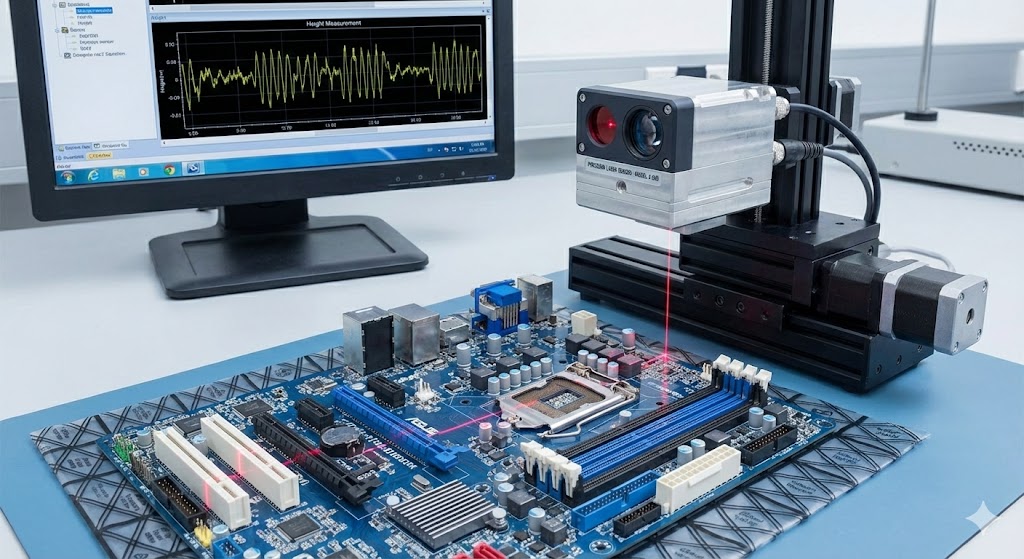
Laser sensors operate on the principle of detecting minute particles or layer thickness through light scattering, absorption, or reflection. In automatic dust removal systems, these sensors are strategically installed near vulnerable components, such as optical lenses, ventilation ducts, or electronic enclosures. They continuously monitor dust accumulation levels in real-time. When the sensor detects that particulate density exceeds a predefined threshold—calibrated based on the specific sensitivity of the equipment—it triggers an automated cleaning mechanism. This mechanism may involve compressed air jets, electrostatic precipitators, or ultrasonic vibrators, which are activated precisely to dislodge and remove dust without human intervention.
The core advantage of laser-based systems lies in their precision and adaptability. Unlike timed or manual cleaning, which may be either excessive or insufficient, laser sensors provide data-driven responses. This ensures cleaning occurs only when necessary, conserving energy and reducing wear on cleaning components. For instance, in semiconductor manufacturing, even nanoscale contaminants can cause defects in microchips. Laser sensors can detect such fine particles and initiate cleaning cycles before yield is compromised. Similarly, in HVAC systems for cleanrooms, maintaining air quality is paramount; laser sensors help sustain particulate counts within strict ISO standards by activating filtration or purging cycles autonomously.

Moreover, the implementation of automatic dust removal enhances safety and reduces maintenance costs. In hazardous environments—such as those with explosive dust or high-temperature machinery—minimizing human exposure is critical. Automated systems, guided by laser sensors, perform cleaning remotely, mitigating risks. Additionally, by preventing dust buildup, these systems reduce the likelihood of overheating in electrical components, which can lead to failures or fires. Predictive maintenance becomes more feasible, as sensor data can be logged and analyzed to forecast cleaning needs and identify abnormal accumulation patterns, signaling potential equipment issues early.
From an engineering perspective, integrating laser sensors requires careful consideration of factors like sensor placement, wavelength selection, and environmental interference. Different laser types—such as infrared or visible spectrum—are chosen based on dust particle size and material. For example, infrared lasers are effective for organic particles, while shorter wavelengths may better detect metallic dust. Calibration must account for ambient light, humidity, and temperature variations to avoid false readings. Modern systems often incorporate IoT connectivity, allowing sensor data to be integrated into broader industrial control networks for centralized monitoring and optimization.
In conclusion, automatic dust removal utilizing laser sensors is a sophisticated, efficient solution for maintaining industrial hygiene. It supports uninterrupted production, improves product quality, and extends equipment lifespan. As industries increasingly adopt automation and smart technologies, the role of laser sensors in proactive maintenance will continue to expand, driving advancements in reliability and operational excellence across sectors from manufacturing to energy.