Photoelectric proximity sensors represent a cornerstone technology in modern industrial automation and smart systems. These devices operate on a simple yet powerful principle: they emit a beam of light, typically from an LED or laser diode, and detect changes in the received light to determine the presence, absence, or distance of an object. Unlike mechanical switches or inductive sensors, they offer non-contact detection, making them ideal for fragile materials, high-speed operations, and harsh environments where physical wear is a concern.
The core technology can be broken down into three main sensing modes: through-beam, retro-reflective, and diffuse reflective. Through-beam sensors consist of separate emitter and receiver units. An object is detected when it interrupts the light beam traveling between them. This mode offers the longest sensing ranges and highest reliability, as it is largely immune to the object's color, texture, or reflectivity. Retro-reflective sensors house both emitter and receiver in a single housing, using a reflector to bounce the light beam back. Detection occurs when an object blocks this reflected beam. These provide a good balance of range and ease of installation. Diffuse reflective sensors, also known as proximity mode sensors, detect light reflected directly off the target object itself. While their range is shortest and can be influenced by the object's color and surface properties, their single-unit design simplifies installation in space-constrained applications.
Recent advancements have significantly enhanced sensor capabilities. Background suppression technology, for instance, allows diffuse sensors to ignore objects beyond a set distance, enabling precise detection at a specific range regardless of color. Fiber optic versions enable sensing in extreme temperatures, tight spaces, or areas with high electromagnetic interference. Furthermore, the integration of advanced optics and digital signal processing has led to sensors with exceptional precision, capable of detecting minute objects or performing precise distance measurements.
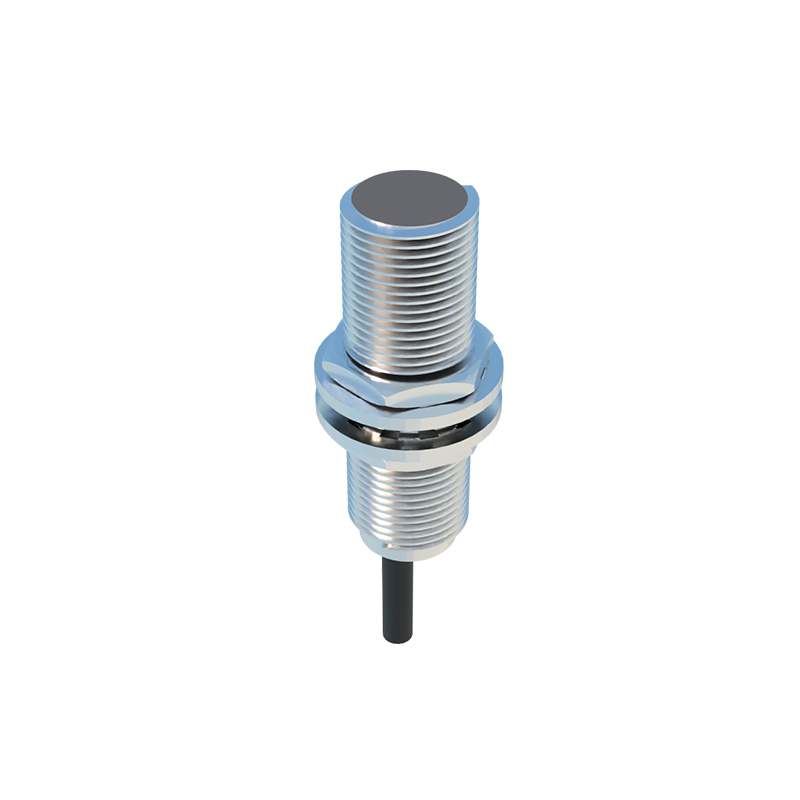
The applications of photoelectric proximity sensors are vast and critical across numerous sectors. In manufacturing and packaging lines, they count products, verify label placement, control robotic arms, and ensure correct fill levels. In the automotive industry, they are used for part verification, robot guidance, and safety curtain systems. Logistics and material handling rely on them for parcel dimensioning, conveyor control, and automated guided vehicle (AGV) navigation. Beyond heavy industry, they are found in consumer electronics for touchless interfaces, in building automation for occupancy sensing, and in security systems for intrusion detection.
A review of the current market landscape reveals several key trends driving growth. The relentless push for Industry 4.0 and the Industrial Internet of Things (IIoT) is a primary catalyst. Modern sensors are increasingly equipped with IO-Link communication, enabling not just binary detection but also the transmission of detailed diagnostic data—such as signal strength, operating temperature, and contamination levels—to higher-level control systems. This facilitates predictive maintenance, reduces downtime, and optimizes processes. The demand for miniaturization continues, allowing sensors to be embedded into smaller machines and devices. There is also a growing need for sensors that can perform reliably in washdown environments in food and pharmaceutical production, leading to more robust housings with high IP ratings.
When selecting a photoelectric sensor for an application, several factors must be carefully evaluated. The required sensing distance and the size of the target object are paramount. Environmental conditions like dust, fog, ambient light, and temperature extremes will dictate the necessary housing material and ingress protection. The object's properties—its color, reflectivity, and material—directly influence the choice of sensing mode and may necessitate sensors with specific light wavelengths (e.g., red, infrared, or laser). Finally, the required output type (e.g., NPN/PNP, analog, or IO-Link) and electrical connectivity must be compatible with the existing control architecture.
Looking ahead, the evolution of photoelectric sensors is intertwined with broader technological shifts. The convergence with time-of-flight (ToF) and LiDAR principles is enhancing 3D sensing capabilities. Smarter, network-integrated sensors will become the norm, providing richer data streams for analytics. Furthermore, developments in light source technology, such as VCSELs (Vertical-Cavity Surface-Emitting Lasers), promise even greater efficiency, precision, and compactness. As automation penetrates deeper into every facet of industry and daily life, the humble photoelectric proximity sensor will remain an indispensable, albeit increasingly intelligent, component in the sensory toolkit of machines.