In the realm of industrial automation and control systems, proximity sensors are indispensable components. A common point of inquiry, especially for those new to the field, revolves around the specific terminology used to describe the location or functional area of these devices. The question "what is the place of a proximity sensor called?" can be addressed through several key terms, each with its own nuanced meaning within an engineering context.
Primarily, the physical location where a proximity sensor is installed is most accurately referred to as its Mounting Position or Installation Point. This denotes the precise mechanical location on a machine frame, robotic arm, conveyor system, or other equipment where the sensor housing is secured. The specification of this point is critical and involves considerations of mounting brackets, orientation, and mechanical stability to ensure consistent operation and avoid physical damage from vibration or impact.
Beyond the mere physical attachment point, the operational focal area of the sensor is of paramount importance. This is universally known as the Sensing Range or Operating Range. It defines the specific distance from the sensor's face within which it can reliably detect a target object. This range is a core specification, typically categorized as nominal (standard), assured (guaranteed under all conditions), or reduced (under specific environmental factors). The term Sensing Zone or Detection Field is also used to describe the three-dimensional space—whether cylindrical, rectangular, or hemispherical—in front of the sensor where detection occurs. For inductive sensors detecting metals, this field is influenced by the target material; for capacitive sensors, it is affected by the target's dielectric constant.
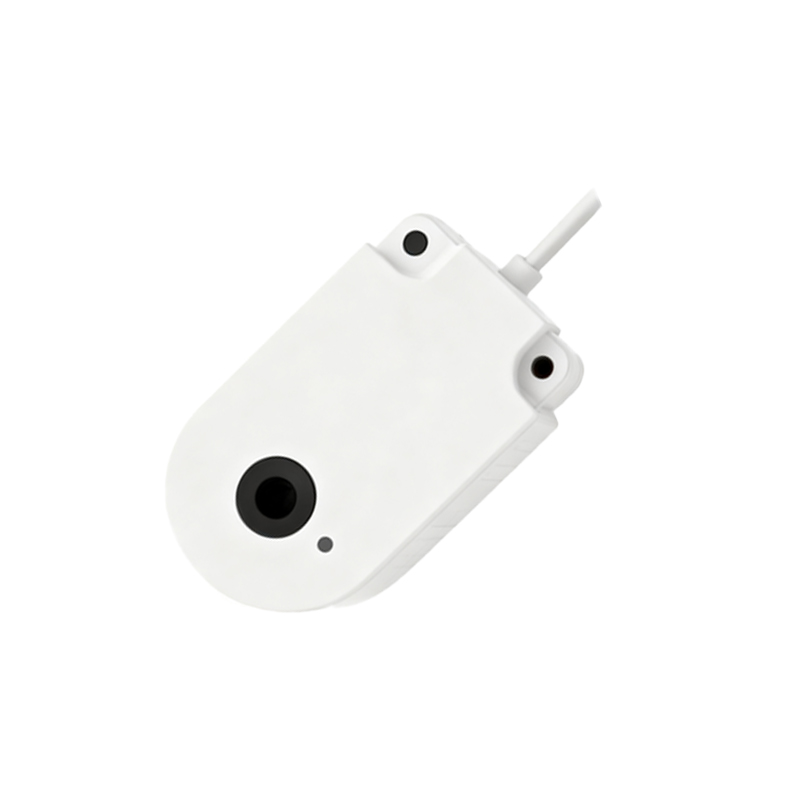
The concept of the Sensing Face or Active Surface is crucial. This is the front part of the sensor from which the electromagnetic field (inductive/capacitive) or ultrasonic/optical beam emanates. The integrity and cleanliness of this face are vital for maintaining specified sensing ranges. In technical documentation, you will often encounter references to Target Position, which is the location of the object to be detected relative to the sensing face at the moment of switching.
In system integration and electrical drawings, the location is defined by its Terminal Point or Connection Node. This refers to the electrical connection point in the control cabinet or wiring harness where the sensor's output wires (e.g., PNP, NPN, analog, IO-Link) are terminated. This "place" in the electrical network determines how the detection signal is integrated into the programmable logic controller (PLC) or other control unit.
Furthermore, within the logic of a machine's control sequence, the sensor occupies a Functional Location or Monitoring Point. This is a logical designation describing its purpose, such as "Cartesian Robot Home Position Sensor" or "Conveyor Pallet Presence Check Sensor." This terminology places the sensor within the functional hierarchy of the automation system rather than its physical coordinates.
The selection of the correct term depends entirely on context. A mechanical engineer discussing CAD models will refer to the Mounting Position. An electrical technician troubleshooting a fault will check wiring at the Terminal Point. A controls engineer programming the PLC is concerned with the signal from the Monitoring Point. And a maintenance technician verifying performance will test objects within the Sensing Range.
Understanding this nomenclature is not merely academic; it is essential for precise communication, accurate documentation, efficient troubleshooting, and safe system design. Miscommunication about a sensor's "place" can lead to installation errors, calibration faults, and ultimately, machine downtime. Therefore, mastering terms like Mounting Position, Sensing Range, Sensing Face, Terminal Point, and Functional Location provides the linguistic precision required in the high-stakes environment of modern industrial engineering, ensuring that every sensor is not just placed, but optimally positioned and correctly integrated for flawless operation.