In the rapidly evolving landscape of industrial automation, cylindrical proximity sensors stand as fundamental components, enabling non-contact detection of metallic and, in some cases, non-metallic objects. These robust, typically threaded-barrel devices are indispensable in manufacturing, packaging, material handling, and automotive assembly lines. Their primary function is to ensure precision, enhance safety, and increase operational efficiency by detecting the presence or absence of an object without physical contact. This article delves into the technological advancements, key market players, and critical selection criteria defining this vital sector.
The core technology behind cylindrical inductive proximity sensors revolves around generating an electromagnetic field. When a metallic target enters this field, it causes a change in oscillation amplitude, which the sensor's circuitry detects, triggering a solid-state output signal. Recent innovations have significantly expanded their capabilities. Modern sensors now offer extended sensing ranges, sometimes up to 70mm for larger diameter models, and improved immunity to electromagnetic interference (EMI). The integration of advanced materials has led to sensors capable of withstanding extreme temperatures, high-pressure washdowns (IP67, IP69K ratings), and corrosive environments common in food & beverage or chemical processing.
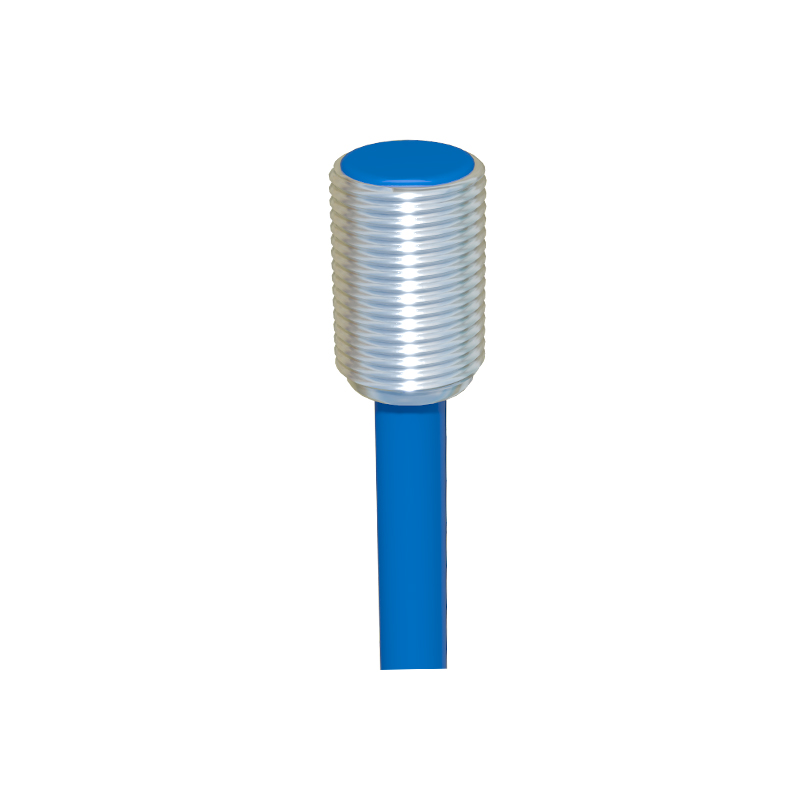
Furthermore, the miniaturization trend is prominent. Companies are developing remarkably compact M8 and M12 threaded sensors without compromising on sensing performance, allowing for installation in space-constrained machinery. Another significant leap is the development of factor-1 sensors, where the sensing distance equals the sensor's housing diameter, providing greater design flexibility. For challenging applications involving non-ferrous metals like aluminum or copper, specialized models with "all-metal" detection or tuned frequencies ensure reliable operation.
Several leading companies drive innovation and set quality standards in the cylindrical proximity sensor market. Organizations like Sick AG, Pepperl+Fuchs, Omron Corporation, Balluff GmbH, and ifm electronic gmbh are renowned for their extensive portfolios and R&D focus. Sick AG, for instance, is celebrated for its rugged sensors with exceptional durability and diagnostic capabilities. Pepperl+Fuchs offers a vast array of inductive sensors, including cylindrical types with advanced functional safety features (Safe ESPE) for use in safety-critical applications.
Omron's E2E series is an industry benchmark for reliability and precision in standard sensing tasks. Balluff distinguishes itself with innovative connectivity solutions, such as sensors with integrated IO-Link communication. This digital interface allows for parameter setting, real-time process data monitoring, and advanced diagnostics, paving the way for predictive maintenance and Industry 4.0 integration. ifm electronic is another key player, emphasizing user-friendly design, high-quality stainless steel housings, and a strong focus on application-specific solutions.
When selecting a cylindrical proximity sensor for a specific application, engineers must consider multiple parameters beyond just the thread size (e.g., M8, M12, M18, M30). The sensing distance, or nominal range, must be chosen with a safety margin to account for target material, size, and temperature variations. The target material itself is crucial; standard sensors are optimized for steel, while special versions are needed for aluminum, brass, or stainless steel. The output type (PNP/NPN, NO/NC) must be compatible with the control system's PLC input card. Environmental factors are paramount: the required Ingress Protection (IP) rating for dust and moisture, temperature tolerance, and resistance to chemicals or welding spatter directly dictate the housing material (nickel-plated brass, stainless steel, or PBT plastic) and seal integrity.
The industry is moving towards smarter, more connected devices. The proliferation of IO-Link is a testament to this shift, transforming simple binary sensors into intelligent data points. This facilitates remote configuration, continuous condition monitoring, and seamless integration into higher-level control systems and digital twins. Additionally, there is a growing demand for sensors that combine multiple detection principles or form factors, though the cylindrical inductive type remains dominant for metallic object detection due to its cost-effectiveness, mechanical robustness, and simplicity.
In conclusion, the domain of cylindrical proximity sensors is far from static. It is characterized by continuous innovation aimed at higher precision, greater resilience, and deeper connectivity. Leading companies compete not only on product specifications but also on value-added services, global supply chain reliability, and technical support. For system integrators and plant engineers, a thorough understanding of both the application requirements and the latest product offerings from these industry leaders is essential to building reliable, efficient, and future-proof automated systems. The humble cylindrical proximity sensor, therefore, remains a critical enabler of modern industrial productivity.