In the realm of modern building automation and industrial applications, automatic door systems have become ubiquitous, offering convenience, accessibility, and improved traffic flow. At the heart of these systems' reliable operation lies a critical component: the proximity switch sensor. As an electrical engineer with extensive experience in sensor technology and automation, I delve into the principles, types, and applications of proximity sensors in automatic doors, highlighting their role in enhancing safety and operational efficiency.
Proximity switches are non-contact sensors that detect the presence or absence of an object within a specific range without physical contact. In automatic doors, they serve as the primary means to initiate opening and closing sequences, ensuring smooth and responsive operation. The fundamental working principle involves generating an electromagnetic field or beam; when an object, such as a person or vehicle, interrupts this field, the sensor triggers a signal to the door control unit. This eliminates the need for mechanical push buttons, reducing wear and tear and minimizing maintenance requirements.
Several types of proximity sensors are employed in automatic door systems, each suited to different environmental conditions and performance criteria. Inductive proximity sensors are commonly used for metal detection, ideal for industrial settings where doors must respond to equipment or metallic objects. Capacitive sensors, on the other hand, can detect both metallic and non-metallic materials, making them versatile for commercial entrances where diverse objects may approach. Ultrasonic sensors emit high-frequency sound waves to measure distance, providing precise detection for sliding or swinging doors in high-traffic areas like airports and hospitals. Infrared (IR) sensors use light beams to detect motion, often integrated with safety edges to prevent entrapment. The selection of sensor type depends on factors such as detection range, response time, environmental interference (e.g., dust, moisture), and cost-effectiveness.
In practice, proximity sensors contribute significantly to safety protocols. For instance, safety sensors are typically installed in pairs—one as a primary activator and another as a safety monitor—to ensure doors do not close on individuals or objects. These sensors comply with international standards like EN 16005 and ANSI/BHMA A156.10, which mandate fail-safe mechanisms to prevent accidents. Additionally, advanced systems incorporate presence detection to keep doors open in crowded scenarios, reducing energy loss by minimizing unnecessary operation. This is particularly crucial in climate-controlled environments where HVAC efficiency is a priority.
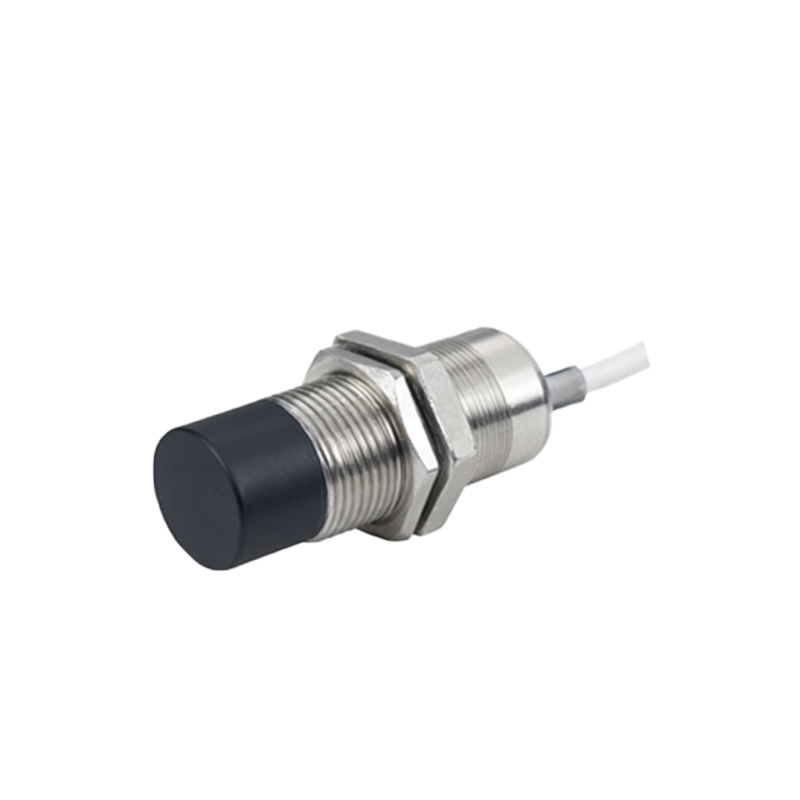
From an engineering perspective, integrating proximity sensors into automatic doors involves careful calibration and testing. The detection range must be optimized to avoid false triggers from passing objects while ensuring timely activation. For example, in retail settings, sensors with adjustable sensitivity can distinguish between a person approaching directly and peripheral movement, enhancing user experience. Moreover, modern sensors often feature diagnostic capabilities, allowing for remote monitoring and predictive maintenance. This reduces downtime and extends the lifespan of door systems, contributing to overall building management efficiency.
In industrial applications, such as warehouse loading docks or cleanrooms, proximity sensors enable automated material handling by interfacing with PLCs (Programmable Logic Controllers) and other control systems. They facilitate seamless integration with security systems, where door operation can be linked to access control protocols. For instance, a sensor might detect an authorized vehicle via RFID and trigger door opening, streamlining logistics while maintaining security.
Despite their advantages, challenges exist, such as interference from external electromagnetic sources or environmental factors like extreme temperatures. Engineers must account for these during installation, often employing shielded sensors or redundant systems to ensure reliability. Regular maintenance, including cleaning lens surfaces for optical sensors and checking alignment, is essential to sustain performance.
Looking ahead, innovations in proximity sensor technology continue to evolve. The advent of IoT (Internet of Things) enables smart sensors that communicate real-time data to building management systems, allowing for adaptive control based on usage patterns. Furthermore, developments in miniaturization and energy efficiency are paving the way for more compact and sustainable automatic door solutions.
In conclusion, proximity switch sensors are indispensable in automatic door systems, bridging the gap between mechanical operation and intelligent automation. By providing reliable, contactless detection, they enhance safety, reduce energy consumption, and improve user convenience. As an engineer, I emphasize the importance of selecting the right sensor type and ensuring proper integration to maximize system benefits. Whether in commercial, industrial, or residential settings, these sensors exemplify how electrical engineering innovations drive everyday efficiency and safety.