In modern agricultural machinery, round balers play a crucial role in efficient forage and straw handling. At the heart of their reliable operation lies a critical component: the proximity switch sensor. These sensors are pivotal for automating bale formation, monitoring rotational speed, and ensuring safety interlocks. Unlike mechanical limit switches, proximity sensors offer non-contact detection, which is essential in the dusty, high-vibration environments typical of baling operations.
Proximity switches used in round balers are predominantly inductive or capacitive types. Inductive sensors detect metallic targets, such as gear teeth or bolts on a rotating shaft, making them ideal for monitoring the baler's main drive or twine system. Capacitive sensors, on the other hand, can detect non-metallic materials, useful for monitoring bale density or the presence of twine. The selection between these types depends on the specific application, required sensing distance, and environmental conditions.
A key application is bale size monitoring. Sensors are positioned to detect the growing bale's rotation or the position of the tension arms. As the bale expands, the arm movement is tracked by the sensor, which sends signals to the baler's electronic control unit (ECU). The ECU then determines when the bale has reached the preset size and initiates the wrapping and ejection cycle. This automation ensures consistent bale density and size, optimizing storage and transport.
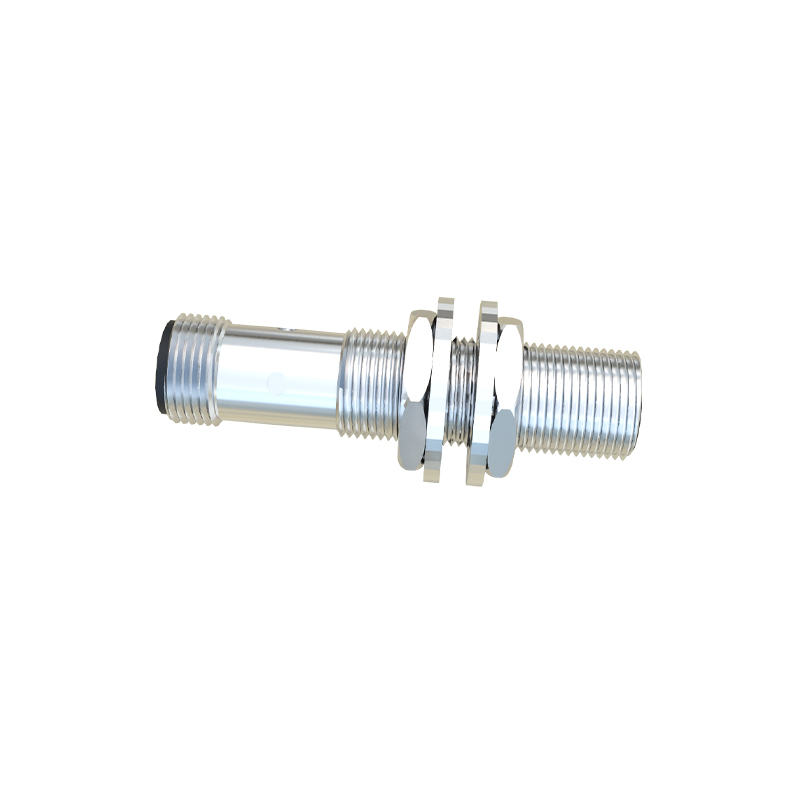
Another vital function is speed monitoring of the pickup reel or drives. Proximity sensors mounted near a rotating gear or encoder wheel provide real-time RPM data. This information is critical for preventing overloading, maintaining optimal feeding rates, and triggering alerts for slippage or blockage. In advanced systems, this data integrates with telematics for predictive maintenance.
Installation and environmental resilience are paramount. These sensors must be housed in rugged, IP67-rated or higher enclosures to withstand moisture, dust, chaff, and mechanical impacts. Proper mounting alignment and gap adjustment are crucial for reliable operation. For instance, an inductive sensor requires a precise air gap between its face and the target; too large a gap can cause failure to detect, while too small a gap risks physical damage.
Electrical compatibility is equally important. Most round baler systems operate on 12V or 24V DC. The sensor's output type—typically NPN (sinking) or PNP (sourcing)—must match the ECU's input requirements. Incorrect pairing can lead to system malfunctions. Additionally, using shielded cables and proper grounding minimizes electromagnetic interference from the baler's powerful hydraulic systems and ignition circuits.
Common failure modes include sensor coating buildup, physical damage from debris, and wiring harness issues. Regular maintenance involves visual inspection for damage, cleaning the sensing face, and verifying output signals with a multimeter or diagnostic tool. Upgrading to modern, solid-state sensors with built-in diagnostics can significantly reduce downtime.
Future trends point toward smarter sensors with IO-Link communication, enabling detailed condition monitoring and parameter adjustments on-the-fly. Integration with IoT platforms allows fleet managers to monitor baler performance remotely, scheduling maintenance before failures occur.
In summary, proximity switch sensors are indispensable for the automation, efficiency, and reliability of round balers. Correct selection, installation, and maintenance of these components directly impact baling productivity and machine longevity. As technology advances, these sensors will continue to evolve, offering greater precision and connectivity for the next generation of agricultural equipment.