In the realm of industrial automation and machinery, precision and reliability are paramount. Among the myriad of sensing technologies available, the 10cm proximity sensor stands out as a versatile and critical component for countless applications. This article delves into the operational principles, key types, selection criteria, and practical implementation considerations for these indispensable devices.
At its core, a proximity sensor is a non-contact device designed to detect the presence or absence of an object within a specified range without physical contact. The 10cm (approximately 4 inches) sensing distance represents a highly practical and common specification, offering an optimal balance between detection range, physical size, and immunity to environmental interference. This range is ideal for applications requiring a moderate safety margin or where objects must be detected before reaching a critical point in a process.
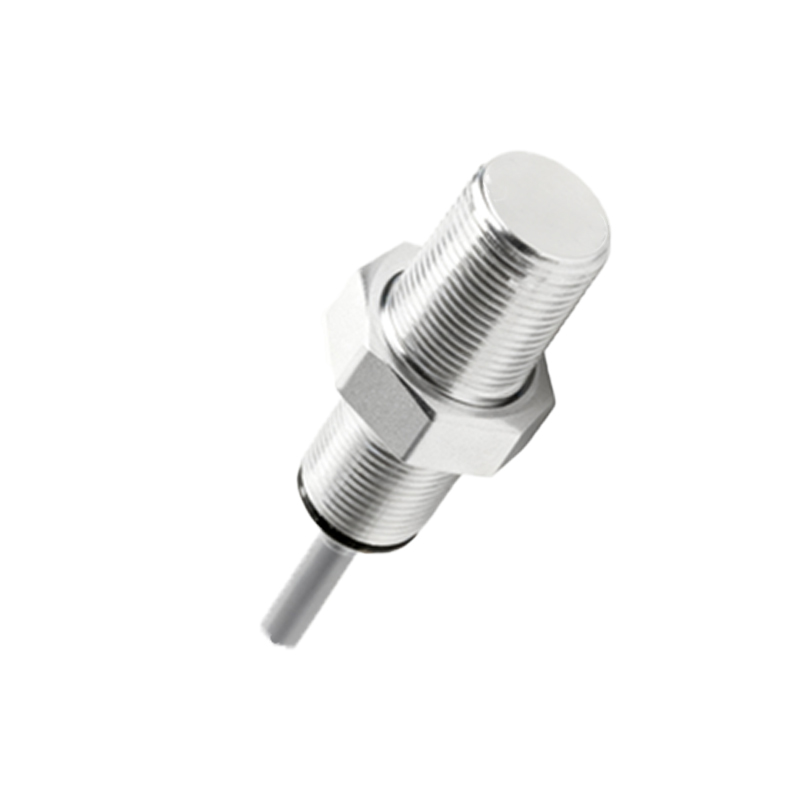
The most prevalent technologies for achieving this 10cm sensing capability are inductive, capacitive, and ultrasonic sensors. Inductive proximity sensors are the workhorses of metal detection. They generate an electromagnetic field and detect changes caused by conductive (typically metallic) targets entering this field. For a standard inductive sensor, achieving a full 10cm range typically requires a larger-diameter sensing face and is often optimized for ferrous metals. They are renowned for their robustness, high switching frequency, and resistance to dirt, dust, and moisture, making them perfect for harsh factory environments involving machine tools, robotic arms, or conveyor systems with metal parts.
Capacitive proximity sensors, on the other hand, can detect both metallic and non-metallic materials such as plastics, glass, wood, and liquids. They function by measuring changes in capacitance between the sensor's electrode and the ground when a target object enters the sensing field. A 10cm capacitive sensor is invaluable in packaging, material handling, and liquid level control applications where the target material varies. However, they can be more susceptible to environmental factors like humidity.
Ultrasonic sensors operate on a time-of-flight principle, emitting high-frequency sound pulses and measuring the time for the echo to return. This technology easily achieves and often exceeds a 10cm range and is excellent for detecting objects of virtually any material, shape, or color, including transparent items that confound optical sensors. They are widely used in distance measurement, palletizing, and presence detection in challenging conditions with dust or light interference.
Selecting the right 10cm proximity sensor requires careful analysis of several parameters beyond just the sensing distance. The target material is the primary determinant in choosing between inductive, capacitive, or ultrasonic types. The sensor's housing material (e.g., stainless steel, nickel-plated brass, or PBT plastic) must withstand the operational environment, including exposure to chemicals, coolants, or physical impact. Key electrical specifications include the operating voltage (commonly 10-30V DC or 20-250V AC), output type (PNP/NPN transistor, or relay), and whether it is normally open (NO) or normally closed (NC). The IP (Ingress Protection) rating is crucial for ensuring durability against dust and water jets or immersion.
Installation and wiring are critical for optimal performance. Factors such as lateral distance between sensors, the presence of surrounding metal (which can reduce the effective sensing distance for inductive types), and proper shielding of cables in electrically noisy environments must be considered. Many modern 10cm sensors feature built-in diagnostics like LED status indicators and short-circuit protection, simplifying maintenance and troubleshooting.
In practice, 10cm proximity sensors are ubiquitous. They serve as end-of-travel limit switches in automated guided vehicles (AGVs), detect the presence of a bottle on a filling line, ensure a robotic gripper has correctly picked up a component, or monitor the position of a hydraulic cylinder. Their non-contact nature eliminates mechanical wear, ensuring long service life and consistent, repeatable operation.
In conclusion, the 10cm proximity sensor is a fundamental building block of modern industrial control systems. Understanding the nuances of its different technologies and application requirements allows engineers and technicians to deploy these sensors effectively, enhancing machine safety, optimizing processes, and improving overall system reliability. As Industry 4.0 advances, these sensors continue to evolve with features like IO-Link communication, enabling predictive maintenance and deeper integration into smart factory networks.