In industrial automation and process control, accurate water level detection is critical for ensuring operational efficiency, safety, and resource management. Among the various sensing technologies available, proximity switch sensors have emerged as a reliable and versatile solution for monitoring liquid levels in tanks, reservoirs, and pipelines. Unlike traditional float switches or conductive probes, proximity sensors offer non-contact detection, minimizing maintenance and reducing the risk of contamination.
Proximity switches operate based on the principle of electromagnetic induction or capacitive sensing. Inductive proximity sensors are typically used for detecting metallic objects, but when applied to water level detection, they are often paired with a float containing a metallic element. As the water level rises or falls, the float moves accordingly, bringing the metallic target within or out of the sensor's detection range. This triggers a switch signal that can be integrated into control systems for automated responses, such as activating pumps or alarms.
Capacitive proximity sensors, on the other hand, can directly detect the presence of water or other liquids without the need for a float. These sensors measure changes in capacitance caused by the dielectric properties of the liquid. When water approaches the sensing face, the capacitance increases, prompting the sensor to switch states. This makes capacitive sensors ideal for applications where direct contact with the liquid is undesirable or where the liquid is non-conductive.
The selection of a proximity sensor for water level detection depends on several factors, including the type of liquid, tank material, temperature, pressure, and required sensing distance. For instance, in corrosive environments, sensors with stainless steel housings or PTFE coatings are recommended to ensure longevity. Additionally, sensors with adjustable sensitivity settings allow for fine-tuning to avoid false triggers caused by foam, turbulence, or residue buildup.
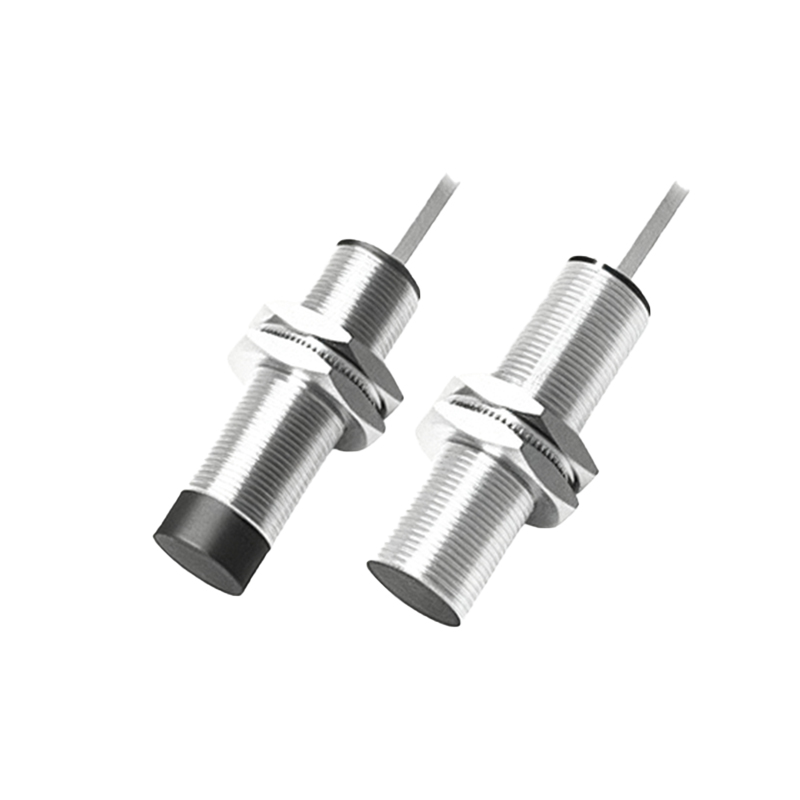
Installation and calibration are crucial for optimal performance. Proximity sensors should be mounted securely to prevent vibration-induced errors, and the sensing distance must be set according to the application's specific requirements. Regular maintenance, such as cleaning the sensing face and checking for electrical connections, helps maintain accuracy over time.
In practice, proximity switch sensors are widely used in water treatment plants, chemical processing, food and beverage production, and HVAC systems. They enable precise control over filling and draining processes, prevent overflows or dry running, and contribute to energy savings by ensuring pumps operate only when necessary. With advancements in technology, modern proximity sensors also feature enhanced diagnostics, IO-Link communication, and robust designs for harsh conditions, further expanding their applicability.
Despite their advantages, it is important to consider limitations. For example, inductive sensors may not be suitable for non-metallic tanks unless a metallic target is used, while capacitive sensors can be affected by changes in liquid composition or temperature. Therefore, a thorough analysis of the application environment is essential before implementation.
In conclusion, proximity switch sensors provide an efficient and durable method for water level detection in industrial settings. Their non-contact operation, adaptability, and integration capabilities make them a preferred choice for engineers seeking reliable automation solutions. As industries continue to prioritize smart monitoring and control, the role of proximity sensors in liquid level management is expected to grow, driving innovations in sensor design and functionality.