In the rapidly evolving field of electrical engineering, precision and efficiency are paramount, especially in welding applications. Welding wire laser sensors have emerged as a critical technology, revolutionizing how engineers monitor and control welding processes. These sensors utilize advanced laser-based systems to provide real-time, non-contact measurements of welding wire position, diameter, and feed rate, ensuring optimal performance and reducing defects in electrical installations and manufacturing.
The core principle behind welding wire laser sensors involves emitting a focused laser beam onto the welding wire surface. As the wire moves through the welding torch, the sensor detects reflections or interruptions in the beam, capturing data on parameters such as alignment and speed. This information is processed by integrated software, which adjusts the welding equipment automatically to maintain consistency. For instance, in automated electrical assembly lines, these sensors help prevent issues like wire misalignment or irregular feed, which can lead to weak joints or electrical failures. By enabling continuous monitoring, they minimize downtime and enhance safety in high-voltage environments.
Key advantages of welding wire laser sensors include their high accuracy and adaptability. Unlike traditional mechanical sensors, they are not prone to wear from friction, making them durable for industrial use. They can operate in harsh conditions, such as areas with electromagnetic interference common in electrical systems, without signal degradation. Additionally, their non-contact nature eliminates contamination risks, crucial for maintaining clean welding surfaces in sensitive electrical components. Engineers report improvements in weld quality, with reductions in rework rates by up to 30% in projects involving circuit boards or power distribution units.
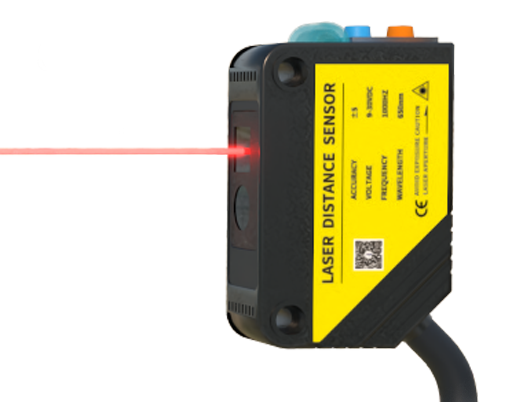
Recent innovations have integrated these sensors with IoT and AI platforms, allowing for predictive maintenance and data analytics. In smart factories, welding wire laser sensors connect to central control systems, providing insights into trends like wire consumption or equipment wear. This connectivity supports just-in-time adjustments, reducing material waste and energy use—a significant benefit for sustainable electrical engineering practices. For example, in renewable energy sectors like solar panel manufacturing, precise welding is essential for durability, and laser sensors ensure long-term reliability by detecting minute deviations before they escalate.
Despite their benefits, challenges remain, such as initial setup costs and the need for specialized training. However, as technology advances, costs are decreasing, making welding wire laser sensors more accessible for small to medium-sized electrical firms. Industry standards, like those from IEEE, are also evolving to include guidelines for sensor implementation, promoting wider adoption.
In summary, welding wire laser sensors represent a transformative tool in electrical engineering, driving precision in welding processes across applications from consumer electronics to infrastructure. By leveraging laser technology, engineers can achieve higher efficiency, safety, and quality, aligning with the industry's push toward automation and innovation. As research continues, these sensors are poised to become even more integral to future electrical systems, supporting advancements in areas like electric vehicle production and smart grid development.