Proximity sensors are indispensable components in modern industrial automation, providing non-contact detection of objects and enabling precise control outputs for various applications. These sensors operate by emitting an electromagnetic field or a beam of electromagnetic radiation and detecting changes in the field or return signal. The control output, typically in the form of a digital signal, triggers actions in machinery, such as starting or stopping processes, counting items, or positioning objects.
There are several types of proximity sensors, including inductive, capacitive, and photoelectric sensors, each suited for specific materials and environments. Inductive sensors detect metallic objects without physical contact, making them ideal for harsh industrial settings where durability is crucial. They generate an output signal when a metal object enters their sensing range, which can be used to activate relays, PLCs (Programmable Logic Controllers), or other control systems. Capacitive sensors, on the other hand, can detect both metallic and non-metallic materials, such as liquids or plastics, by measuring changes in capacitance. This versatility allows for applications in packaging, food processing, and material handling. Photoelectric sensors use light beams to detect objects, offering long-range sensing capabilities and high accuracy for tasks like object detection on conveyor belts.
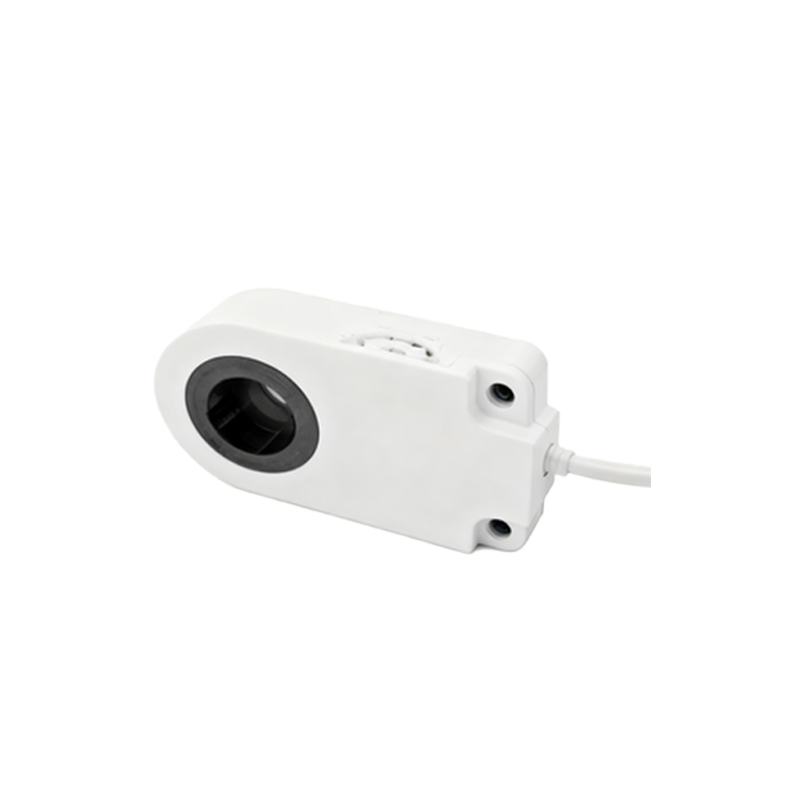
The control output of proximity sensors is typically configured as either a normally open (NO) or normally closed (NC) contact, depending on the required logic for the automation system. In a NO configuration, the output is off when no object is detected and turns on when an object is within range. Conversely, an NC output is on by default and turns off upon detection. This flexibility enables engineers to design control circuits that meet specific safety and operational needs. For instance, in safety-critical applications, an NC output might be used to ensure that a machine stops if the sensor fails, preventing accidents.
Integrating proximity sensors into control systems involves connecting their outputs to devices like PLCs, motor drives, or solenoid valves. The output signal, often a 24V DC or 120V AC signal in industrial settings, must match the input requirements of the connected equipment. Proper wiring and shielding are essential to prevent electrical noise from interfering with the signal, which could lead to false triggers or system malfunctions. Additionally, many modern proximity sensors feature programmable outputs, allowing users to adjust parameters such as switching frequency, delay times, and output modes via software or built-in interfaces. This programmability enhances adaptability in dynamic production environments.
Applications of proximity sensor control outputs span numerous industries. In automotive manufacturing, they are used for part detection in assembly lines, ensuring components are correctly positioned before welding or fastening. In packaging, sensors count products and control filling machines, improving efficiency and reducing waste. In material handling, they monitor the position of pallets or robotic arms, enabling automated storage and retrieval systems. The reliability and speed of proximity sensors contribute to increased productivity and reduced downtime in these settings.
When selecting a proximity sensor for a specific application, factors such as sensing range, environmental conditions, and output type must be considered. For example, in high-temperature environments, sensors with robust housings and extended temperature ratings are necessary to maintain performance. Similarly, in washdown areas like food processing plants, sensors with IP67 or higher ingress protection ratings resist water and chemical exposure. The output type—whether PNP (sourcing) or NPN (sinking)—should also align with the control system's input configuration to ensure compatibility.
In conclusion, proximity sensor control outputs play a vital role in industrial automation by enabling accurate, non-contact detection and control. Their ability to interface with various control devices and adapt to diverse applications makes them a cornerstone of modern manufacturing and processing systems. As technology advances, features like IO-Link communication and smart diagnostics are further enhancing their functionality, paving the way for more interconnected and efficient industrial operations.