In the rapidly evolving landscape of industrial automation, the demand for more compact, intelligent, and multifunctional sensing solutions is at an all-time high. Among the most significant advancements meeting this demand is the development and deployment of the proximity and pressure integrated sensor. This innovative device represents a paradigm shift, merging two critical sensing modalities into a single, robust unit, thereby enhancing system efficiency, reliability, and data coherence.
Traditionally, proximity sensing and pressure measurement have been handled by separate, discrete components. Proximity sensors, whether inductive, capacitive, or photoelectric, are tasked with detecting the presence or absence of an object without physical contact. They answer the fundamental question: "Is something there?" On the other hand, pressure sensors, including piezoresistive, capacitive, or strain gauge types, quantify the force applied per unit area, providing critical data on system states like fluid levels, force application, or vacuum conditions. They answer: "With how much force?" While both are indispensable, their separation can lead to increased system complexity, higher installation and maintenance costs, potential synchronization issues, and a larger physical footprint.
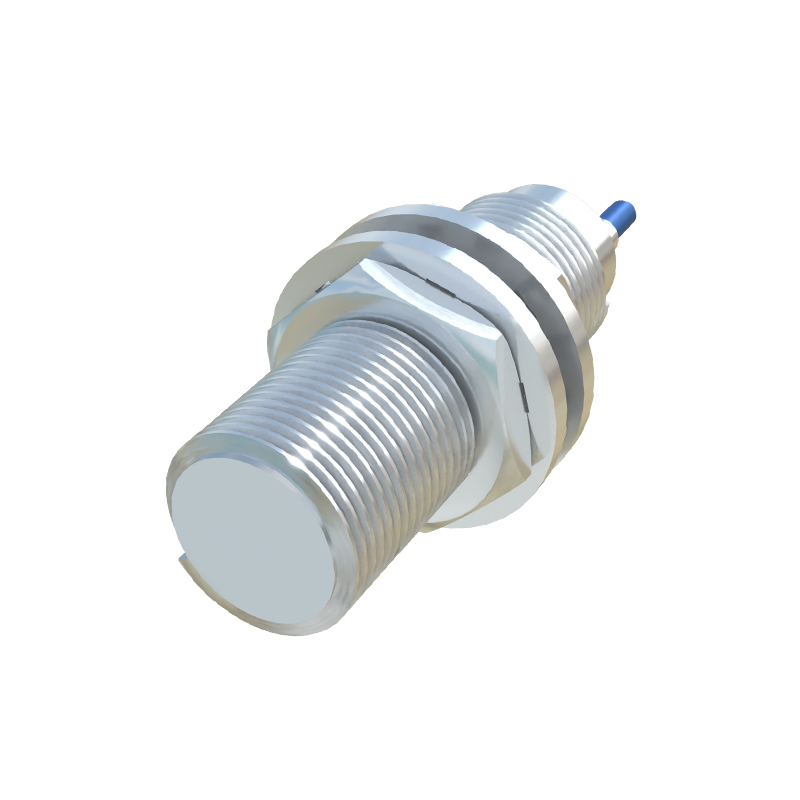
The integrated sensor elegantly solves these challenges. By housing both sensing elements within a single enclosure and often on a unified ASIC (Application-Specific Integrated Circuit), it provides simultaneous, correlated data streams. For instance, in a robotic gripper application, the sensor can first detect the approach of a component (proximity function) and then precisely measure the grip force applied (pressure function) to prevent damage. This closed-loop feedback in one device allows for more sophisticated and immediate control algorithms.
The core technologies enabling this integration are multifaceted. Advanced MEMS (Micro-Electro-Mechanical Systems) fabrication is crucial, allowing for the miniaturization of pressure diaphragms and associated circuitry. For the proximity function, high-frequency oscillator circuits for inductive sensing or sophisticated LED-phototransistor pairs for optical sensing are integrated alongside. The real magic, however, lies in the signal processing unit. A powerful microcontroller or dedicated DSP (Digital Signal Processor) within the sensor handles filtering, compensation (for temperature, linearity), and data fusion. It intelligently processes raw signals from both sensing elements, often using algorithms to distinguish between a true pressure event and an environmental disturbance detected by the proximity element.
The applications for proximity-pressure integrated sensors are vast and transformative. In automotive manufacturing, they are used in assembly robots for precise part handling and insertion force verification. In hydraulic and pneumatic systems, they monitor cylinder position (via proximity) and line pressure simultaneously, predicting failures like seal leaks before they cause downtime. In consumer electronics assembly, they ensure delicate components are both present and seated with the correct force. The medical device industry utilizes them in automated diagnostic equipment and surgical robots, where sterile, space-constrained environments benefit immensely from a single, reliable sensor providing dual verification.
Selecting and implementing such a sensor requires careful consideration of several key parameters. The sensing range for both proximity and pressure must match the application. The output interface is critical—common options include analog (4-20 mA, 0-10V), digital (IO-Link, which is increasingly popular for its bidirectional data capability), or fieldbus protocols (PROFINET, EtherCAT). Environmental ratings, particularly Ingress Protection (IP) codes for dust and water resistance and temperature operating ranges, are non-negotiable for harsh industrial settings. Mechanical design, including housing material (stainless steel, PPS plastic) and connection type (M8, M12 connectors), must ensure longevity.
The benefits of adoption are compelling. Firstly, it reduces total cost of ownership by cutting the number of parts to purchase, inventory, wire, and maintain. Secondly, it saves valuable space in control panels and on machinery, a key factor in miniaturized equipment. Thirdly, it improves data quality and system response time, as the correlated measurements are generated and processed locally, reducing latency compared to polling two separate sensors. Finally, it enhances diagnostic capabilities; the sensor can report on the health of both functions, enabling predictive maintenance.
Looking ahead, the integration trend will only deepen. Future iterations will incorporate more sensing elements, such as temperature or humidity, creating true multi-parameter "sensing hubs." The rise of Industrial IoT (IIoT) and Industry 4.0 will drive the demand for sensors with built-in intelligence and direct cloud connectivity. These smart sensors will not only provide data but also perform edge computing, making preliminary decisions and only sending relevant insights to higher-level control systems.
In conclusion, the proximity and pressure integrated sensor is far more than a simple combination of two devices. It is a sophisticated, intelligent component that embodies the principles of modern industrial design: integration, intelligence, and efficiency. By providing synchronized, context-rich data from a single point, it empowers engineers to build simpler, smarter, and more reliable automated systems,