In the realm of industrial automation and control systems, proximity sensors are indispensable components for non-contact object detection. Among the various configurations available, 0-24V DC proximity sensors stand as a cornerstone, offering robust performance and seamless integration with standard industrial power supplies. This article delves into the operational principles, key specifications, wiring considerations, and application best practices for these ubiquitous sensors.
At their core, 0-24V proximity sensors are solid-state electronic devices designed to detect the presence or absence of a target object without physical contact. They typically operate on a DC voltage range from 10 to 30 volts, with 24V DC being the nominal and most common industrial standard. This voltage compatibility makes them ideal for direct connection to Programmable Logic Controller (PLC) input modules, relay interfaces, and standard 24V DC power rails found in control panels worldwide. The operating principle varies by type: inductive sensors detect metallic objects, capacitive sensors detect both metallic and non-metallic materials, and ultrasonic sensors use sound waves for detection. The "0-24V" designation primarily refers to the sensor's output signal. When a target is detected, the sensor's output transistor switches, changing the state of the output line relative to the 0V (common) reference, effectively providing a clean digital signal (ON/OFF) to the control system.
Selecting the right 0-24V proximity sensor requires careful attention to several technical parameters. First, the sensing distance, or "rated operating distance," is critical. This is the nominal distance at which a standard target will reliably trigger the sensor. It is crucial to note that factors like target material, size, and environmental conditions can affect the actual sensing range. Second, the output type must be specified: NPN (sinking) or PNP (sourcing). An NPN sensor switches the output to 0V (common) when active, while a PNP sensor switches the output to the positive supply voltage (e.g., +24V). The choice depends entirely on the input circuit of the receiving device (e.g., PLC). Mismatching NPN and PNP is a common wiring error. Third, the output configuration—normally open (NO) or normally closed (NC)—defines the logic state of the signal in the absence of a target. A NO contact closes (becomes conductive) upon detection, while an NC contact opens. Fourth, environmental ratings, particularly the Ingress Protection (IP) code (e.g., IP67), are vital for ensuring reliability in harsh conditions involving dust, moisture, or washdowns.
Proper wiring is fundamental to reliable operation and longevity. A standard three-wire DC sensor has connections for Brown (+V, typically 24V), Blue (0V or common), and Black (output signal). A four-wire device may include an additional wire for a second complementary output or diagnostic function. It is imperative to adhere to the manufacturer's datasheet. Key wiring practices include: using shielded cables in electrically noisy environments and grounding the shield at one end only; installing surge suppression devices (like flyback diodes) on inductive loads (relays, solenoids) connected to the sensor output to protect the sensor's internal transistor from voltage spikes; and ensuring correct polarity. Connecting power backwards can instantly damage the sensor. Furthermore, derating the operational voltage and sensing distance in extreme temperatures is a recommended practice.
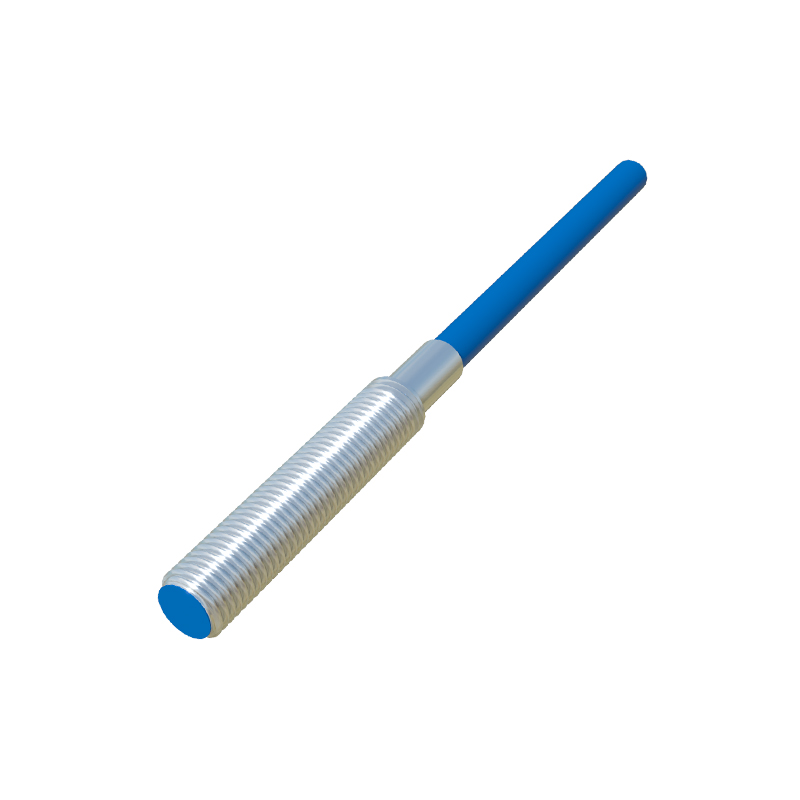
The applications for 0-24V proximity sensors are vast. They are used for part presence verification on conveyor lines, end-of-travel limit detection on actuators, rotary speed monitoring via gear tooth sensing, and precise positioning in assembly machinery. Their solid-state design offers high switching frequencies, immunity to mechanical wear (unlike limit switches), and long operational life. When integrating these sensors, consider mounting to minimize side-effects from adjacent metal, allow for adequate adjustment, and protect the sensing face from physical damage or buildup of contaminants.
In conclusion, 0-24V DC proximity sensors are a fundamental, reliable technology for modern industrial automation. A clear understanding of their operating principles, careful selection based on electrical and environmental specifications, and adherence to proper installation guidelines are the keys to unlocking their full potential. By mastering these aspects, engineers and technicians can design robust, efficient, and maintainable control systems that form the backbone of automated production.