In the realm of industrial automation and control systems, proximity switch sensors are indispensable components. Among their various specifications, the sensing range is a critical parameter. This article delves into the specifics of proximity sensors with a 1cm (approximately 0.39 inches) sensing distance, exploring their operating principles, typical applications, and key selection criteria.
A proximity sensor with a 1cm range is designed to detect the presence or absence of an object within a very specific, short distance without any physical contact. This short-range operation is a defining characteristic, often necessitated by requirements for precision, space constraints, or to avoid interference from background objects. The two most common technologies achieving this range are inductive and capacitive sensors.
Inductive proximity sensors are the workhorses for detecting metallic objects. They operate on the principle of electromagnetic induction. The sensor generates an oscillating electromagnetic field from its active face. When a metallic target enters this field within the 1cm range, it induces eddy currents on the target's surface. This causes a change in the oscillation amplitude within the sensor's coil, which is detected by the internal circuitry, triggering a switching signal. The effective sensing distance (Sn) is standardized, and for a 1cm sensor, this is typically the nominal range under ideal conditions with a standard target (usually a square of mild steel, 1mm thick, with sides equal to the sensor's diameter or 3 times Sn, whichever is greater). It's crucial to note that the actual sensing distance can be affected by the target material's properties. For instance, steel is detected at the full nominal range, while stainless steel might reduce it to 60-80%, and copper or aluminum to 30-50% of Sn. Therefore, a 1cm inductive sensor might only detect a brass object at 0.3-0.5cm.
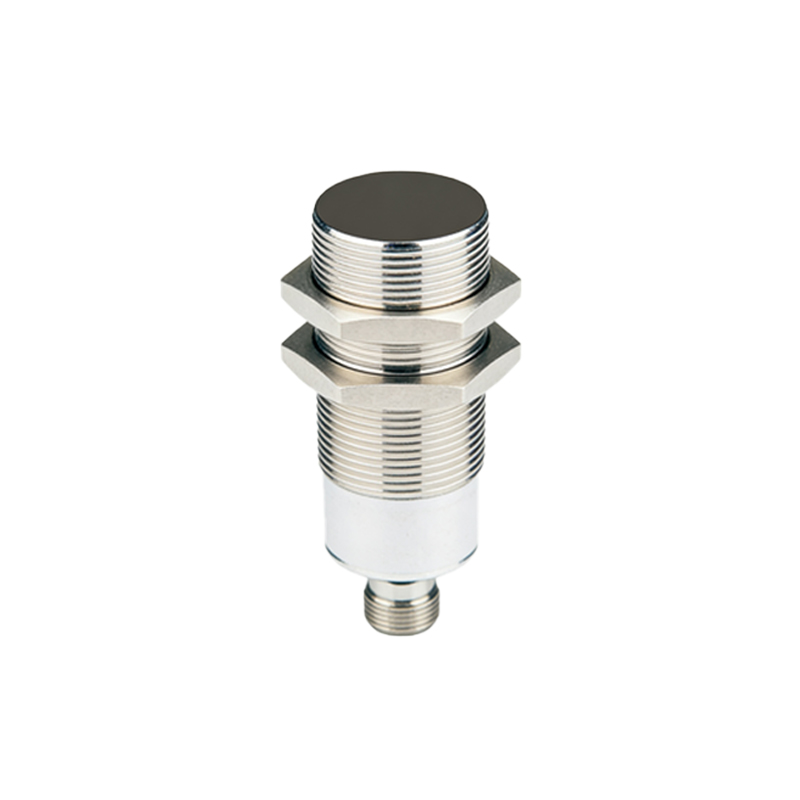
Capacitive proximity sensors, on the other hand, can detect both metallic and non-metallic materials (plastics, wood, liquids, granules) by sensing changes in capacitance. The sensor face and the target act as two plates of a capacitor. As a target approaches within the 1cm range, the dielectric constant between the plates changes, altering the capacitance. The sensor's circuit monitors this change and switches its output state when a preset threshold is reached. These sensors are ideal for applications involving non-conductive materials but require careful installation to avoid false triggers from environmental factors like humidity or contamination on the sensor face.
The 1cm sensing range finds its niche in numerous precise applications. Common use cases include:
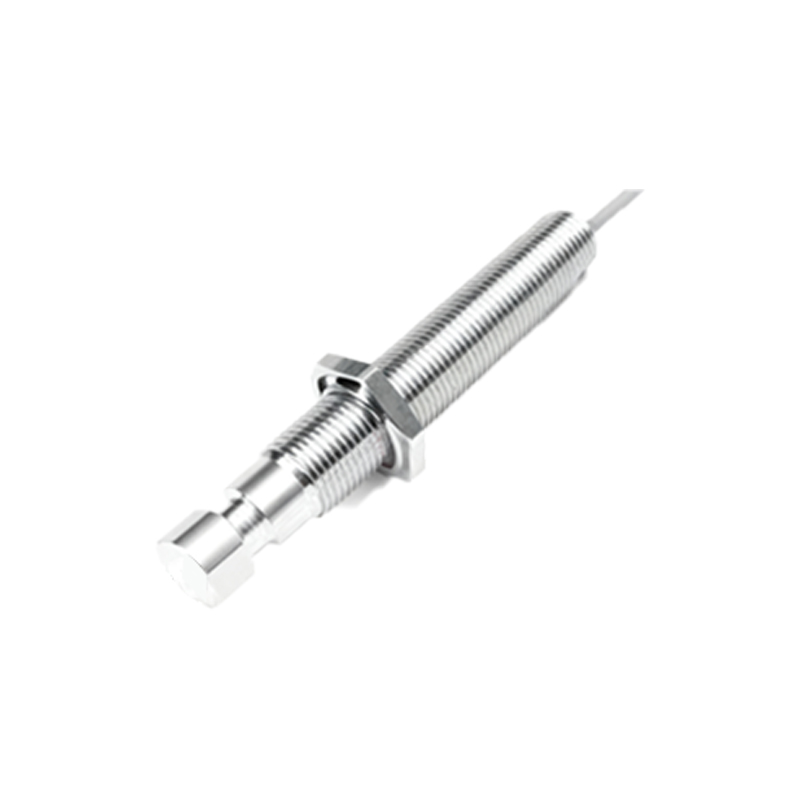
Position Verification: Confirming a part is correctly seated in a fixture or a robotic gripper has successfully acquired a component.
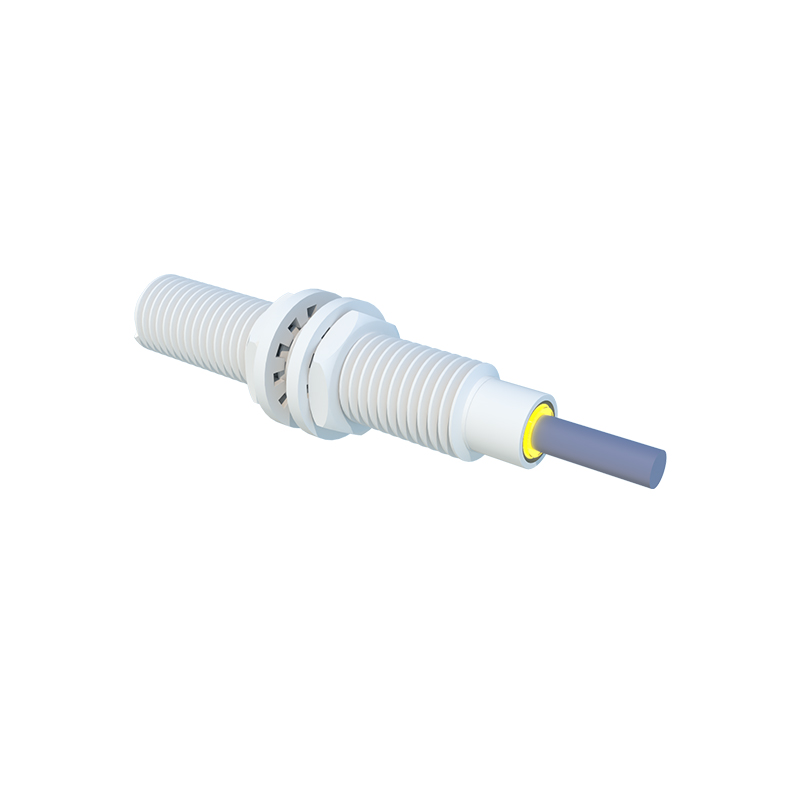
End-of-Travel Detection: Sensing the precise limit of a linear actuator or a small cylinder stroke.
Counting and Sorting: Detecting small parts on a conveyor belt where close proximity is required for reliable detection of tiny objects.
Fill Level Control: In small containers or vials, a capacitive sensor can detect the presence of liquid or powder at a precise height.
Safety Interlocks: Ensuring a guard door is fully closed (within a 1cm tolerance) before machine operation commences.
When selecting a 1cm range proximity sensor, engineers must consider several factors beyond just the sensing distance. The housing material and size (e.g., M8, M12 cylindrical, or rectangular block) must suit the mechanical installation. The output type (PNP/NPN, NO/NC) must be compatible with the PLC or controller input card. Environmental ratings, particularly Ingress Protection (IP) codes like IP67, are vital for resistance to dust and water in harsh industrial environments. Temperature range and supply voltage are other critical electrical specifications. Finally, considering the mounting (flush or non-flush) is essential; non-flush mountable sensors offer a longer range but require more lateral clearance, while flush-mounted types can be embedded in metal without affecting performance but have a reduced range.
In conclusion, the 1cm proximity sensor represents a category of devices optimized for short-range, high-precision detection tasks. Its effectiveness hinges on a clear understanding of the target material, the operating technology (inductive vs. capacitive), and the installation environment. By carefully matching these parameters to the application requirements, engineers can ensure reliable, maintenance-free operation, contributing to the efficiency and accuracy of automated systems. The compactness and reliability of these sensors make them fundamental building blocks in the precise world of modern industrial control.