In modern industrial environments, temperature monitoring is a critical component of operational safety and process efficiency. Laser sensor temperature alarm systems represent a significant technological advancement in this field, offering non-contact, high-precision, and rapid-response capabilities that traditional thermocouples or infrared sensors often cannot match. These systems utilize laser-based detection principles to measure surface temperatures from a distance, making them ideal for applications involving extreme heat, hazardous materials, or moving machinery where direct contact is impractical or dangerous.
The core technology behind these alarms typically involves a laser diode that emits a focused beam toward a target surface. The system then analyzes the reflected or emitted radiation, often using principles like laser interferometry or pyrometry, to calculate the exact temperature. One of the primary advantages is the minimal interference with the measured object, preserving its integrity and the ongoing process. For instance, in metal forging or glass manufacturing, where temperatures can exceed 1000°C, laser sensors provide continuous, real-time data without physical degradation or contamination risk.
Industrial applications are vast and varied. In power generation plants, laser sensors monitor turbine blades and boiler surfaces, triggering alarms if temperatures deviate from safe operational ranges, thus preventing catastrophic failures. Within chemical processing facilities, they oversee reactor vessels and pipeline temperatures, ensuring reactions remain within controlled parameters to avoid thermal runaway incidents. The automotive industry employs these systems in paint-drying ovens and welding stations to maintain quality control and worker safety. Furthermore, in data centers, laser-based alarms can detect overheating server racks before critical hardware damage occurs, highlighting their versatility across sectors.
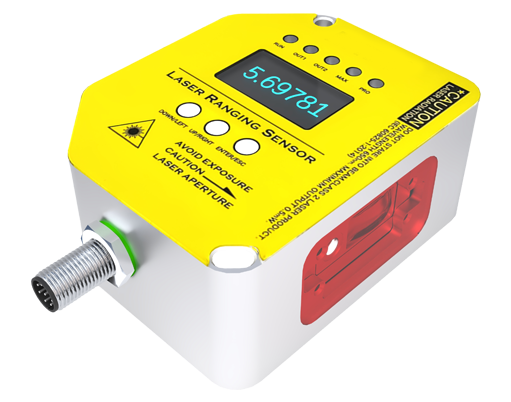
Key features that define high-performance laser temperature alarm systems include their measurement range, response time, accuracy, and environmental robustness. Advanced models can detect temperatures from below freezing to over 3000°C with accuracies within ±0.5% of the reading. Response times are exceptionally fast, often in milliseconds, allowing for immediate corrective actions. They are also designed to withstand harsh industrial conditions, featuring enclosures with high IP ratings for dust and water resistance, and immunity to electromagnetic interference common in factory settings.
Integration with broader industrial control systems is another crucial aspect. Modern laser alarm units often come equipped with digital outputs (e.g., 4-20 mA, Modbus, Profinet) that connect seamlessly to Programmable Logic Controllers (PLCs) or Supervisory Control and Data Acquisition (SCADA) systems. This connectivity enables automated responses, such as activating cooling systems, shutting down machinery, or alerting personnel via visual and auditory alarms or centralized monitoring dashboards. Predictive maintenance is enhanced as historical temperature data can be logged and analyzed to identify trends and prevent future anomalies.
Despite their advantages, implementing laser sensor temperature alarms requires careful consideration. Factors like the target's emissivity, surface finish, and environmental obstructions (e.g., smoke, steam) can affect readings. Proper calibration and installation by qualified engineers are essential to ensure reliability. Regular maintenance, including lens cleaning and software updates, helps sustain optimal performance over time.
In conclusion, laser sensor temperature alarm systems are indispensable tools for enhancing industrial safety and operational continuity. Their non-contact nature, precision, and rapid response provide a proactive approach to temperature management, mitigating risks of equipment damage, production downtime, and workplace hazards. As industries continue to embrace automation and smart manufacturing, the role of these advanced sensing technologies will only grow, driving further innovations in safety protocols and efficiency standards.