In the realm of industrial automation and control systems, proximity sensors are indispensable components. They detect the presence or absence of an object without physical contact, enabling precise, reliable, and wear-free operation in harsh environments. Understanding the different types of proximity sensors is crucial for selecting the right technology for a specific application. This guide delves into the primary categories, their operating principles, advantages, and typical use cases.
The most fundamental classification of proximity sensors is based on their underlying detection technology. The four main types are Inductive, Capacitive, Ultrasonic, and Photoelectric sensors.
Inductive Proximity Sensors
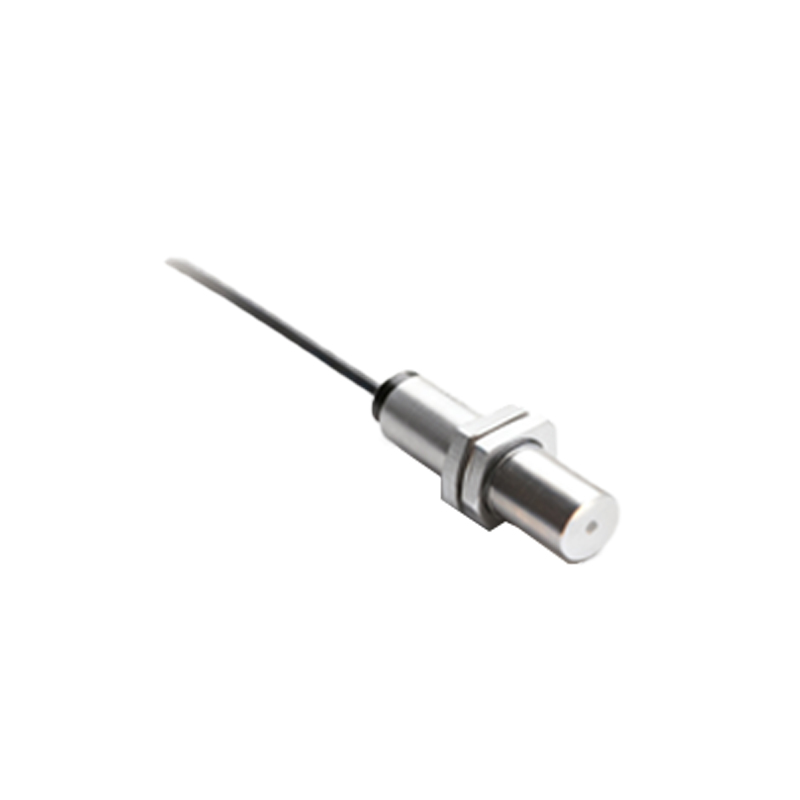
Inductive proximity sensors are designed to detect metallic objects, primarily ferrous metals like iron and steel, though some models can also sense non-ferrous metals. Their operation relies on electromagnetic induction. The sensor generates an oscillating electromagnetic field from its face. When a metallic target enters this field, eddy currents are induced on the metal's surface. This causes a change in the oscillation amplitude, which is detected by the sensor's circuitry, triggering a solid-state output switch.
Key advantages include high switching frequency, exceptional reliability, resistance to environmental factors like dust, oil, and moisture, and robustness in heavy industrial settings. They are commonly used for position sensing of machine parts, counting metallic objects on conveyors, and as limit switches in CNC machinery.
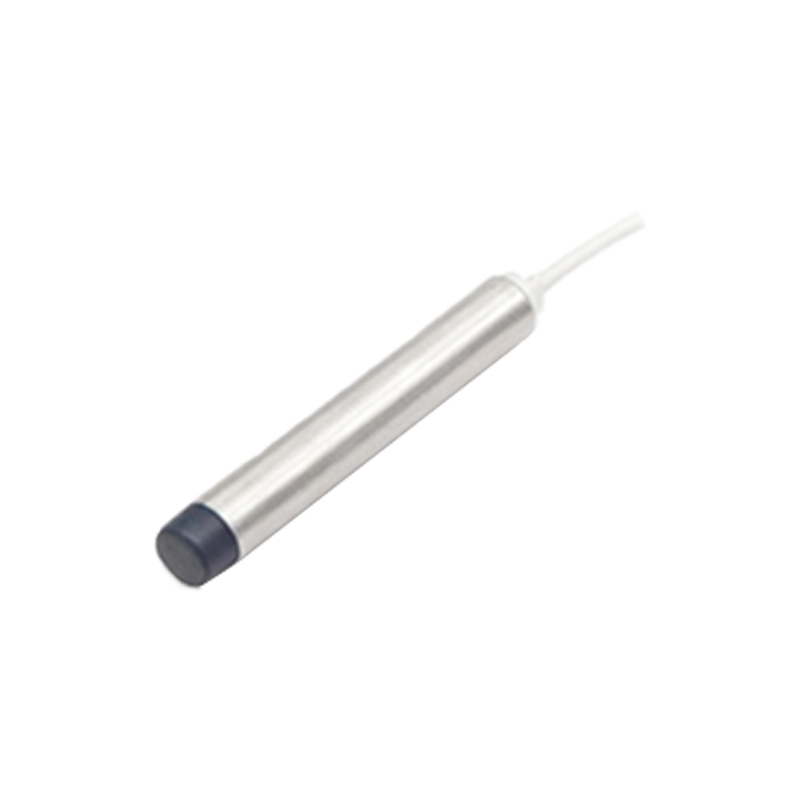
Capacitive Proximity Sensors
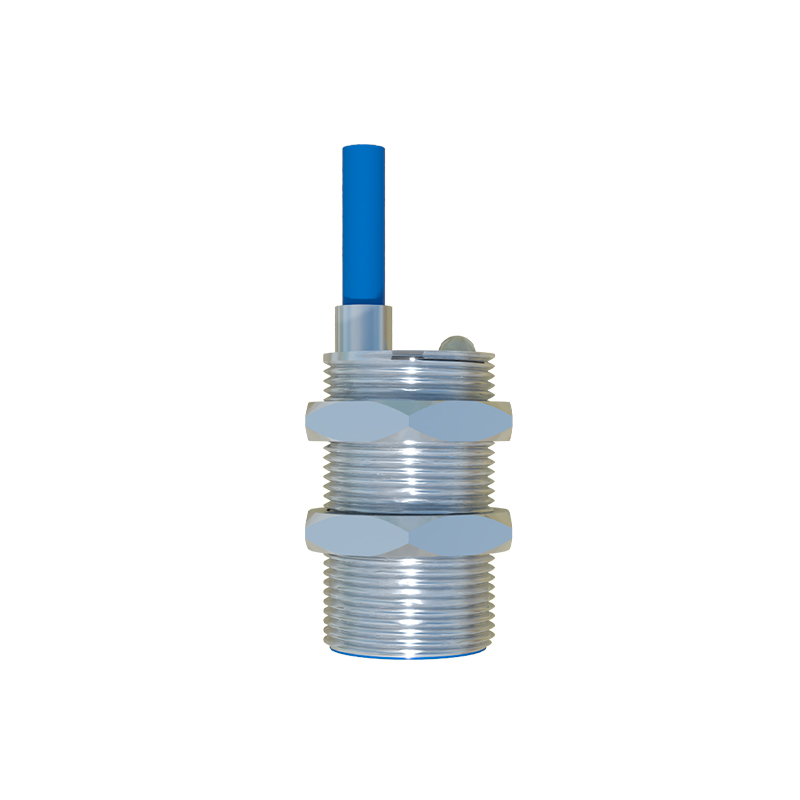
Capacitive sensors can detect both metallic and non-metallic materials, including liquids, plastics, glass, wood, and granular substances. They function by measuring changes in capacitance. The sensor's active face acts as one plate of a capacitor, with the target object acting as the other plate. As an object approaches, it alters the dielectric constant of the space between, changing the capacitance. When this change reaches a preset threshold, the sensor switches its output.
These sensors are ideal for applications involving non-metallic materials. They are frequently employed in level detection for liquids or powders in tanks, material handling for paper or plastic films, and presence detection of filled containers, even through thin non-metallic walls.
Ultrasonic Proximity Sensors
Ultrasonic sensors operate by emitting high-frequency sound waves (typically beyond human hearing) and evaluating the reflected echo. They measure the time interval between sending the signal and receiving the echo to calculate the distance to the target. This principle is known as time-of-flight measurement. They can detect virtually any material, regardless of color, transparency, or surface texture, as long as it reflects sound adequately.
Their primary strengths are long sensing ranges and the ability to perform precise distance measurements. Applications include object detection on high-speed conveyors, liquid level control in large vessels, loop control in winding machines, and collision avoidance in automated guided vehicles (AGVs).
Photoelectric Sensors
Photoelectric sensors use light beams to detect objects. They consist of a light emitter (usually an LED) and a receiver. When the emitted light beam is interrupted or reflected by a target, the change in light intensity at the receiver triggers the output. They are further subdivided into three main modes: Through-beam, Retro-reflective, and Diffuse (proximity) mode.
Through-beam: Comprises separate emitter and receiver units. An object is detected when it breaks the light beam. This mode offers the longest range and highest reliability.
Retro-reflective: Uses a single unit containing both emitter and receiver, along with a reflector. Detection occurs when the object interrupts the beam to the reflector. It is easier to install than through-beam.
Diffuse (Proximity): The emitter and receiver are in one housing. Detection relies on light reflecting directly off the target object. Sensing distance depends on the target's color, reflectivity, and surface texture.
Photoelectric sensors are versatile, capable of detecting small objects over long distances. They are ubiquitous in packaging, material handling, assembly line counting, and door control systems.
Selection Criteria and Conclusion
Choosing the correct proximity sensor involves analyzing several factors: target material (metal, plastic, liquid), required sensing distance, environmental conditions (temperature, contaminants), response speed, output type (PNP/NPN, analog), and electrical requirements.
In summary, inductive sensors excel with metals in tough conditions. Capacitive sensors handle diverse materials, including non-metals. Ultrasonic sensors provide reliable detection and distance measurement for most surfaces over longer ranges. Photoelectric sensors offer high precision and flexibility for clear object detection. A thorough understanding of these types empowers engineers and technicians to design more efficient, reliable, and intelligent automated systems, ensuring optimal performance and productivity across countless industrial applications.