In the realm of industrial automation and control systems, the 24V DC proximity sensor stands as a fundamental and ubiquitous component. Its reliability, versatility, and compatibility with standard industrial voltage levels make it a cornerstone for countless applications, from packaging machinery and automotive assembly lines to material handling and robotic systems. This guide delves into the operational principles, key types, advantages, and critical selection criteria for 24V proximity switches.
At its core, a proximity sensor is a non-contact device designed to detect the presence or absence of an object within its sensing range without any physical contact. The 24V DC specification refers to its operating voltage, which aligns with the prevalent standard for Programmable Logic Controller (PLC) inputs and most industrial control circuitry. This compatibility simplifies wiring, reduces the need for additional power conversion modules, and enhances system integration.
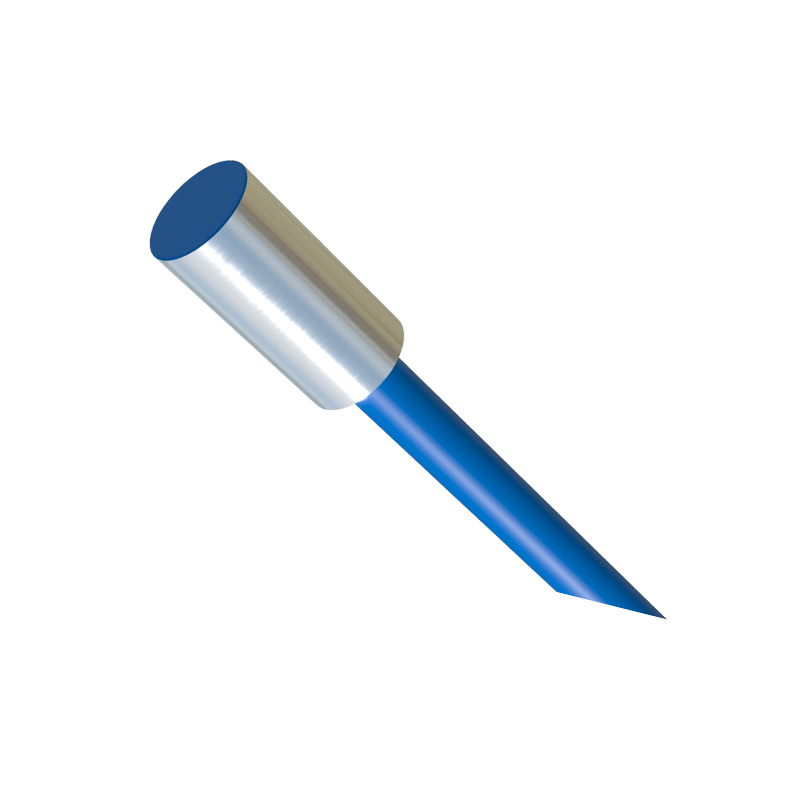
The working principle varies based on the technology employed. The most common types include Inductive, Capacitive, and Magnetic (Reed switch or Hall effect) sensors. Inductive proximity sensors are the workhorses of metal detection. They generate an electromagnetic field from a coil energized by the 24V supply. When a metallic target enters this field, it induces eddy currents, causing a change in the oscillation amplitude. The sensor's internal circuit detects this change and triggers a solid-state switch, changing the output state. These sensors are ideal for detecting ferrous and non-ferrous metals, with sensing ranges typically from a few millimeters to about 60mm.
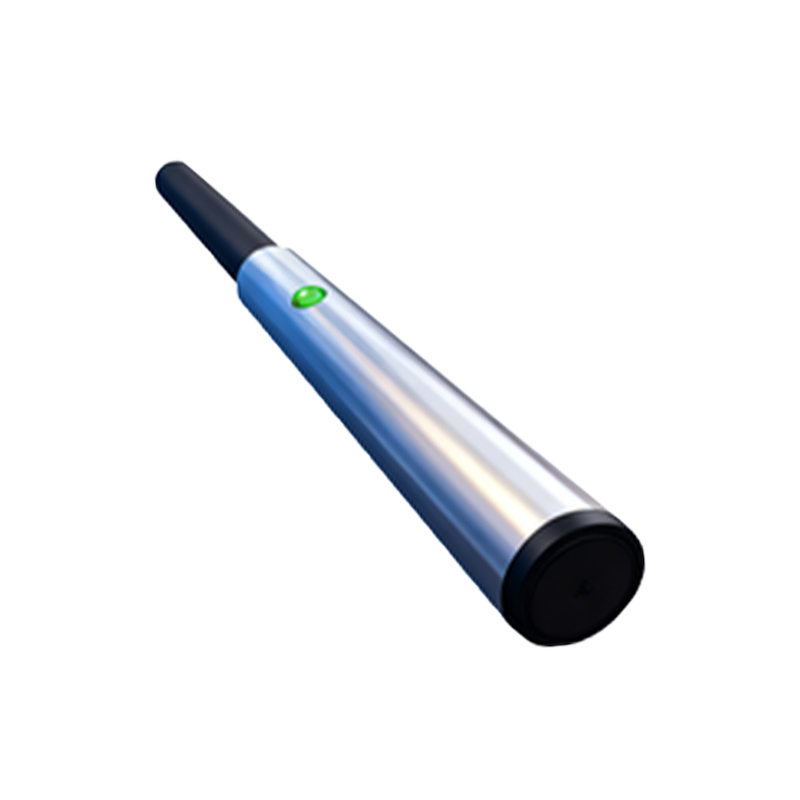
Capacitive proximity sensors, also operating on 24V DC, can detect both metallic and non-metallic materials such as plastics, glass, wood, and liquids. They function by generating an electrostatic field. The entry of any object with a dielectric constant different from air alters the capacitance of the circuit, which is detected to change the output. This makes them perfect for level detection, material handling, and presence verification of non-conductive objects.
Magnetic proximity sensors, including reed switches and Hall-effect sensors, are specifically designed to detect permanent magnets. They are often used in cylinder position sensing and safety door monitoring. When a magnet approaches, the 24V-powered sensor's internal contacts close (reed) or a semiconductor generates a voltage (Hall effect), providing a clean switching signal.
The advantages of using a 24V DC system are significant. Firstly, it is considered a safe extra-low voltage (SELV) in many regions, reducing risks associated with electric shock during installation and maintenance. Secondly, it offers excellent noise immunity compared to lower voltages, minimizing false triggers from electromagnetic interference (EMI) common in industrial environments. The standardized voltage also ensures broad compatibility with other control components.
When selecting a 24V proximity sensor, several parameters are crucial. The Sensing Distance (nominal range) must be chosen with a safety margin (typically 70-80% of nominal) to account for temperature variations and target material differences. The Output Configuration is vital: PNP (sourcing) and NPN (sinking) are the two primary transistor output types, and selection must match the input circuit of the controller (e.g., PLC). A three-wire device (V+, Output, 0V) is standard. Housing Material (often nickel-plated brass or stainless steel) determines environmental robustness. IP (Ingress Protection) Rating (e.g., IP67) indicates resilience against dust and water, essential for harsh conditions. Finally, consider the Switching Frequency for high-speed applications and whether a Normally Open (NO) or Normally Closed (NC) logic is required.
Installation and wiring require attention. Ensure the sensor is mounted securely, free from vibration, and that adjacent metal objects (the "factor 1" effect) do not interfere with its field. Always follow the manufacturer's wiring diagram, correctly connecting the brown wire (typically +24V), blue wire (0V), and black wire (load/output). A protective fuse or circuit breaker is recommended. For long cable runs, use shielded cables to prevent noise pickup.
In conclusion, the 24V proximity sensor is an indispensable tool for modern industrial automation. Its non-contact operation ensures long life and reliability, while its standardized voltage offers seamless integration. By understanding the different technologies—inductive for metals, capacitive for various materials, and magnetic for magnets—and carefully considering specifications like sensing distance, output type, and environmental rating, engineers and technicians can select the optimal sensor to enhance machine efficiency, safety, and productivity. Proper selection, installation, and maintenance of these devices form the bedrock of a responsive and reliable control system.