In the realm of industrial automation and precision manufacturing, laser auto-focus sensors have emerged as a critical technology, enabling unparalleled accuracy and efficiency in processes that demand exact focal positioning. These sophisticated devices utilize laser triangulation or confocal measurement principles to dynamically adjust the focus of optical systems, ensuring optimal performance in applications ranging from semiconductor inspection to additive manufacturing. Unlike traditional mechanical focusing methods, laser auto-focus sensors operate without physical contact, thereby eliminating wear and tear while providing real-time feedback for closed-loop control systems.
The core mechanism of a laser auto-focus sensor involves emitting a focused laser beam onto a target surface. By analyzing the reflected light pattern—often through a position-sensitive detector (PSD) or a CMOS/CCD sensor—the device calculates the distance to the surface with micron-level precision. This data is then processed by an integrated microcontroller, which adjusts the position of the lens or the entire optical assembly to maintain the desired focal plane. Advanced models incorporate adaptive algorithms to compensate for surface irregularities, varying reflectivity, and environmental disturbances such as vibrations or thermal fluctuations.
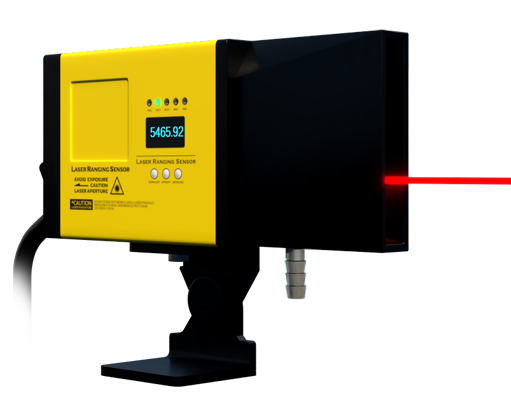
Key advantages of laser auto-focus sensors include their high-speed response, often achieving adjustment times in milliseconds, and their ability to function across diverse materials, including metals, plastics, ceramics, and transparent substrates. In electronics manufacturing, for instance, these sensors are indispensable for PCB drilling and laser marking, where depth consistency is paramount. Similarly, in biomedical engineering, they facilitate precise imaging in microscopy and laser surgery systems. The integration of Industry 4.0 features, such as IoT connectivity and data analytics, further enhances their utility by enabling predictive maintenance and process optimization.
Despite their robustness, challenges persist, such as interference from ambient light or highly reflective surfaces. Modern solutions address these through modulated laser signals, spectral filtering, and intelligent software calibration. As industries push toward miniaturization and higher tolerances, the evolution of laser auto-focus sensors continues, with trends pointing to miniaturized designs, multi-spectral capabilities, and enhanced AI-driven autonomy. Ultimately, these sensors represent a cornerstone of smart manufacturing, driving advancements in quality control, throughput, and operational safety.
For engineers and system integrators, selecting the appropriate laser auto-focus sensor requires careful consideration of parameters like measurement range, resolution, repeatability, and environmental ratings. Collaboration with specialized suppliers can ensure tailored solutions that meet specific application demands, fostering innovation across sectors from aerospace to consumer electronics. As technology progresses, the convergence of laser sensing with robotics and digital twins promises to redefine precision engineering, making laser auto-focus sensors an enduring asset in the industrial toolkit.