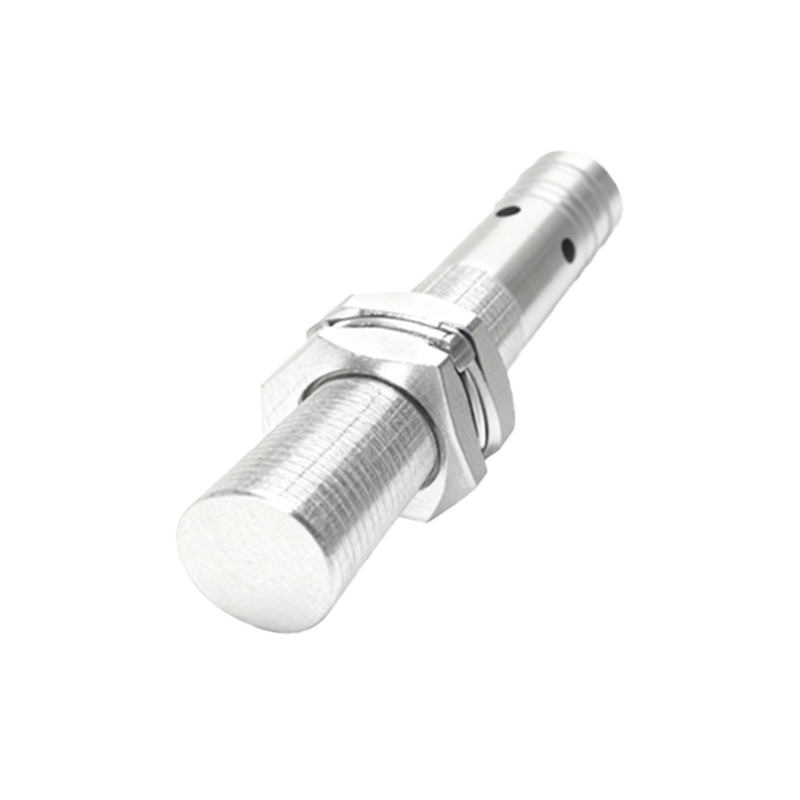
In the realm of industrial automation, proximity sensors are indispensable components for non-contact detection of objects. Among the most widely used threaded barrel types are the M8 and M12 sensors, known for their compact design and reliable performance. A fundamental specification for these sensors is their sensing distance, which directly impacts application suitability and system design. This article delves into the typical detection ranges for M8 and M12 inductive and capacitive proximity sensors, exploring the factors that influence these distances and providing guidance for selection.
Firstly, it is crucial to distinguish between the two primary sensing technologies: inductive and capacitive. Inductive proximity sensors are designed to detect metallic objects. They generate an electromagnetic field, and the presence of a metal target within this field induces eddy currents, causing a change in the sensor's oscillation amplitude, which triggers the output. For standard inductive sensors with an M8 threaded housing, the typical sensing distance, often referred to as the nominal sensing distance (Sn), ranges from 1 mm to 2 mm. Some specialized models with embedded or shielded designs may offer distances at the lower end of this range, while unshielded (non-flush) versions might achieve up to 2 mm. The smaller size of the M8 sensor inherently limits the size of its coil, which is the core component generating the electromagnetic field, thus constraining its effective range.
In contrast, the M12 inductive proximity sensor, with its larger physical diameter, accommodates a larger coil. This allows for a more robust electromagnetic field. Consequently, the standard sensing distance for an M12 inductive sensor is typically between 2 mm and 4 mm. Again, this can vary based on the design (shielded or unshielded) and the specific target material. For instance, steel targets are detected at the nominal distance, while non-ferrous metals like aluminum or copper may require a reduction factor, effectively shortening the usable sensing range.
Capacitive proximity sensors operate on a different principle. They can detect both metallic and non-metallic materials (liquids, plastics, wood, etc.) by measuring changes in capacitance. The sensing distance for capacitive sensors is generally shorter than their inductive counterparts for a given housing size. For an M8 capacitive sensor, the standard sensing distance is quite limited, often around 1 mm to 1.5 mm, and can be highly dependent on the material's dielectric constant. The M12 capacitive sensor offers a more practical range, typically from 2 mm to 3 mm for standard materials. These sensors often feature a potentiometer for sensitivity adjustment, allowing the user to fine-tune the sensing distance to the specific application and material, though the maximum range is still constrained by the sensor's physical design.
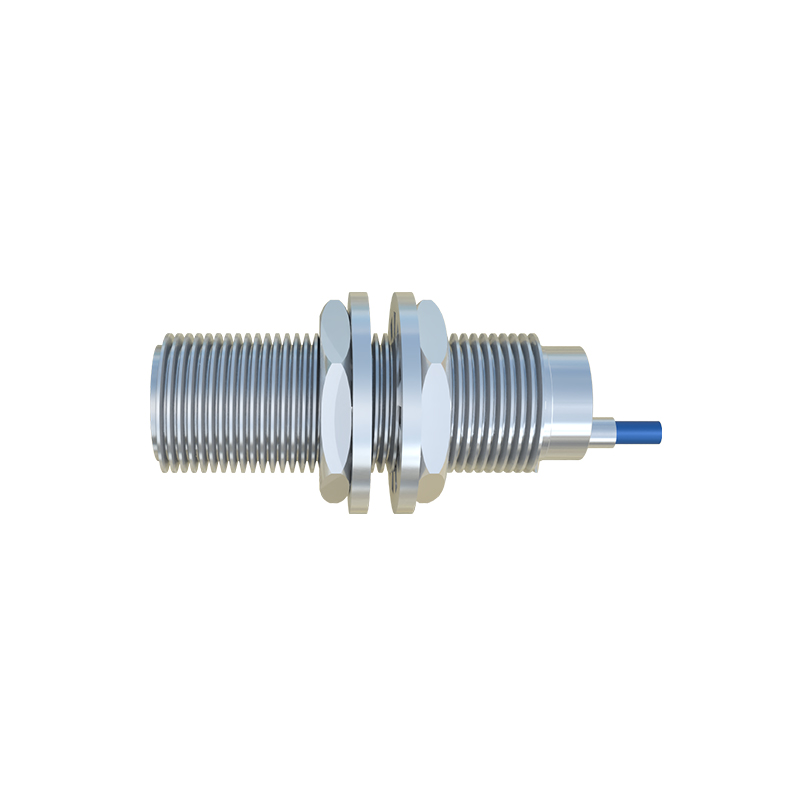
Several key factors influence the stated nominal sensing distance. The first is the target material. For inductive sensors, as mentioned, steel is the reference. A reduction factor of 0.3 to 0.8 is commonly applied for non-ferrous metals. For capacitive sensors, materials with higher dielectric constants (like water) can be detected from farther away than those with low constants (like dry wood). The second factor is the sensor design. Shielded (flush-mountable) sensors have their sensing field focused to the front, allowing them to be installed flush with metal without interference, but this design slightly reduces the nominal distance compared to unshielded (non-flush) sensors, which have a larger lateral field but cannot be mounted flush. Thirdly, environmental conditions such as temperature extremes or the presence of strong electromagnetic fields can affect performance. Finally, manufacturing tolerances mean the actual sensing distance of any individual sensor may vary, typically within a ±10% range of the nominal value.
When selecting between an M8 and M12 sensor based on detection distance, the primary consideration is the required range versus the available installation space. M12 sensors are the clear choice when a longer sensing distance (4 mm or less for inductive) is necessary. They are also more robust and often offer a wider range of output configurations (PNP/NPN, NO/NC). The M8 sensor is ideal for high-density applications where space is at a premium, such as in small machinery, robotic grippers, or PCB handling equipment, where detection needs are within a very close proximity. Always consult the manufacturer's datasheet for the exact specifications, as advanced models with built-in amplifiers or specialized designs can sometimes exceed these typical ranges. Understanding these fundamental specifications ensures reliable sensor integration, minimizing downtime and optimizing the efficiency of automated systems.