In industrial automation and machinery design, embedded proximity sensors play a pivotal role in enabling non-contact detection, enhancing reliability, and saving space. These sensors are integrated directly into mechanical structures or assemblies, offering seamless operation in harsh environments. This article delves into the common types of embedded proximity sensors, their working principles, and typical applications.
Inductive proximity sensors are widely used for detecting metallic objects. They generate an electromagnetic field and sense changes when a metal target enters the field. Embedded inductive sensors are often housed in stainless steel or nickel-plated brass bodies, making them suitable for embedding in metal fixtures or machine frames. Key variants include shielded (flush-mountable) and unshielded types. Shielded sensors can be mounted flush with surrounding metal without affecting their sensing range, ideal for compact designs. Unshielded types offer longer sensing distances but require non-metallic surroundings. Common applications include position sensing in CNC machines, robotic arms, and automated assembly lines.
Capacitive proximity sensors detect both metallic and non-metallic materials, such as plastics, liquids, or granular substances. They operate by measuring changes in capacitance caused by the presence of a target. Embedded capacitive sensors are often encapsulated in robust materials like PBT or epoxy resin, allowing them to be integrated into containers, conveyors, or processing equipment. These sensors are valuable in industries like food and beverage, where they monitor fill levels, or in packaging systems detecting cardboard or glass.
Magnetic proximity sensors, including reed switches and Hall effect sensors, respond to magnetic fields. Embedded magnetic sensors are compact and can be sealed within actuators, cylinders, or mobile machinery parts. Reed switches consist of ferromagnetic contacts that close under a magnetic field, while Hall effect sensors generate voltage changes. They are commonly embedded in pneumatic cylinders for end-position detection or in safety doors to confirm closure without physical contact.
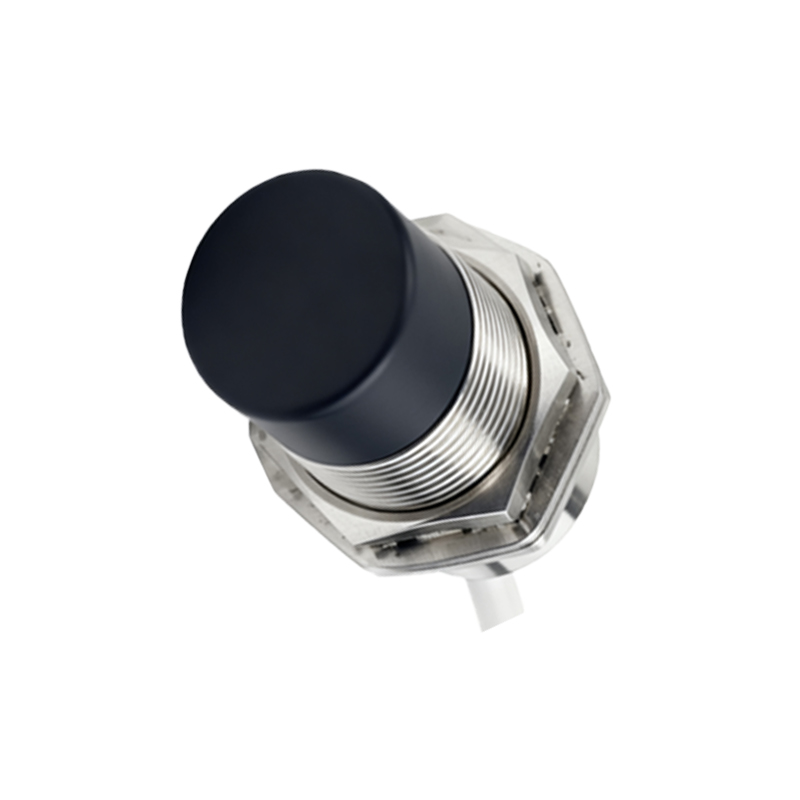
Ultrasonic proximity sensors use sound waves to detect objects, regardless of material composition. Embedded ultrasonic sensors are designed with integrated transducers and electronics, often potted to protect against dust, moisture, or vibrations. They can be mounted within tanks, automotive assemblies, or material handling systems to measure distance or presence, such as in liquid level control or obstacle detection for AGVs (Automated Guided Vehicles).
Photoelectric sensors, though less commonly embedded due to size constraints, include fiber-optic variants that can be deeply integrated. These sensors emit light beams and detect reflections or interruptions. Embedded fiber-optic probes are threaded into tight spaces, like in semiconductor manufacturing or medical devices, for precise object detection.
Key considerations when selecting embedded proximity sensors include environmental factors (temperature, IP ratings), sensing range, output types (PNP/NPN, analog), and mounting requirements. Proper embedding ensures protection from mechanical stress, chemicals, or electrical interference, extending sensor lifespan.
In summary, embedded proximity sensors—inductive, capacitive, magnetic, ultrasonic, and photoelectric—offer versatile solutions for modern automation. Their integration enhances system efficiency, reduces maintenance, and supports Industry 4.0 initiatives. Engineers should evaluate application-specific needs to choose the optimal type, ensuring robust and reliable performance.