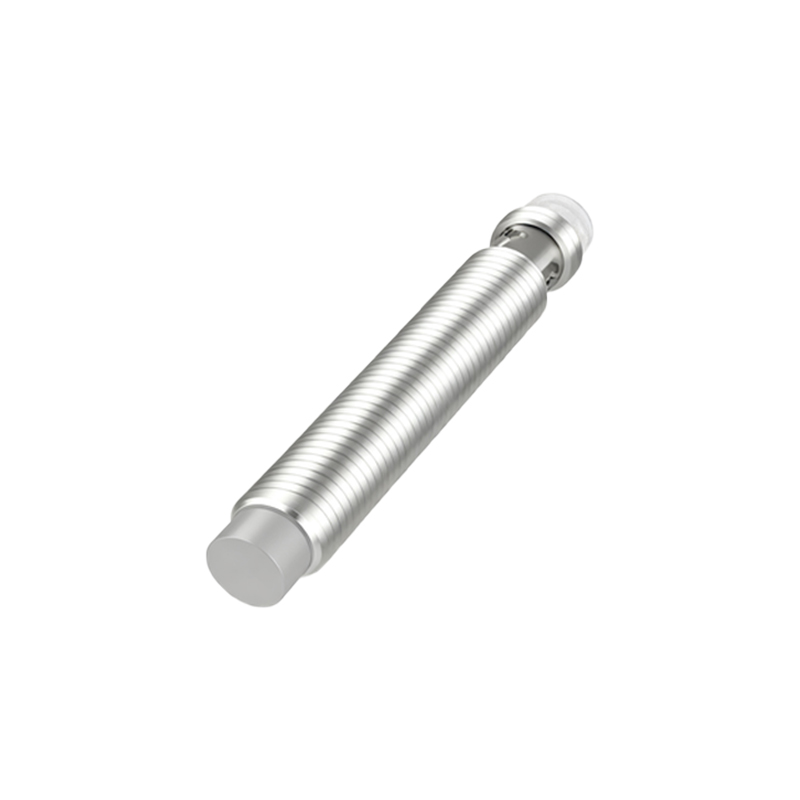
In the vast landscape of industrial automation, the ability to detect objects without physical contact has been a cornerstone of efficiency and safety. Among the various sensing technologies, long-range proximity sensors stand out as critical components for modern, large-scale operations. These devices are engineered to detect the presence or absence of objects at distances significantly greater than their standard counterparts, often spanning from several centimeters to multiple meters. This capability is transforming how industries monitor, control, and secure processes over extensive areas.
The core principle behind most long-range proximity sensors involves the emission of an energy field—be it electromagnetic, ultrasonic, or optical—and the analysis of the reflected signal. Inductive sensors, for instance, generate an oscillating electromagnetic field to detect metallic objects, with specialized long-range models utilizing optimized coil designs and advanced circuitry to extend their sensing distance. Capacitive sensors, sensitive to both metallic and non-metallic materials, achieve greater ranges through increased electrode surface area and sophisticated signal processing to distinguish the target from environmental noise. However, for the longest ranges, photoelectric and ultrasonic sensors are typically the champions. Photoelectric sensors, using modulated infrared or laser light, can reliably detect objects tens of meters away, while ultrasonic sensors use high-frequency sound waves for detection in challenging environments with dust, smoke, or varying colors.
The global adoption of these sensors is driven by their application in complex and expansive industrial scenarios. In logistics and material handling, they enable the precise tracking of containers and pallets across vast warehouse yards, automating inventory management and guiding automated guided vehicles (AGVs) over long travel paths. In the automotive industry, they are integral to large assembly lines, monitoring the position of vehicle bodies on overhead conveyors that stretch across factory buildings. For outdoor applications, such as in mining, agriculture, or port management, ruggedized long-range sensors monitor stockpile levels, control large gate and barrier systems, and ensure the safe positioning of cranes and heavy machinery.
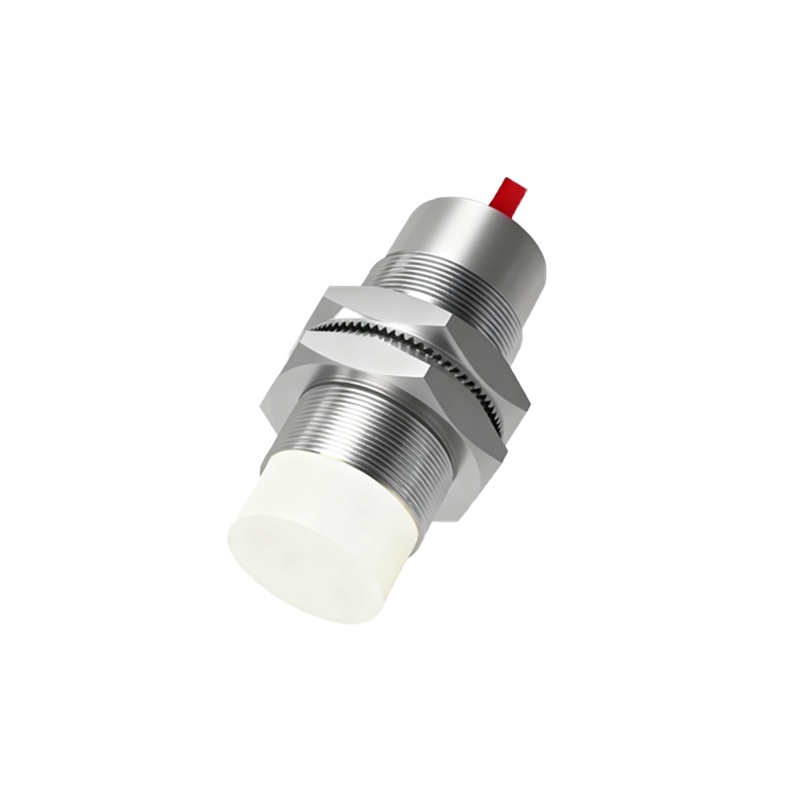
A key trend in the worldwide market is the integration of smart features and Industrial Internet of Things (IIoT) connectivity. Modern long-range sensors are no longer simple binary switches. They are equipped with IO-Link, Ethernet/IP, or PROFINET interfaces, providing detailed diagnostic data such as signal strength, temperature, and device health. This data can be transmitted over long distances via industrial networks to centralized control systems or cloud platforms, enabling predictive maintenance, remote configuration, and seamless integration into broader digital twin ecosystems. This connectivity ensures that even sensors deployed in remote or hazardous locations can be monitored and managed from a central operations center.
The selection and deployment of a long-range proximity sensor require careful consideration of several factors beyond just the nominal sensing distance. Environmental conditions are paramount. Sensors intended for outdoor use must have high Ingress Protection (IP) ratings (e.g., IP67, IP69K) to withstand rain, dust, and temperature extremes. For applications involving heavy vibration or mechanical shock, robust housing and secure mounting are essential. The nature of the target object—its size, material, color, and surface texture—directly influences the effective range and must be accounted for during sensor tuning. Furthermore, potential optical or acoustic interference from other equipment in the facility must be evaluated to prevent false triggering.
Looking ahead, the evolution of long-range sensing technology continues. Advancements in time-of-flight (ToF) optical sensors and radar-based technologies are pushing detection ranges even further while improving accuracy and resistance to environmental interference. The fusion of sensor data with artificial intelligence for pattern recognition and anomaly detection is opening new frontiers in predictive analytics and autonomous system control. As industries worldwide strive for greater autonomy, efficiency, and safety in large-scale operations, the role of the long-range proximity sensor will only become more pivotal. These devices are the essential, long-reaching "eyes" and "ears" of the automated industrial world, providing the critical data needed to connect and control processes across continents and supply chains.