In the landscape of modern industrial manufacturing, precision is paramount. Among the array of technologies enabling this precision, laser thickness measurement sensors stand out as a critical tool for quality control and process optimization. These non-contact sensors utilize the principles of laser triangulation or time-of-flight measurement to accurately gauge the thickness of materials in real-time, without physical interaction with the target surface.
The core operation of a laser thickness sensor typically involves emitting a focused laser beam onto the material surface. In a common triangulation setup, the reflected light is captured by a detector at a known angle. By calculating the displacement of the laser spot on the detector, the sensor's internal processor determines the distance to the surface. When two such sensors are aligned on opposite sides of a material, their combined distance readings, subtracted from the fixed distance between the sensors, yield the material's thickness with high accuracy. This method is exceptionally effective for continuous production lines, such as those in metal rolling, plastic film extrusion, glass manufacturing, and paper production.
Key advantages of laser-based thickness measurement are numerous. First, the non-contact nature eliminates risks of material deformation, surface damage, or sensor wear, which are common concerns with contact methods like calipers or roller gauges. This is particularly vital for measuring soft, delicate, hot, or moving materials. Second, laser sensors offer extremely high resolution and repeatability, often down to the sub-micron level, ensuring consistent product quality. Third, their high measurement speed—capable of thousands of readings per second—allows for 100% inline inspection, enabling immediate feedback and adjustment to the manufacturing process. This real-time capability helps in minimizing material waste, reducing downtime, and ensuring compliance with stringent industry specifications.

Modern laser thickness sensors are integrated with sophisticated features. They often incorporate environmental compensation algorithms to account for factors like ambient temperature fluctuations or vibration, which could otherwise affect accuracy. Advanced models may include multi-point scanning, which measures thickness across the entire width of a web or sheet, identifying variations like edge curl or center bulge. Connectivity through industrial protocols (e.g., Ethernet/IP, Profinet) allows seamless data integration into factory automation systems and Industrial Internet of Things (IIoT) platforms for comprehensive analytics and predictive maintenance.
When selecting a laser thickness sensor for an application, several factors must be considered. The material's optical properties are crucial; for instance, transparent films may require sensors with specific wavelengths or configurations to avoid erroneous readings from internal reflections. The required measurement range, resolution, and the environmental conditions (presence of dust, steam, or extreme temperatures) also dictate the sensor choice. Proper installation and alignment are critical, as misalignment can lead to systematic errors. Regular calibration against known standards is necessary to maintain long-term accuracy.
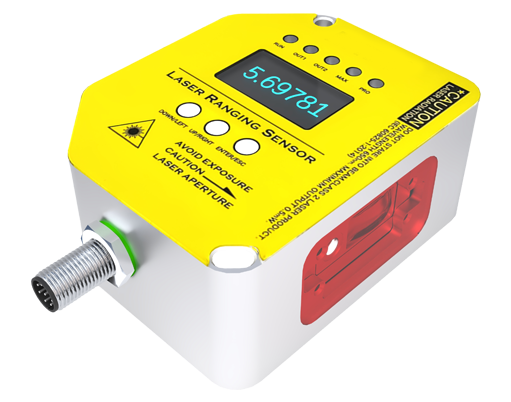
In conclusion, laser thickness measurement sensors are indispensable in driving efficiency and quality in contemporary industry. By providing fast, accurate, and reliable thickness data without contact, they empower manufacturers to achieve tighter tolerances, enhance product consistency, and optimize resource utilization. As technology advances, these sensors are becoming more intelligent, robust, and integrated, further solidifying their role as a cornerstone of smart, data-driven manufacturing processes. Their continued evolution promises even greater contributions to productivity and innovation across diverse industrial sectors.