In the realm of industrial automation and quality control, precision measurement is not merely a requirement; it is the cornerstone of efficiency, safety, and product excellence. Among the myriad of technologies enabling this precision, laser displacement sensors stand out for their non-contact, high-speed, and highly accurate capabilities. Boan, as a prominent name in the field of industrial sensing, offers a comprehensive range of laser displacement sensors designed to meet the rigorous demands of modern manufacturing, robotics, and research applications. This article delves into the technology, key features, and diverse applications of Boan laser displacement sensors, highlighting why they are a preferred choice for engineers and technicians worldwide.
At its core, a Boan laser displacement sensor operates on the principle of optical triangulation or, in some advanced models, time-of-flight measurement. In the common triangulation method, a laser diode projects a focused beam onto the target surface. The reflected light is then captured by a high-resolution CMOS or PSD (Position Sensitive Device) receiver at a specific angle. Any change in the distance to the target causes a shift in the position of the laser spot on the receiver. This displacement is calculated with exceptional accuracy by the sensor's internal processor, providing a precise digital or analog output corresponding to the target's position, thickness, or profile. This non-contact method is crucial for measuring delicate, hot, fast-moving, or otherwise inaccessible objects without causing wear or interference.
Boan sensors are engineered with several distinguishing features that set them apart in a competitive market. First and foremost is their remarkable accuracy and resolution, often reaching the micron or even sub-micron level. This is complemented by a high sampling rate, allowing for real-time measurement of rapidly moving production lines or vibrating components. The sensors typically feature a compact and robust housing, rated with high IP grades for resistance to dust, water, and oil, making them suitable for harsh industrial environments. User-friendly configurability is another hallmark; many models offer intuitive software interfaces for setting measurement ranges, output modes, and filtering parameters. Furthermore, Boan provides sensors with various laser types (red or blue laser) to optimize performance for different surface materials, colors, and finishes, overcoming challenges like low reflectivity or transparent objects.
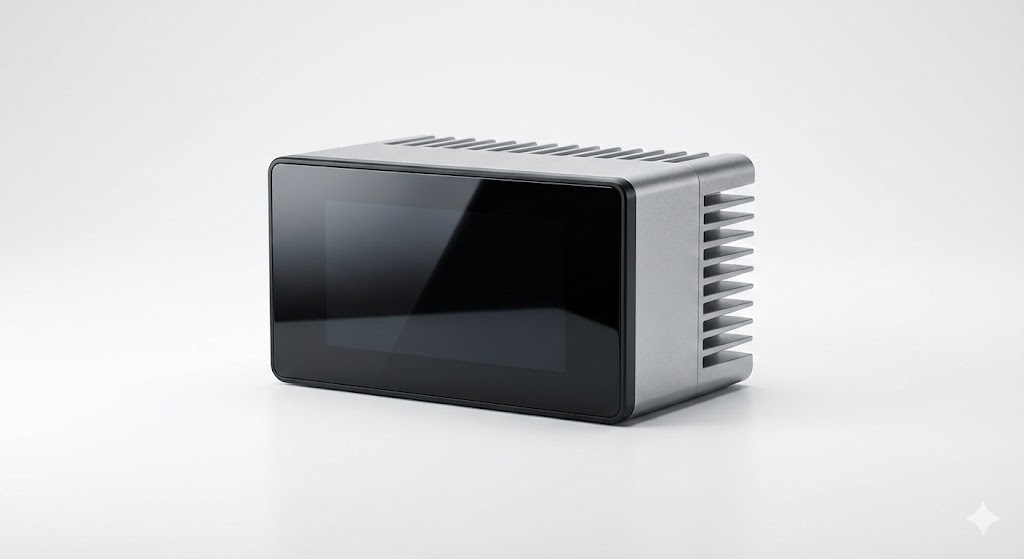
The application spectrum for Boan laser displacement sensors is vast and continually expanding. In automotive manufacturing, they are indispensable for measuring gap and flush between body panels, inspecting brake disc thickness, and controlling robot welding paths. In the electronics industry, these sensors ensure the precise height and coplanarity of components on printed circuit boards (PCBs) and measure the thickness of semiconductor wafers. They play a critical role in metal processing for monitoring roller gaps, sheet flatness, and part dimensions. Beyond traditional manufacturing, they are used in robotics for precise object positioning and bin picking, in logistics for parcel dimensioning, and in civil engineering for structural deformation monitoring. Their ability to generate 2D profiles by scanning also enables complex shape inspection and reverse engineering.

Selecting the right Boan sensor involves careful consideration of several parameters. The measuring range, from a few millimeters to several meters, must match the application. The required accuracy and repeatability will dictate the sensor's class. The target's surface properties—whether it is shiny, dark, rough, or transparent—will influence the choice of laser wavelength and receiver technology. Environmental factors such as ambient light, temperature fluctuations, and potential contaminants must also be accounted for to ensure stable, long-term operation. Boan's extensive portfolio typically includes options tailored for these varied conditions, and consulting their technical documentation or application engineers is highly recommended for optimal selection.
In conclusion, Boan laser displacement sensors represent a fusion of advanced optical engineering and practical industrial design. They provide a reliable, high-performance solution for the exacting measurement tasks that define contemporary industry. By enabling non-contact, high-speed, and ultra-precise data acquisition, they empower businesses to enhance product quality, optimize processes, reduce waste, and drive innovation. As industries evolve towards greater automation and smarter factories, the role of precise sensing technologies like those offered by Boan will only become more central, solidifying their status as a fundamental tool in the engineer's arsenal for building the future of manufacturing.