In the realm of industrial automation and precision engineering, the monitoring of fan performance has evolved from rudimentary vibration analysis to sophisticated, non-contact measurement systems. Among these, laser displacement sensors have emerged as a transformative technology, offering unparalleled accuracy and reliability for critical applications in HVAC systems, data center cooling, industrial exhaust, and aerospace propulsion. Unlike traditional methods that rely on physical contact or indirect parameters, laser sensors provide direct, real-time data on blade deflection, rotational speed, imbalance, and structural integrity.
The fundamental principle involves projecting a focused laser beam onto a target point on a fan blade. The sensor precisely measures the time-of-flight or phase shift of the reflected light to calculate the exact distance to the blade surface. As the fan rotates, this distance measurement changes minutely with each blade pass. High-speed sampling rates, often exceeding 50 kHz, allow the sensor to capture these micro-vibrations and positional changes. This raw distance data is then processed through specialized algorithms to extract key performance indicators.
One of the primary applications is the detection of dynamic imbalance. Even a minor mass imbalance in a fan assembly induces centrifugal forces, causing shaft wobble and excessive vibration. A laser sensor positioned axially can measure the periodic axial runout of the hub or blade tips. Simultaneously, a radially oriented sensor can detect radial displacement. By analyzing the amplitude and phase of these displacement signals relative to a once-per-revolution tachometer pulse, engineers can pinpoint the imbalance magnitude and angular location with micron-level precision. This enables on-site balancing without disassembly, drastically reducing downtime.
Predictive maintenance is another critical domain revolutionized by this technology. Gradual faults like blade fatigue, hub cracking, or bearing wear manifest as subtle changes in vibration signatures long before catastrophic failure. Continuous laser monitoring establishes a baseline "health" profile. Advanced analytics then track deviations from this baseline, such as the emergence of specific harmonic frequencies or changes in the blade's natural frequency. For instance, a developing crack alters the local stiffness of a blade, shifting its resonant frequency. Laser sensors, with their high bandwidth, can detect these shifts during operation, triggering alerts for scheduled intervention. This shift from time-based to condition-based maintenance prevents unplanned outages and extends equipment lifespan.

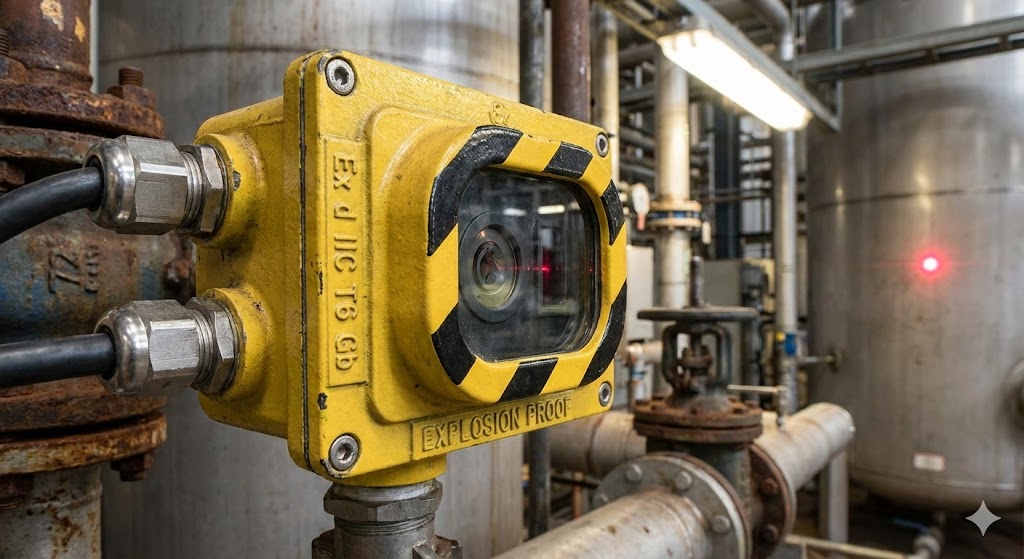
Furthermore, laser sensors excel in harsh environments where physical contact is impossible or undesirable. In high-temperature exhaust systems or cleanrooms, sensor heads can be mounted outside a viewing window, measuring through the glass. Their immunity to electromagnetic interference makes them ideal for installations near powerful motors or variable-frequency drives. Modern models are also equipped with robust housings (IP67/IP68 ratings) to withstand dust, moisture, and mechanical shock.
The integration of this data into Industrial IoT (IIoT) platforms represents the next frontier. Wireless laser sensor nodes can transmit real-time displacement data to cloud-based analytics engines. Here, machine learning models correlate fan performance with other process variables like airflow, pressure, and temperature. This holistic view enables system-level optimization, predicting not just component failure but also efficiency degradation. For example, blade fouling or erosion, detected as a change in aerodynamic profile via laser scanning, directly impacts fan efficiency and energy consumption.
In conclusion, the adoption of laser sensor technology for fan measurement marks a significant leap forward in operational reliability and intelligence. It provides a direct window into the mechanical state of rotating equipment, enabling precise diagnostics, accurate balancing, and truly predictive maintenance strategies. As sensor technology advances, becoming more compact, affordable, and integrated with AI-driven analytics, its role in ensuring the safety, efficiency, and longevity of fan systems across all industries will only become more indispensable. The future of fan monitoring is not just about sensing vibration; it's about precisely measuring displacement and interpreting its meaning for smarter, more resilient operations.