Proximity sensors are indispensable components in modern industrial automation, enabling non-contact detection of objects within a specified range. These devices enhance efficiency, safety, and reliability across various sectors, including manufacturing, automotive, and packaging. Understanding the different types of proximity sensors is crucial for selecting the right technology for specific applications. This guide explores the primary categories, their operating principles, advantages, and typical use cases.
The most common type is the inductive proximity sensor. It operates by generating an electromagnetic field and detecting changes caused by metallic objects. When a metal target enters the sensor's field, it induces eddy currents, which alter the oscillation amplitude. This change triggers the sensor's output switch. Inductive sensors are highly durable, resistant to environmental factors like dust and moisture, and excel in detecting ferrous and non-ferrous metals. Typical applications include position sensing in machinery, metal detection in conveyor systems, and part counting in assembly lines. However, they are limited to metallic objects and have a relatively short sensing range, usually up to 60 mm.
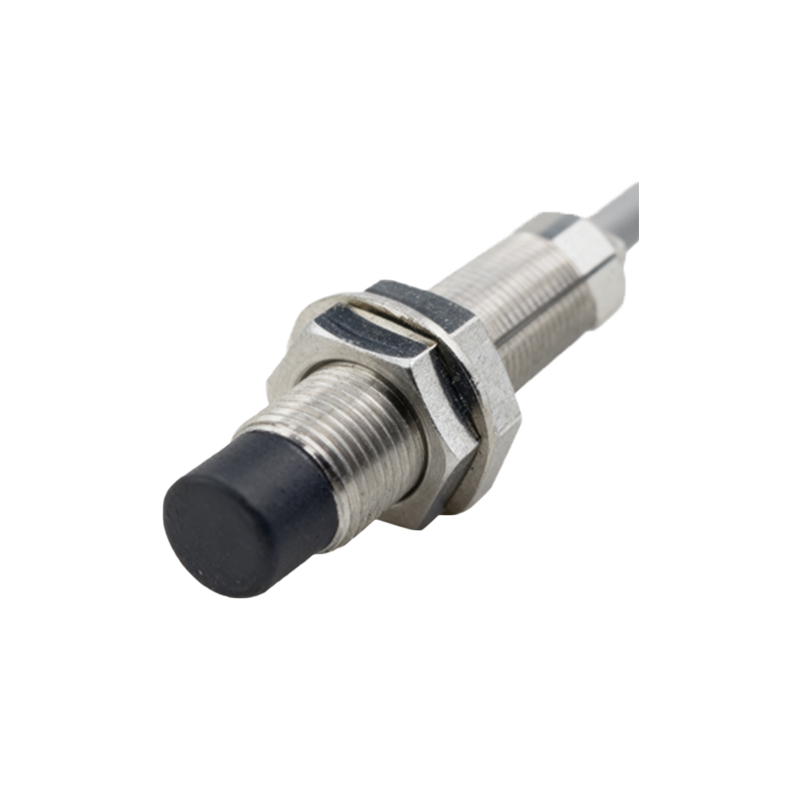
Capacitive proximity sensors, on the other hand, can detect both metallic and non-metallic materials, such as plastics, liquids, glass, and wood. They function by measuring changes in capacitance between the sensor's electrode and the target object. When an object approaches, it alters the dielectric constant of the sensor's electrostatic field, leading to a capacitance shift that activates the output. These sensors are versatile and suitable for level detection in tanks, material handling, and presence sensing of non-metallic items. They offer sensing distances up to 40 mm but can be sensitive to environmental factors like humidity and temperature variations.
Magnetic proximity sensors utilize a reed switch or Hall effect mechanism to detect magnetic fields, typically from permanent magnets. The reed switch version consists of two ferromagnetic blades sealed in a glass tube; when a magnet approaches, the blades attract and close the circuit. Hall effect sensors generate a voltage proportional to the magnetic field strength. Magnetic sensors are ideal for harsh environments with high temperatures, vibrations, or contaminants, as they are fully sealed. Common uses include position sensing in cylinders, door and window security systems, and speed detection in automotive applications. Their sensing range is generally limited to 100 mm, depending on the magnet's strength.
Ultrasonic proximity sensors employ sound waves beyond human hearing to detect objects. They emit ultrasonic pulses and measure the time taken for echoes to return after hitting a target. By calculating the distance based on sound speed, these sensors can detect a wide variety of materials, regardless of color, transparency, or surface texture. They offer longer sensing ranges, up to several meters, and are effective in challenging conditions like fog or dust. Applications include distance measurement, liquid level control, and object detection in automated guided vehicles (AGVs). Drawbacks include potential interference from acoustic noise and slower response times compared to other types.

Optical proximity sensors, also known as photoelectric sensors, use light beams to detect objects. They consist of a light emitter (usually LED or laser) and a receiver. When an object interrupts or reflects the light beam, the receiver detects the change and triggers an output. These sensors are categorized into through-beam, retro-reflective, and diffuse reflective types, each with distinct advantages. Through-beam sensors offer the longest range and high accuracy, while diffuse reflective sensors are compact and easy to install. Optical sensors can detect virtually any material and are widely used in packaging, robotics, and safety systems. However, they may be affected by ambient light, dirt, or color variations.
In summary, selecting the appropriate proximity sensor depends on factors such as target material, environmental conditions, required sensing distance, and cost. Inductive sensors are best for metals in rugged settings, capacitive sensors for diverse materials, magnetic sensors for extreme environments, ultrasonic sensors for long-range detection, and optical sensors for precision and versatility. By leveraging these technologies, industries can optimize automation processes, reduce downtime, and improve overall operational efficiency. As technology advances, smart sensors with integrated diagnostics and connectivity are becoming more prevalent, further enhancing their role in the Industrial Internet of Things (IIoT).