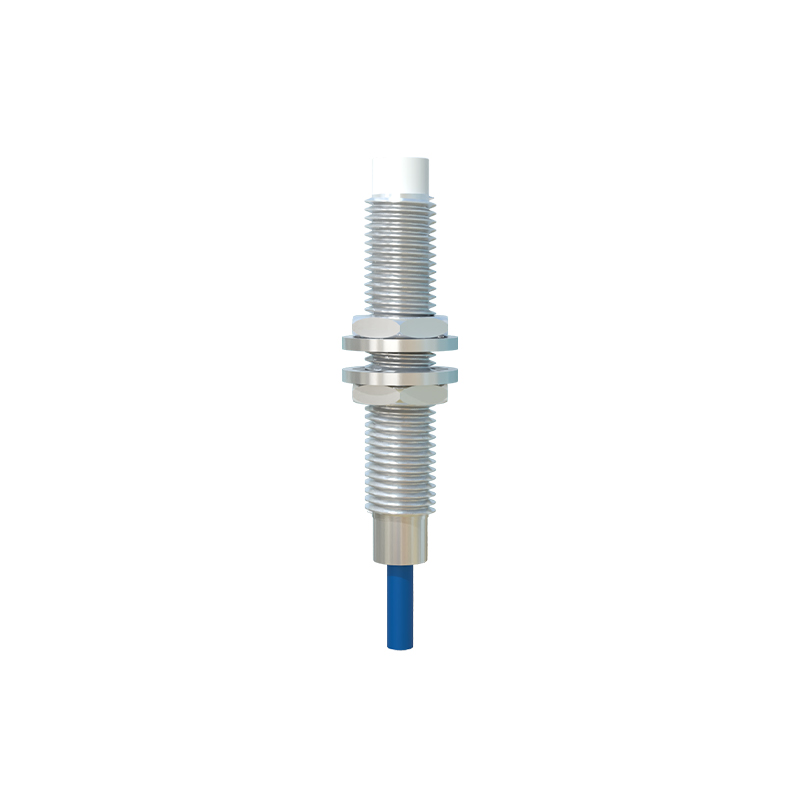
M18 proximity sensors are among the most widely used industrial sensing devices globally, prized for their robust performance, versatility, and standardized form factor. Understanding their precise dimensions is critical for proper integration into machinery, enclosures, and automated systems. This guide delves into the detailed specifications, mounting considerations, and application insights surrounding M18 sensor dimensions, tailored for electrical engineers and system designers.
The term "M18" refers explicitly to the sensor's threaded barrel diameter, which is 18 millimeters. This standardized threading, typically conforming to the metric fine thread specification M18x1.0 or M18x1.5, allows for easy installation into matching threaded holes in mounting brackets or machine frames. The overall length of an M18 sensor, however, is not standardized and varies significantly based on the sensing technology (inductive, capacitive, or photoelectric), sensing range, and built-in features like embedded amplifiers or special housings. A standard shielded (flush-mountable) inductive proximity sensor might have a barrel length of 40mm to 70mm from the mounting nut to the sensing face. Unshielded (non-flush) variants, which offer longer sensing distances, are often slightly longer. It is imperative to consult the manufacturer's datasheet for the exact model.
Beyond the barrel, key dimensional features include the sensing face diameter, mounting nut dimensions, and cable or connector outlet. The active sensing surface at the end of the barrel is usually smaller than 18mm. The hex nut, used for tightening the sensor, typically has a width across flats of 24mm or 27mm, requiring a standard wrench for installation. Designers must account for this wrenching clearance in the layout. The rear of the sensor may feature a fixed, integral cable or a standardized quick-disconnect connector, such as a 4-pin M12 or M8 micro-connector. The inclusion and type of connector add to the sensor's total envelope and must be considered for rear clearance.
Mounting considerations are paramount. For shielded (flush-mountable) sensors, the metal barrel can be installed flush with a metal mounting surface without affecting performance, allowing for a very compact design. Unshielded sensors require a specific clearance around the sensing face from surrounding metal to operate correctly; this non-ferrous zone is usually specified as a multiple of the sensor's diameter. Engineers must also plan for the necessary space behind the mounting nut to accommodate the sensor body, any embedded status LEDs, and the cable/connector bend radius. Failure to provide adequate rear clearance is a common installation error leading to damage.
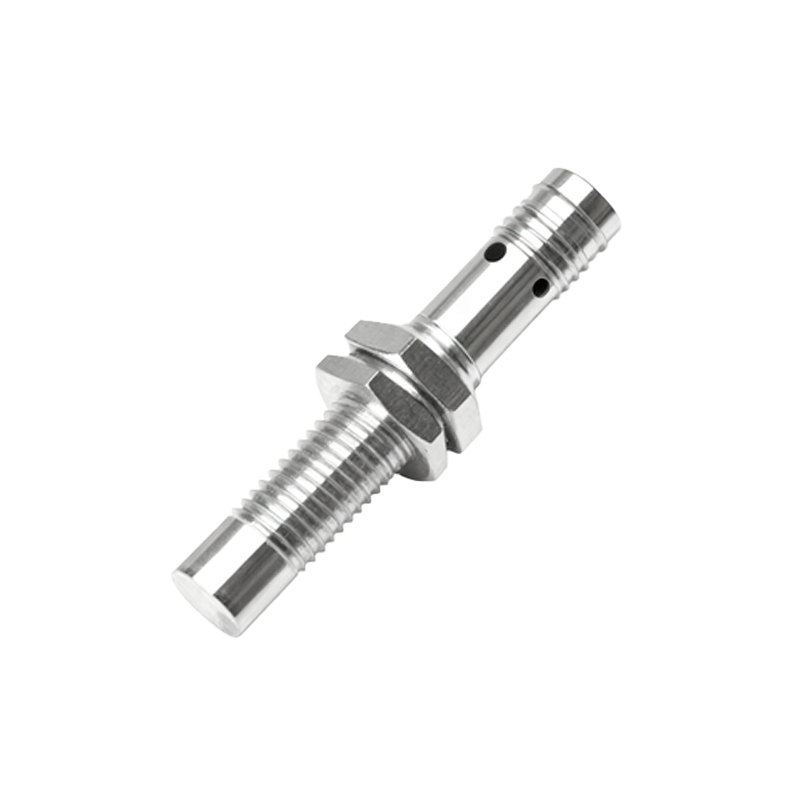
The compact M18 size offers an excellent balance between sensing performance and space efficiency. It provides a larger sensing range and often more robust construction than smaller M12 or M8 sensors, while remaining significantly more space-saving than M30 sensors. This makes the M18 ideal for applications with moderate space constraints but demanding sensing requirements, such as in robotic end-effectors, conveyor line monitoring, machine tooling position feedback, and automated assembly stations.
When selecting an M18 sensor, the dimensional checklist should include: 1) Total length (barrel + housing), 2) Thread length and pitch (e.g., M18x1.0), 3) Hex nut size for wrenching, 4) Sensing face diameter, 5) Required front and rear clearances, and 6) Connector type or cable length/strain relief dimensions. Adhering to these specifications ensures reliable operation, prevents mechanical interference, and facilitates maintenance. Always cross-reference the mechanical drawing in the product datasheet, as even sensors with identical electrical specifications from different manufacturers can have subtle dimensional differences that impact interchangeability in tight spaces.