In industrial automation, safety systems, and smart building applications, the precise detection of human presence within a defined range is paramount. Among various sensing distances, the 30cm (approximately 11.8 inches) range for human proximity sensors has emerged as a critical specification for numerous interactive and safety-critical functions. This article delves into the operational principles, key technologies, and practical applications of proximity sensors optimized for this specific detection distance.
Proximity sensors designed for a 30cm range typically utilize non-contact sensing technologies. The most common are capacitive and infrared (IR) sensors, each with distinct mechanisms. Capacitive sensors detect changes in an electrostatic field caused by the presence of a human body, which acts as a dielectric. These sensors are highly effective for short-range, direct proximity detection and are less affected by ambient light conditions. Their sensitivity can be finely tuned to distinguish a human hand or body from other objects at around 30cm. Conversely, active infrared sensors, often employing modulated IR LEDs and phototransistors, detect the reflection of infrared light from a target. Time-of-flight (ToF) or phase-shift measurement principles in some advanced IR sensors enable precise distance measurement, making 30cm a configurable and reliable threshold.
The selection of a 30cm range is not arbitrary. It represents a strategic balance between responsiveness and practicality. In human-machine interfaces (HMI) on industrial machinery, a 30cm detection zone can activate a control panel or display without physical contact, enhancing hygiene and reducing wear. For safety light curtains and access control systems, this distance provides a crucial buffer, initiating a machine slowdown or a warning signal before an operator enters a hazardous zone. In consumer electronics and smart appliances, such as automatic faucets, soap dispensers, or gesture-controlled devices, 30cm is an intuitive range for user interaction, close enough for deliberate activation yet far enough to prevent accidental triggers.
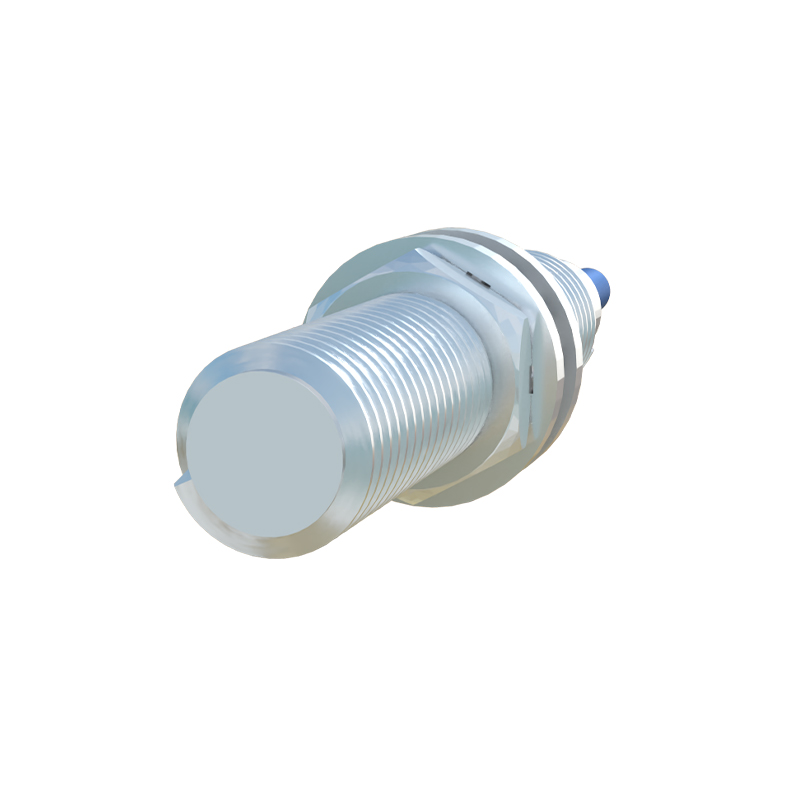
Achieving consistent and reliable 30cm detection involves several engineering considerations. Sensor calibration is vital to compensate for environmental variables like temperature, humidity, and the presence of non-target materials. Shielding and housing design are crucial to minimize false triggers from lateral interference or background objects. For instance, a well-designed capacitive sensor will have a focused sensing field, while an IR sensor may incorporate lenses to shape its beam angle. Furthermore, integrating digital signal processing (DSP) allows for filtering noise and implementing algorithms that can differentiate between a steady approach and transient environmental changes.
In application, these sensors are ubiquitous. On factory floors, they enable touchless operation of equipment, crucial in cleanrooms or food processing. In public spaces, they automate doors and sanitization equipment, with 30cm being a common standard for activation. Automotive interiors use them for gesture control of infotainment systems, where a 30cm range allows for intuitive mid-air commands. The evolution towards the Industrial Internet of Things (IIoT) sees these sensors providing valuable presence data for occupancy analytics and predictive maintenance in smart buildings.
However, challenges persist. Different clothing materials, skin tones, or environmental contaminants can slightly affect detection consistency, particularly for capacitive sensors. IR sensors may face difficulties with highly reflective or absorbent surfaces. Therefore, system integrators must conduct thorough on-site testing. The future points towards sensor fusion—combining capacitive, IR, and even ultrasonic sensing—to create robust systems that maintain high accuracy at the 30cm benchmark across diverse conditions.
In conclusion, the 30cm human proximity sensor is a sophisticated component that blends physics, electronics, and practical ergonomics. Its widespread adoption underscores its effectiveness in creating safer, more hygienic, and more intuitive interactions between humans and technology. As sensing technology advances, this specific range will continue to be a fundamental parameter in designing responsive and intelligent automated systems.