In the realm of precision measurement and industrial automation, two technologies stand out for their ability to deliver accurate, non-contact data: fiber optic sensors and laser sensors. While both serve similar overarching purposes, their underlying principles, construction, and ideal use cases differ significantly. Understanding these distinctions is crucial for engineers and system designers to select the optimal technology for a given application.
Fiber optic sensors operate by using light transmitted through an optical fiber—a thin strand of glass or plastic. The core principle involves modulating a property of this light—such as its intensity, phase, wavelength, or polarization—in response to an external environmental parameter like temperature, pressure, strain, or vibration. The sensor itself is often the fiber, or a specially treated section of it. Changes in the measured parameter alter the characteristics of the light traveling through the fiber. A photodetector at the other end analyzes these changes to derive precise measurements. A key advantage is their passive nature; they require no electrical power at the sensing point, making them intrinsically safe for use in explosive or high-voltage environments. They are also highly resistant to electromagnetic interference (EMI), a critical factor in electrically noisy industrial settings. Their flexibility and small size allow them to be embedded into structures like bridges, aircraft wings, or pipelines for continuous health monitoring. However, their systems can be complex, often requiring sophisticated signal processing equipment, and may have a higher initial cost for simpler applications.
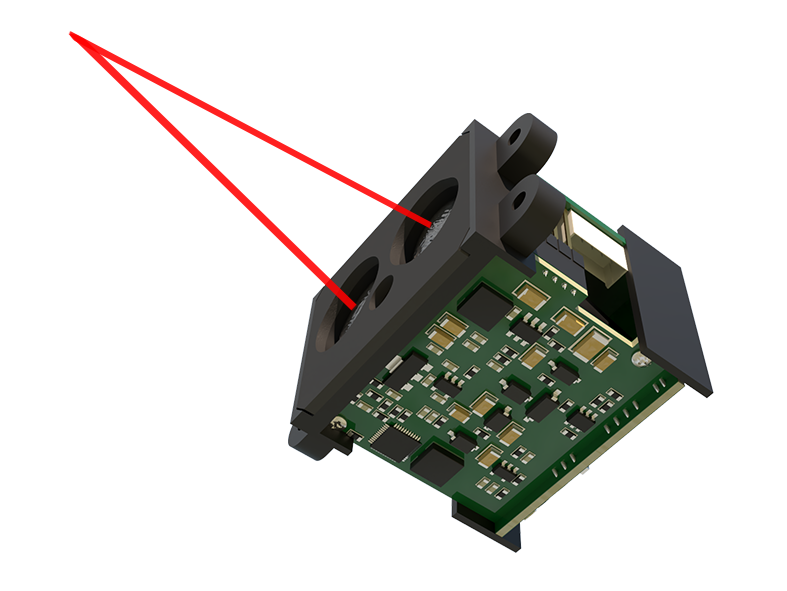
Laser sensors, in contrast, typically refer to devices that use a focused, coherent laser beam as a probing tool. The most common types are laser displacement sensors and laser triangulation sensors. They work by projecting a laser spot onto a target surface. The reflected light is captured by a receiving element, such as a CCD or CMOS array. By analyzing the position or the time-of-flight of the reflected beam, the sensor can calculate precise measurements of distance, height, thickness, or profile. Their primary strengths lie in exceptional speed, very high resolution over short to medium ranges, and excellent spot definition. They excel in applications requiring fast, precise dimensional checks, such as in automotive part inspection, electronics assembly, and robotics guidance. However, the performance of laser sensors can be degraded by the target's surface properties—highly reflective, transparent, or dark absorbent surfaces can scatter or poorly reflect the beam, leading to measurement errors. They are also generally point-based sensors and are more susceptible to ambient light interference than their fiber optic counterparts, though modern models have mitigations for this.
The choice between the two often hinges on the specific demands of the application. For harsh environments characterized by extreme temperatures, high EMI, or explosive atmospheres, fiber optic sensors are frequently the default choice. Their ability to perform distributed sensing over kilometers of fiber is unmatched, making them ideal for monitoring large-scale infrastructure like pipelines, dams, and power cables. In the medical field, their small size and biocompatibility enable minimally invasive diagnostic tools.
Laser sensors dominate in high-speed manufacturing and quality control. Their non-contact, high-precision measurement is perfect for verifying part dimensions, detecting surface defects, or aligning components on a fast-moving production line. 3D profiling and contour scanning are areas where laser triangulation sensors are particularly powerful.

In some advanced systems, the technologies converge. Fiber optic cables can be used to deliver laser light to a remote or hazardous sensing location, combining the environmental robustness of fibers with the precise probing capability of a laser. This hybrid approach underscores the complementary nature of these two powerful sensing paradigms.
Ultimately, neither technology is universally superior. Fiber optic sensors offer unparalleled resilience and versatility for environmental and structural monitoring in tough conditions. Laser sensors provide unbeatable speed and accuracy for precise geometric measurements in controlled industrial settings. A clear assessment of the measurement environment, target properties, required speed, and precision will guide the selection towards the most effective and reliable solution.