In the realm of industrial automation and machinery, proximity sensors are indispensable components for non-contact detection. Among the myriad of options available, the E2B-S08L stands out as a reliable and widely utilized model. This article delves into the technical specifications, operational principles, key features, and practical applications of the E2B-S08L inductive proximity sensor, providing a comprehensive guide for engineers and procurement specialists.
The E2B-S08L is an inductive proximity sensor, a type of sensor that generates an electromagnetic field to detect the presence of metallic objects without physical contact. Its fundamental operating principle is based on electromagnetic induction. The sensor contains an oscillator circuit that creates a high-frequency alternating magnetic field at its sensing face. When a metallic target enters this field, eddy currents are induced on the target's surface. This causes a change in the oscillation amplitude within the sensor, which is then detected by a trigger circuit. This change subsequently switches the sensor's output state, sending a signal to the connected controller, such as a PLC.
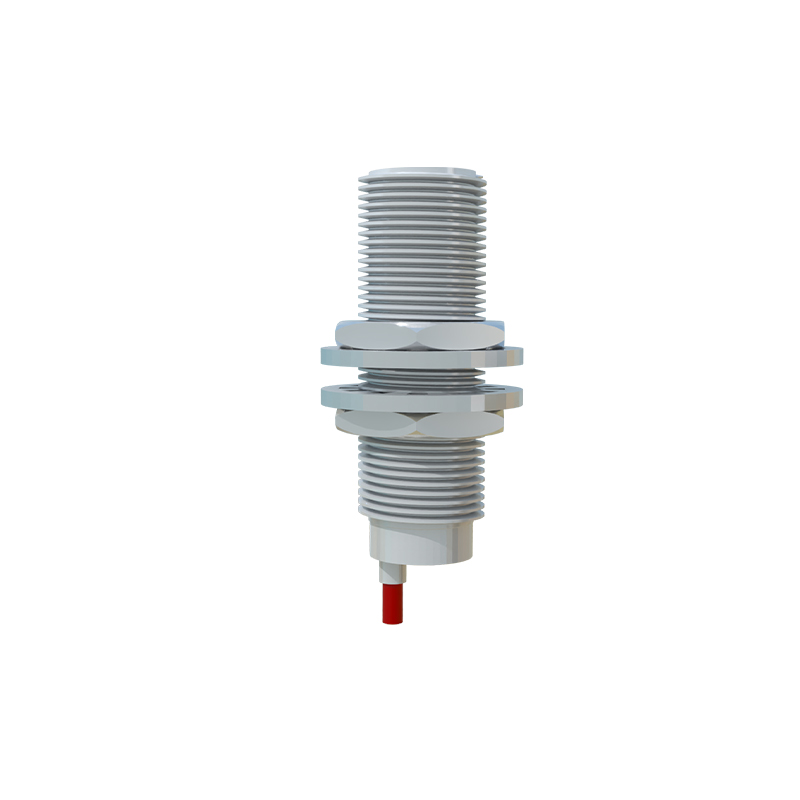
A key specification of the E2B-S08L is its 8mm diameter cylindrical housing, denoted by the "S08" in its model number. This compact form factor allows for installation in space-constrained applications. The "L" suffix typically indicates a certain housing material or specific variant, often a standard nickel-plated brass barrel offering good environmental resistance. The sensor is designed for flush mounting, meaning it can be embedded in a metal bracket without a gap, though its sensing distance might be slightly reduced compared to non-flush mounting. Its standard sensing distance is rated, commonly around 2mm for mild steel, but this can vary slightly depending on the target material's properties, such as size, shape, and composition.
The electrical characteristics of the E2B-S08L are crucial for system integration. It is commonly available in both NPN (sourcing) and PNP (sinking) output configurations, providing flexibility to match different PLC input card requirements. The output type is typically a 3-wire DC configuration, requiring a supply voltage, usually in the range of 10-30 VDC. The output is a solid-state switch, ensuring fast response times and a long operational life with no moving parts to wear out. Its switching frequency is sufficiently high for most high-speed counting or positioning tasks on production lines.
One of the standout features of the E2B-S08L is its robust construction. It is built to withstand harsh industrial environments. Many variants offer ingress protection ratings such as IP67, making them resistant to dust and temporary immersion in water. This durability ensures reliable operation in settings with coolants, oils, metal chips, and vibrations. Furthermore, it incorporates built-in protection against short-circuits, reverse polarity, and surge voltages, enhancing system reliability and reducing downtime.
The applications for the E2B-S08L are vast across manufacturing and processing industries. It is frequently employed for position detection, such as verifying the presence of a cylinder in its end position or confirming that a workpiece is correctly placed on a fixture. It serves excellently in part counting on conveyor systems, where it detects each passing metal component. In machine tools, these sensors monitor tool presence or detect the end of a material feed. They are also integral to safety interlocking systems, though for personnel safety, specifically designed safety sensors are mandated.
When selecting an E2B-S08L or any proximity sensor, several factors must be considered. First, identify the target material; inductive sensors only detect metals, with different sensitivity for steel, aluminum, and copper. The required sensing distance and the available space for mounting dictate the housing size and style. The electrical characteristics—supply voltage, output type (NPN/PNN), and current capacity—must be compatible with the control system. Environmental conditions like temperature extremes, exposure to chemicals, or washdown requirements will influence the choice of housing material and sealing rating. Finally, considering the connection method, whether pre-wired cable or quick-disconnect connector, impacts maintenance and installation ease.
In summary, the E2B-S08L proximity sensor represents a workhorse in industrial sensing. Its combination of compact design, reliable inductive sensing technology, robust environmental sealing, and electrical protection makes it a versatile and dependable choice for countless automation tasks. By understanding its specifications and aligning them with application requirements, engineers can ensure optimal performance, enhanced machine efficiency, and reduced maintenance costs in their automated systems.