The 218B proximity sensor represents a pivotal advancement in industrial automation, designed to detect the presence or absence of metallic objects without physical contact. Its structural configuration is meticulously engineered to ensure reliability, durability, and precision in diverse operational environments. This article delves into the structural composition and underlying principles of the 218B sensor, elucidating its functionality from an engineering perspective.
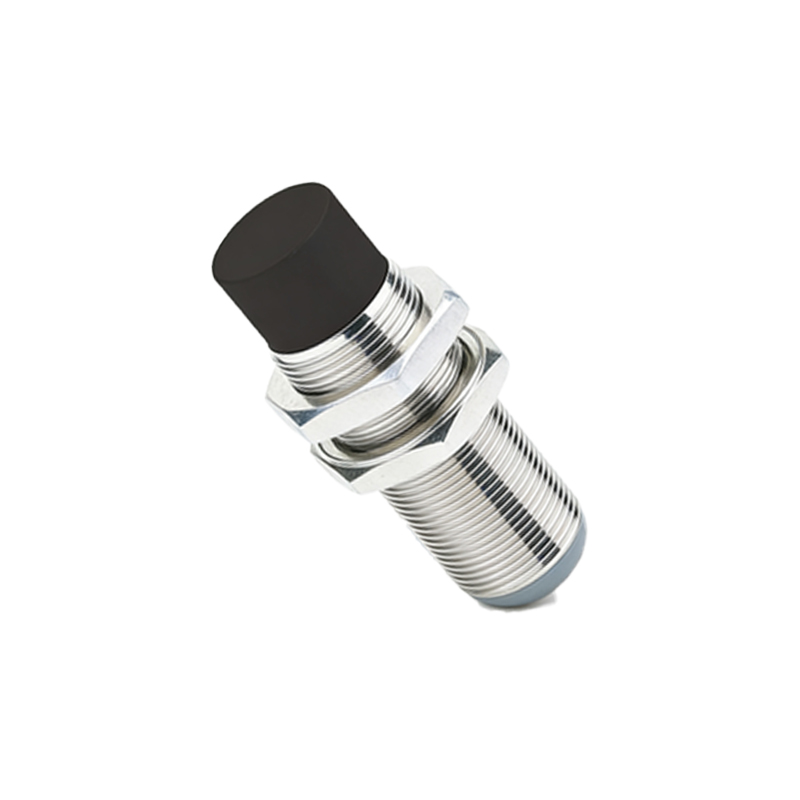
Structurally, the 218B sensor comprises several integral components: a sensing coil, oscillator circuit, demodulator, trigger circuit, and output stage, all encapsulated within a robust housing typically constructed from nickel-plated brass or stainless steel. The sensing coil, wound around a ferrite core, is the heart of the device. When energized by the oscillator circuit, it generates a high-frequency electromagnetic field that extends from the active face of the sensor. This field is sensitive to conductive materials, particularly ferrous and non-ferrous metals. Upon the intrusion of a metallic target into the detection zone, eddy currents are induced on the target's surface. These eddy currents draw energy from the oscillator, resulting in a measurable attenuation of the electromagnetic field amplitude. The demodulator circuit converts this amplitude change into a direct current signal, which is then processed by the trigger circuit. Once the signal surpasses a predefined threshold, the output stage switches states—transitioning from high to low or vice versa, depending on the sensor's configuration (e.g., normally open or normally closed). This switching action provides a clear digital signal to connected control systems, such as PLCs (Programmable Logic Controllers), facilitating automated decision-making in machinery.
The operational principle of the 218B is rooted in electromagnetic induction, specifically the eddy current effect. Unlike capacitive or ultrasonic sensors, the 218B is inherently immune to non-metallic substances like plastics, wood, or liquids, making it ideal for applications in metal detection, position sensing, and object counting in manufacturing lines. Its design incorporates shielding to minimize interference from adjacent sensors or external electromagnetic noise, ensuring stable performance even in densely packed installations. Key parameters influencing its functionality include sensing distance, which is typically rated up to 15 mm for standard models, response frequency (often exceeding 1 kHz), and environmental resistance to factors like temperature fluctuations, vibration, and moisture—often conforming to IP67 protection standards.
In practical applications, the 218B sensor is deployed in scenarios such as conveyor belt monitoring, robotic arm positioning, and safety interlocks. For instance, in automotive assembly lines, it verifies the presence of engine components before welding operations, thereby preventing defects. The sensor's output is commonly interfaced via PNP or NPN transistor configurations, compatible with a wide range of industrial voltages (10-30 VDC). Maintenance considerations involve periodic calibration to account for wear or environmental drift, though the solid-state design generally ensures long service life with minimal downtime.
Advancements in the 218B series include enhanced temperature tolerance (operating ranges from -25°C to 70°C) and embedded diagnostics, such as LED indicators for status monitoring. Engineers must account for factors like target material, size, and approach angle during installation, as these affect sensing accuracy. For example, larger targets or those with higher conductivity may increase the effective detection range, while oblique approaches could reduce sensitivity. Comparative analysis with other proximity sensor types—like inductive, capacitive, or photoelectric—highlights the 218B's specialization for metallic environments, where speed and reliability are paramount.
In summary, the 218B proximity sensor exemplifies a harmonized blend of structural robustness and electromagnetic precision. Its ability to deliver non-contact detection with high repeatability underpins modern industrial automation, contributing to efficiency and safety. Future iterations may integrate IoT capabilities for predictive maintenance, but the core structural principles discussed here remain foundational to its operation. Understanding these aspects enables engineers to optimize deployment, troubleshoot issues, and leverage the sensor's full potential in complex systems.