In the realm of industrial automation and control systems, proximity sensors stand as fundamental components, enabling non-contact detection of objects with high reliability and precision. Original equipment manufacturer (OEM) proximity sensors, in particular, represent the gold standard, offering guaranteed performance, longevity, and seamless integration. This article provides a comprehensive overview of original proximity sensors, detailing their operating principles, primary types, key applications, and essential selection criteria.
At its core, a proximity sensor is a device that detects the presence or absence of an object within its sensing range without any physical contact. It achieves this by emitting an electromagnetic field, beam, or acoustic waves and then looking for changes in the field or return signal. The absence of mechanical contact eliminates wear and tear, making these sensors exceptionally durable and suitable for harsh industrial environments. Original sensors from reputable manufacturers are engineered with high-quality materials and undergo rigorous testing to ensure consistent operation under specified conditions, including extreme temperatures, humidity, vibration, and exposure to chemicals.
The most prevalent types of original proximity sensors are inductive, capacitive, and photoelectric. Inductive proximity sensors are the workhorses of metal detection. They generate an oscillating electromagnetic field from a coil. When a metallic object enters this field, it induces eddy currents, causing a change in the oscillation amplitude. This change is detected by the sensor's circuitry, triggering an output signal. They are ideal for detecting ferrous and non-ferrous metals and are widely used in machine automation, such as counting metal parts, monitoring position, and as safety interlocks.
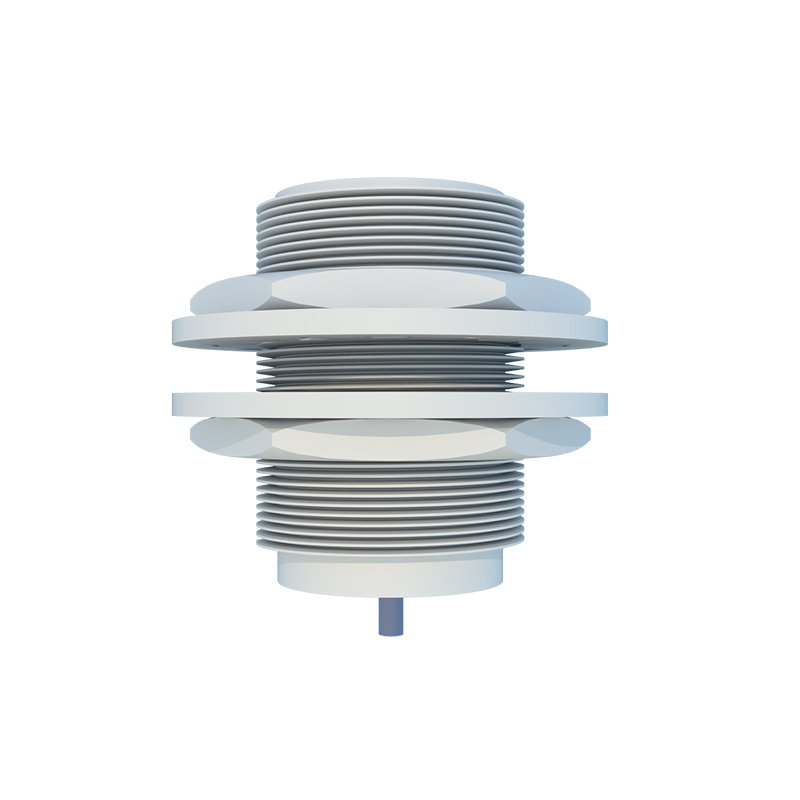
Capacitive proximity sensors, on the other hand, can detect both metallic and non-metallic materials, including liquids, powders, plastics, and wood. They function by generating an electrostatic field. Any object with a dielectric constant different from air entering this field alters the capacitance of the circuit, which is detected by the sensor. This makes them versatile for applications like liquid level detection, material handling, and detecting filled or empty containers on production lines.
Photoelectric sensors utilize light beams to detect objects. They consist of an emitter (light source) and a receiver. When an object interrupts or reflects the light beam, the receiver detects the change, and the sensor switches its output. They offer the longest sensing ranges among proximity sensors and are excellent for detecting objects of any material, provided they are not perfectly transparent. Common configurations include through-beam, retro-reflective, and diffuse reflective models. They are indispensable in packaging, material handling, and assembly automation for tasks like object counting, positioning, and break detection.
Selecting the right original proximity sensor requires careful consideration of several parameters. First, the sensing distance, or nominal range, must be appropriate for the application, typically with a safety margin. The target material dictates the sensor type: inductive for metals, capacitive for a broader range, and photoelectric for long-range or precise detection. The housing material is critical for environmental compatibility; stainless steel or nickel-plated brass housings offer excellent resistance to corrosion and mechanical impact. Output configuration (NPN/PNP, NO/NC) must match the control system's input requirements. Additionally, factors like switching frequency, temperature rating, and protection class (IP rating) are vital for ensuring reliable operation in the intended environment.

Original proximity sensors from established brands provide not only superior performance but also comprehensive technical documentation, consistent quality, and reliable global support. They are designed to meet international standards and certifications, ensuring safety and interoperability. Investing in original sensors minimizes downtime, reduces maintenance costs, and enhances the overall efficiency and safety of automated systems.
In conclusion, original proximity sensors are sophisticated, reliable devices that form the sensory backbone of modern industrial automation. Understanding their types, operating principles, and key selection factors empowers engineers and technicians to design robust, efficient, and safe control systems. By specifying original components, one ensures system integrity, long-term reliability, and optimal performance across countless applications, from simple presence detection to complex robotic guidance.