In today's fast-paced industrial landscape, the demand for high-precision, real-time measurement solutions has never been greater. Real-time laser distance sensors have emerged as a cornerstone technology, enabling unparalleled accuracy, speed, and reliability in a multitude of applications. These advanced devices operate on the principle of emitting a laser beam toward a target object and calculating the distance by analyzing the reflected light. The most common methods include time-of-flight (ToF), phase-shift, and triangulation, each suited for specific ranges and accuracy requirements.
The core advantage of real-time laser sensors lies in their non-contact measurement capability. Unlike mechanical probes or ultrasonic sensors, laser sensors do not physically touch the target, eliminating the risk of damage to both the sensor and the object. This is particularly crucial in delicate manufacturing processes, such as semiconductor fabrication or precision assembly of electronic components. Furthermore, their ability to deliver instantaneous readings—often in microseconds—makes them indispensable for dynamic processes like robotic guidance, conveyor belt monitoring, and automated quality control.
Industrial integration of these sensors has revolutionized sectors like automotive, aerospace, and logistics. In automotive production lines, for instance, laser sensors are deployed for gap and flush measurement between body panels, ensuring consistent build quality. In warehouse automation, they facilitate real-time inventory tracking and pallet dimensioning, optimizing storage space and logistics efficiency. The aerospace industry relies on them for precise alignment of aircraft components and surface inspection, where even micron-level deviations can have significant implications.
Modern real-time laser distance sensors are equipped with sophisticated features that enhance their performance and adaptability. Many models offer high-resolution analog outputs, digital interfaces (such as IO-Link or Ethernet/IP), and programmable logic for seamless integration into Industrial Internet of Things (IIoT) ecosystems. Advanced signal processing algorithms filter out environmental noise, such as ambient light or vibrations, ensuring stable readings in harsh industrial environments. Some sensors also incorporate integrated temperature compensation to maintain accuracy across varying operational conditions.

When selecting a real-time laser sensor, engineers must consider several key parameters. Measurement range, resolution, linearity, and sampling rate are fundamental specifications that determine suitability for an application. For example, long-range sensors using ToF technology may cover distances up to several hundred meters but with millimeter-level accuracy, while short-range triangulation sensors can achieve sub-micron resolution over a few centimeters. Environmental factors like target surface properties (reflectivity, color, texture), ambient temperature, and exposure to dust or moisture also influence sensor choice. Manufacturers often provide sensors with different laser classes (e.g., Class 1 or Class 2) to comply with safety regulations based on application visibility.

The future of real-time laser distance sensing is poised for further innovation. Emerging trends include the miniaturization of sensor components, enabling integration into compact mobile robots and wearable devices. Enhanced connectivity through 5G and edge computing will allow for decentralized data processing, facilitating real-time analytics and predictive maintenance. Additionally, the fusion of laser measurement with machine vision and artificial intelligence is opening new frontiers in adaptive manufacturing, where systems can self-calibrate and optimize processes autonomously.
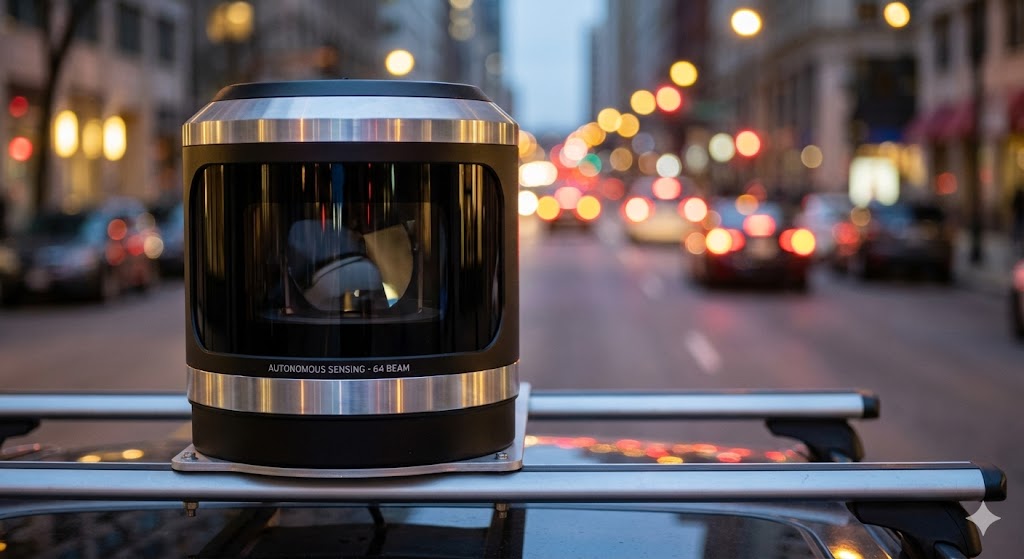
In conclusion, real-time laser distance sensors represent a critical enabler of industrial automation and precision engineering. Their ability to provide fast, accurate, and non-contact measurements drives efficiency, quality, and safety across diverse applications. As technology advances, these sensors will continue to evolve, offering even greater capabilities to meet the complex challenges of modern industry. Engineers and decision-makers are encouraged to stay abreast of these developments to leverage the full potential of laser sensing in their operations.