Metal sensing proximity switch sensors, particularly the MMV series, represent a cornerstone technology in modern industrial automation and control systems. These non-contact sensors are engineered to detect the presence or absence of metallic objects with high precision and reliability. Operating on the principle of electromagnetic induction, an MMV sensor generates a high-frequency oscillating electromagnetic field from its active face. When a metallic target, such as steel, aluminum, or brass, enters this field, eddy currents are induced on the target's surface. This phenomenon causes a measurable change in the sensor's oscillation amplitude or frequency, which is then processed by the internal circuitry to trigger a solid-state switching output.
The design and construction of MMV proximity sensors are tailored for harsh industrial environments. Typically housed in robust, threaded metal barrels (common sizes being M8, M12, M18, and M30), they offer significant resistance to vibration, shock, and contaminants like oil, coolants, and dust, often conforming to IP67 or higher ingress protection ratings. A key specification is the rated sensing distance (Sn), which defines the nominal operating point. For instance, an MMV sensor with an Sn of 8mm can reliably detect a standard steel target at that distance. It is critical to note that the actual sensing range can vary with different metals; ferrous metals like mild steel are typically detected at the full nominal range, while non-ferrous metals like aluminum or copper may reduce the effective sensing distance, often requiring a correction factor (e.g., 0.3 to 0.5 times Sn).
Wiring and output configuration are fundamental to integration. MMV sensors are predominantly available in two-wire (AC/DC), three-wire (DC), or four-wire (dual-channel) versions. The three-wire DC models are most prevalent, offering PNP (sourcing) or NPN (sinking) transistor outputs compatible with Programmable Logic Controllers (PLCs) and other control devices. The output is characterized by its switching state—normally open (NO) or normally closed (NC)—and its ability to handle specific load currents, often up to 200mA. Proper connection, with attention to polarity (brown wire to +V, blue wire to 0V, black wire as the signal output), is essential to prevent damage.
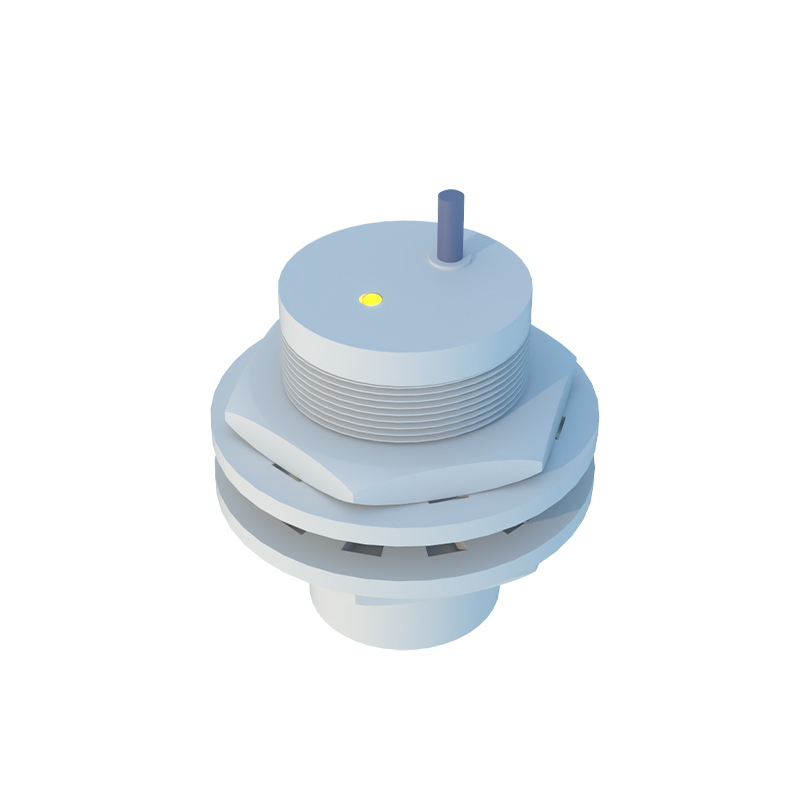
The application spectrum for MMV metal proximity sensors is vast. They are indispensable for position sensing, such as verifying the presence of a metal part on a conveyor, detecting the end-of-travel of a cylinder with a metallic piston, or confirming the closed position of a metal door or gate. In counting and sorting systems, they provide the primary input for tallying metallic items. They also serve as vital components in safety interlock systems, where their non-contact nature offers superior longevity and reliability compared to mechanical limit switches. In machine tools, they monitor tool presence or workpiece positioning, contributing to process integrity and equipment protection.
Selecting the correct MMV sensor requires careful consideration of several parameters beyond just size and sensing distance. The operating voltage range (commonly 10-30V DC or 20-250V AC), temperature tolerance (typically -25°C to +70°C), switching frequency (how many on/off cycles per second it can handle), and short-circuit/overload protection features must align with the application's demands. Furthermore, the housing material (often nickel-plated brass or stainless steel) must be chosen based on the environmental conditions, such as exposure to chemicals or washdowns.
Installation and maintenance practices significantly impact performance and lifespan. Ensuring a metal-free zone around the active sensing face is crucial to prevent false triggering. For flush-mountable models, they can be installed level with a metal mounting surface without affecting the sensing range. Non-flush models require a clear space around the sensor. Regular checks for physical damage, buildup of metallic debris on the face, and verification of output signals with a multimeter or indicator lamp are recommended preventive measures. Their solid-state design means there are no moving parts to wear out, leading to exceptionally long service life under proper operating conditions.
In summary, the MMV series of inductive proximity sensors provides a robust, versatile, and highly effective solution for metal detection across countless industrial scenarios. Their ability to operate without physical contact eliminates mechanical wear, ensures high-speed response, and delivers consistent performance in demanding settings. A thorough understanding of their operating principles, specifications, and application guidelines is key for engineers and technicians to leverage their full potential, enhancing automation system efficiency, safety, and reliability.