In the realm of industrial automation, achieving precise positioning is paramount for efficiency, safety, and quality control. Optical proximity sensors have emerged as a critical technology enabling this precision across diverse applications. Unlike mechanical limit switches or inductive sensors, optical proximity sensors operate without physical contact, using light beams to detect the presence, absence, or position of an object. This non-contact nature eliminates wear and tear, ensuring long-term reliability and reducing maintenance costs.
The core principle involves an emitter, typically an LED or laser diode, which projects a light beam. A photodetector receives the light, and the sensor's electronics interpret changes in the received light signal—such as intensity modulation, time-of-flight, or triangulation—to determine an object's position. Common types include through-beam, retro-reflective, and diffuse reflective sensors, each suited for specific positioning tasks. For instance, through-beam sensors, with separate emitter and receiver units, offer the longest sensing ranges and highest accuracy for precise edge detection or counting on high-speed conveyor lines. Diffuse reflective sensors, where the emitter and receiver are housed together, are ideal for detecting objects at a fixed distance, such as in robotic pick-and-place operations where the end-effector must stop at an exact point above a component.
A key application is in automated guided vehicles (AGVs) and autonomous mobile robots (AMRs). Optical proximity sensors are deployed for navigation, obstacle avoidance, and docking. By precisely detecting reflectors or tape on the floor, they enable sub-millimeter repeatability in positioning the vehicle at loading stations or assembly points. This eliminates cumulative errors that can occur with wheel encoders alone. In semiconductor manufacturing, where tolerances are microscopic, optical sensors position wafers within lithography machines with nanometer-level accuracy, ensuring perfect alignment for each layer of circuit patterning.
On packaging lines, these sensors ensure products are correctly positioned for labeling, filling, or capping. A diffuse sensor can detect the exact height of a bottle cap, while a through-beam sensor verifies the precise location of a label applicator. In robotic welding cells, optical sensors often work in tandem with vision systems to locate seam positions before the welding torch engages, compensating for part variances and ensuring weld integrity.
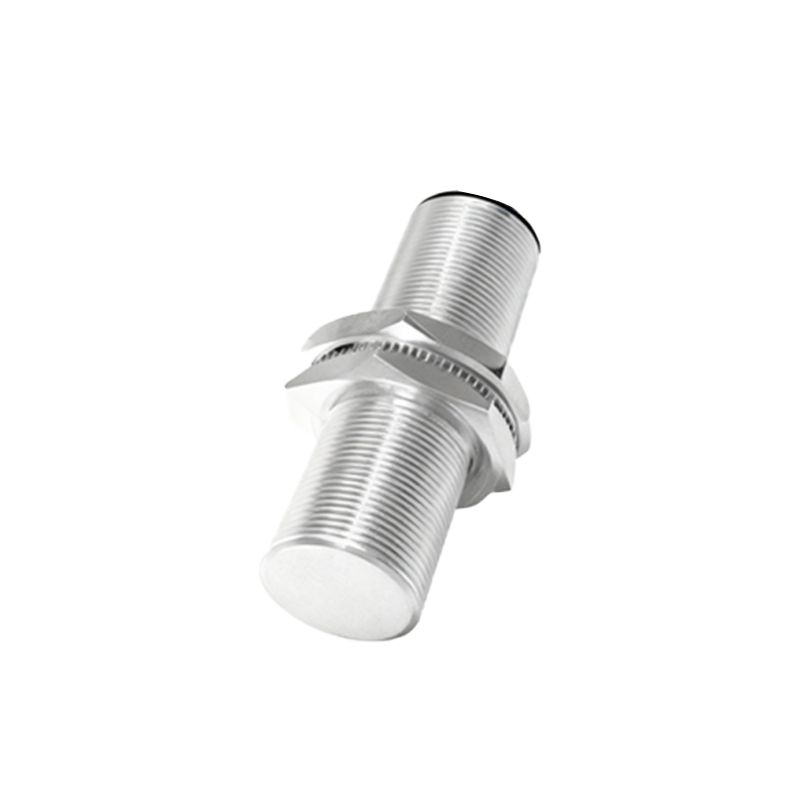
The advantages for positioning are multifold. First is speed: optical sensors respond in microseconds, facilitating real-time position feedback in high-cycle processes. Second is resolution: modern laser-based sensors can detect minute displacements. Third is versatility: they can detect a vast range of materials, including glass, plastic, metal, and even transparent films, which are challenging for other sensor types. However, environmental factors like ambient light, dust, fog, or surface reflectivity can pose challenges. Engineering solutions include using modulated light signals to ignore ambient interference, selecting sensors with specific wavelengths (e.g., red light vs. laser), or employing sensors with background suppression technology that evaluates the angle of reflected light rather than just its intensity.
Integration into control systems is streamlined via standard industrial interfaces like IO-Link, which allows for parameterization, diagnostics, and the exchange of detailed position data, not just a simple on/off switch. This facilitates predictive maintenance and easy adaptation to new production tasks. Looking ahead, the convergence of optical sensing with AI and edge computing is paving the way for even smarter positioning systems. Sensors will not only report a position but also analyze patterns to predict misalignment or wear in machinery before a fault occurs.
In conclusion, optical proximity sensors are indispensable for modern precision positioning. Their non-contact operation, high speed, and accuracy make them the cornerstone of reliable automation, from macro-scale logistics to micro-scale electronics assembly. As technology advances, their role will only deepen, driving further gains in productivity and manufacturing intelligence.
