In the rapidly evolving landscape of industrial manufacturing, laser welding has emerged as a cornerstone technology for achieving high-strength, precise, and clean joints in materials ranging from automotive components to delicate medical devices. At the heart of optimizing this process lies the critical role of laser welding fixture sensors. These sophisticated devices are integral to ensuring that workpieces are held securely and positioned with micron-level accuracy during the welding operation, directly impacting weld quality, repeatability, and overall production throughput.
Laser welding fixture sensors are specialized transducers designed to monitor and control various parameters of the fixturing system. Their primary function is to provide real-time feedback on the position, clamping force, and alignment of the part being welded. Unlike conventional mechanical fixtures, which are passive and rigid, sensor-equipped fixtures introduce a dynamic layer of intelligence. For instance, inductive or capacitive displacement sensors can detect minute deviations in part placement, triggering automatic adjustments before the laser pulse is initiated. This preemptive correction is vital, as even sub-millimeter misalignments can lead to defects such as porosity, undercut, or incomplete fusion, compromising the structural integrity of the weld.
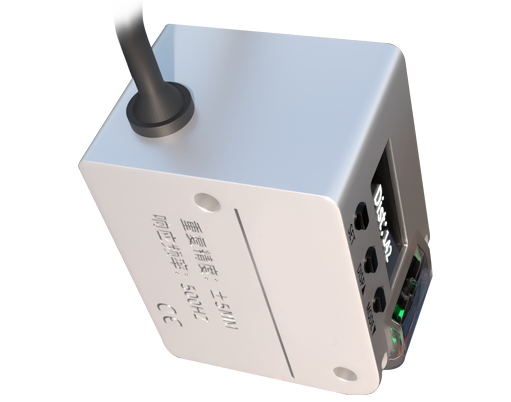
The integration of force sensors, particularly piezoelectric or strain gauge types, into clamping mechanisms represents another significant advancement. These sensors measure the exact pressure applied to hold the workpiece. Maintaining an optimal clamping force is a delicate balance; excessive force can induce stress or deform thin materials, while insufficient force allows movement, causing weld drift. By continuously monitoring this force, the system can adapt in real-time, ensuring consistent contact and heat dissipation. This capability is especially crucial for welding dissimilar metals or heat-sensitive alloys, where thermal expansion coefficients vary.
Furthermore, modern laser welding fixture sensors are increasingly embedded within Industry 4.0 frameworks. They are equipped with communication protocols like IO-Link, PROFINET, or EtherCAT, enabling seamless data exchange with central manufacturing execution systems (MES) and programmable logic controllers (PLCs). This connectivity facilitates predictive maintenance, as sensor data trends can forecast wear in fixture components before a failure occurs, minimizing unplanned downtime. Additionally, the collected data contributes to comprehensive digital twins of the welding process, allowing for virtual simulation and optimization without interrupting production lines.
The benefits of deploying advanced fixture sensors extend beyond quality assurance. They significantly enhance process efficiency by reducing setup times. Traditional fixture alignment often relies on manual measurement and trial-and-error, a time-consuming process. With auto-calibration enabled by sensor feedback, fixtures can quickly adapt to new part geometries, supporting high-mix, low-volume production runs that are becoming standard in agile manufacturing. This flexibility is paramount for industries like aerospace and electronics, where product lifecycles are short and customization is high.

Material considerations also play a pivotal role in sensor selection and application. For welding highly reflective materials like aluminum or copper, which pose challenges for laser absorption, precise fixture alignment ensured by sensors helps maintain a consistent focal point and angle of incidence, maximizing energy coupling. Similarly, in applications involving complex 3D contours or overlapping seams, multi-axis sensor systems guide robotic arms or CNC stages to follow the exact weld path programmed, compensating for any fixture or part tolerances.
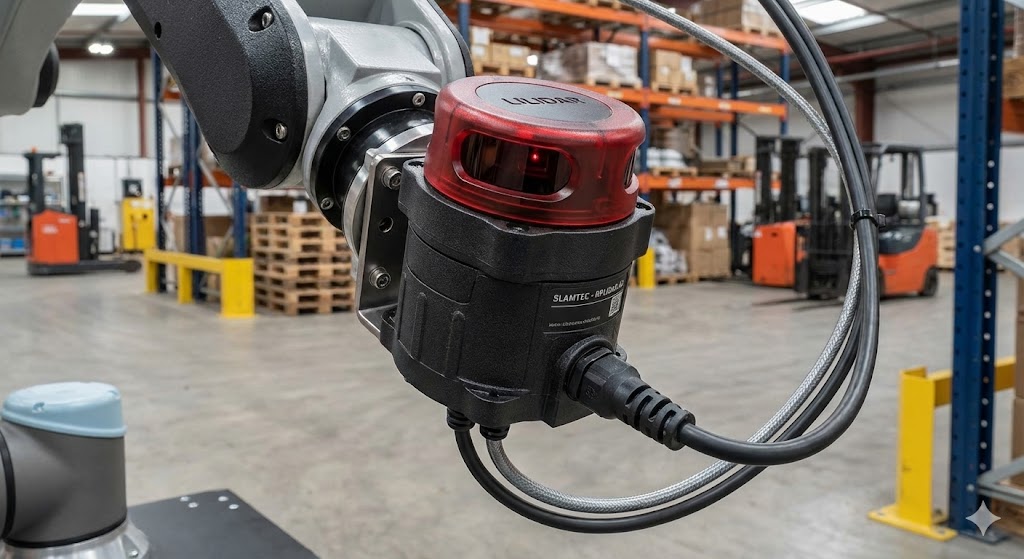
Looking ahead, the convergence of sensor technology with artificial intelligence and machine learning is set to redefine laser welding fixtures. AI algorithms can analyze vast datasets from multiple sensor streams—including thermal imaging sensors monitoring heat-affected zones—to identify subtle correlations between fixture parameters and weld defects. This enables the development of self-optimizing fixtures that autonomously adjust clamping strategies or laser parameters in real-time, pushing the boundaries of what is achievable in automated welding.
In conclusion, laser welding fixture sensors are far more than ancillary components; they are enablers of precision, efficiency, and intelligence in modern fabrication. By providing critical, real-time metrology and control, they ensure that the full potential of laser welding technology is realized, delivering robust, high-quality welds while adapting to the demands of flexible and smart manufacturing environments. Their continued evolution will undoubtedly remain a key driver in advancing industrial joining processes across global sectors.