In the realm of industrial automation and control systems, proximity sensors play an indispensable role in enabling non-contact detection of objects. Among the various types available, inductive proximity sensors, often referred to by model series like "E2E," are fundamental components for metallic object detection. This article delves into the core characteristics that define the performance and suitability of these robust sensors for demanding applications.
The primary operating principle of an E2E-style inductive proximity sensor is based on electromagnetic induction. The sensor generates a high-frequency oscillating electromagnetic field from its active face. When a metallic target enters this field, eddy currents are induced on the target's surface. This causes a change in the oscillation amplitude within the sensor's coil, which is then detected and converted into a solid-state output signal, typically switching a load on or off. This non-contact nature eliminates mechanical wear, ensuring exceptional longevity and reliability.
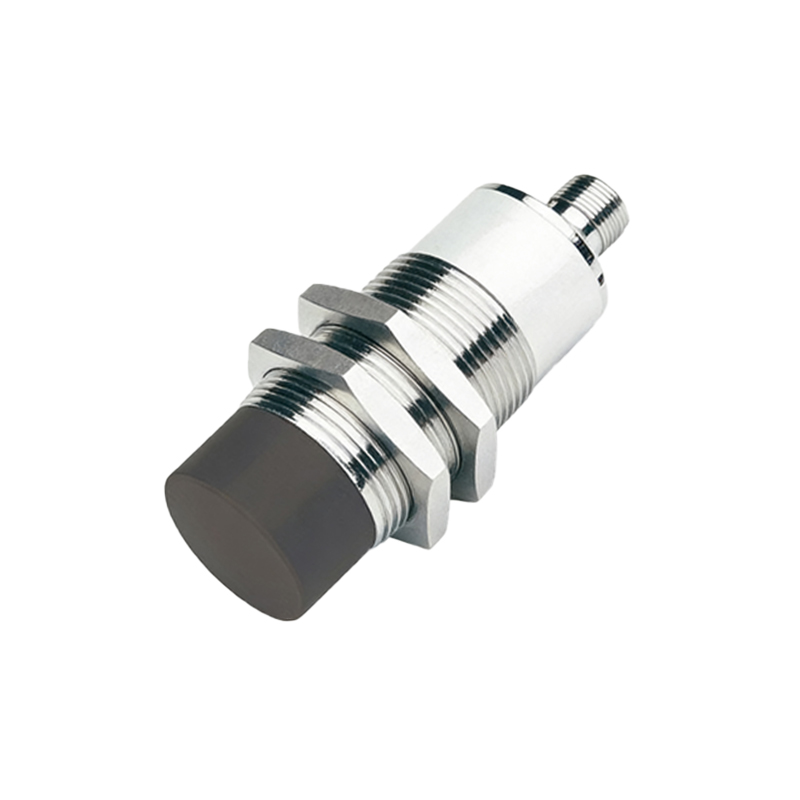
Several key characteristics determine the selection and application of these sensors:
Sensing Distance: This is arguably the most critical parameter. The rated operating distance (Sn) is the nominal sensing range for a standard target, usually defined as a square of mild steel (e.g., Fe360) with a side length equal to the sensor's diameter or the diameter of a triple-sensor face. It is crucial to note that the actual sensing distance can be affected by factors like target material, size, shape, and installation conditions. Manufacturers provide reduction factors for different metals; for instance, stainless steel may have a factor of 0.7-0.8, while aluminum or copper could be as low as 0.3-0.4. The "E2E" series typically offers standardized sensing ranges from 1mm to 15mm or more, catering to various precision needs.
Hysteresis: To ensure stable switching and prevent output chatter when a target is at the exact sensing point, proximity sensors incorporate hysteresis. This is the difference between the switch-on point (as the target approaches) and the switch-off point (as the target recedes). Hysteresis, usually expressed as a percentage of the sensing distance (e.g., 3-10% of Sn), provides a clear margin for reliable operation, especially in environments with vibration.
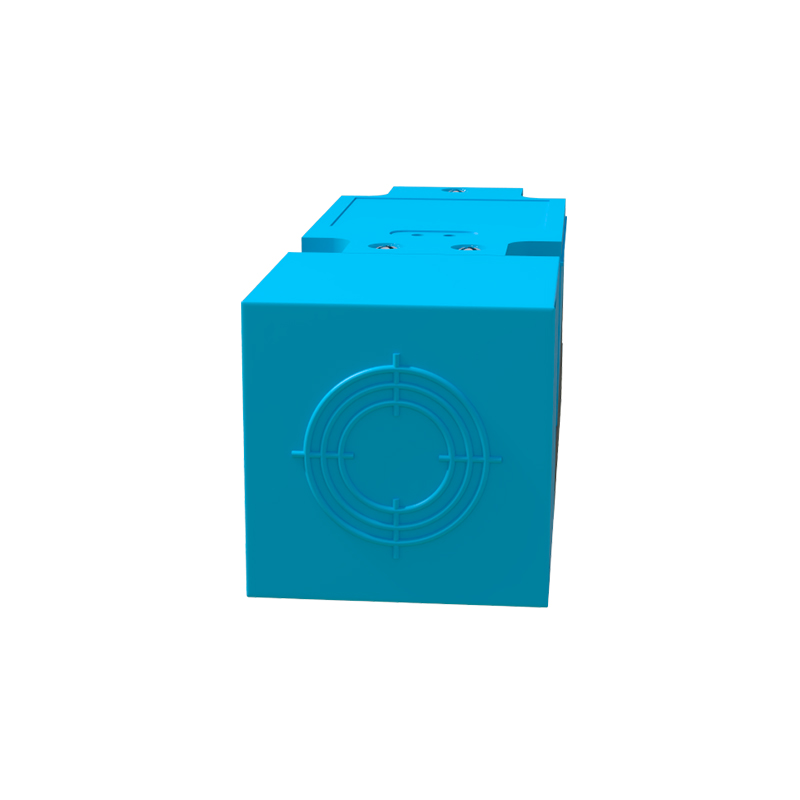
Output Configuration: E2E sensors are available in multiple output types. The two main categories are NPN (sinking) and PNP (sourcing) transistor outputs, which are standard for DC-powered sensors. The choice depends on the PLC or control system input module's requirements. Furthermore, outputs can be Normally Open (NO) or Normally Closed (NC), providing flexibility in control logic design. Some advanced models also offer analog (4-20mA or 0-10V) or IO-Link outputs for continuous distance measurement and digital communication.
Frequency Response/Switching Frequency: This characteristic defines how quickly a sensor can respond to targets, measured in Hertz (Hz). A higher switching frequency allows the detection of rapidly moving or closely spaced objects on a production line. Standard sensors may offer frequencies from 100 Hz to 5 kHz, with high-speed variants available for specialized applications.
Environmental Robustness: Industrial environments are harsh. Key specifications here include:
Ingress Protection (IP Rating): A rating of IP67 is standard, indicating protection against dust ingress and temporary immersion in water. IP68 and IP69K ratings are available for more severe conditions.
Temperature Range: Operating and storage temperature ranges ensure functionality in cold storage or near hot machinery. Typical ranges are -25°C to +70°C.
Electrical Noise Immunity: Built-in protection against surge voltages, reverse polarity, and short-circuit conditions is essential for electrical durability.
Material: The housing is often made of nickel-plated brass or stainless steel (e.g., V2A, V4A), and the sensing face is typically from PBT or PPS plastic, offering chemical and mechanical resistance.
Mounting and Form Factor: E2E sensors commonly come in cylindrical threaded barrels (e.g., M8, M12, M18, M30), facilitating easy installation into standard mounting holes. Flush-mounted and non-flush-mounted versions exist. Non-flush (shielded) sensors can be installed flush with metal without affecting their sensing range, while non-flush (unshielded) types offer a longer range but require a non-metallic surrounding.
Target Considerations: As mentioned, the target's material, size, and shape significantly impact performance. A general rule is that the target should be at least equal to the sensor's sensing face diameter. For reliable detection, engineers must always consult the sensor's datasheet for specific reduction factors and minimum target size guidelines.
In conclusion, understanding the detailed characteristics of E2E proximity sensors—from sensing distance and hysteresis to output type