In the realm of industrial automation, robotics, and safety systems, proximity sensing is a fundamental technology. Among the various sensing modalities, infrared (IR) proximity sensors stand out for their reliability, cost-effectiveness, and versatility. A sophisticated evolution within this category is the ten-level infrared proximity sensor. This article delves into the operational principles, design considerations, and typical applications of this advanced sensor type, providing a comprehensive overview for engineering professionals.
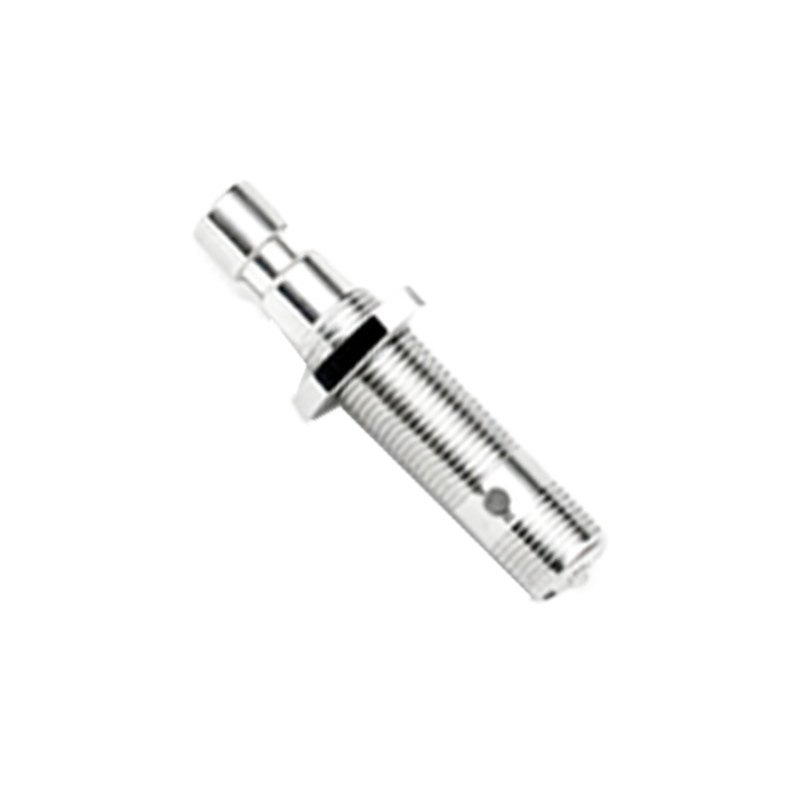
At its core, an infrared proximity sensor operates by emitting an infrared light beam and detecting its reflection from a nearby object. The basic components include an IR emitter (typically an IR LED), an IR receiver (such as a photodiode or phototransistor), and signal processing circuitry. The presence and distance of an object are inferred by the intensity of the reflected IR light. A standard binary sensor provides a simple on/off output based on a predefined threshold. The ten-level sensor, however, significantly enhances this capability by quantizing the detection range into ten distinct sensitivity or distance levels.
The principle of operation hinges on the relationship between the received signal strength and the distance to the target, governed by the inverse-square law. As the distance to an object decreases, the intensity of the reflected IR light increases non-linearly. The ten-level sensor's circuitry is designed to segment this analog response curve into ten discrete digital steps. This is typically achieved through a multi-stage comparator circuit or, more commonly in modern designs, an analog-to-digital converter (ADC) integrated with a microcontroller.
The IR emitter is driven by a pulsed current, often modulated at a specific frequency (e.g., 38 kHz). This modulation is crucial for several reasons. First, it allows the receiver circuit to be tuned to the same frequency, dramatically improving immunity to ambient infrared noise from sources like sunlight or incandescent lighting. Second, it enables the use of higher peak current for the LED, resulting in a stronger emitted signal without exceeding its average power rating. The receiver detects only the modulated IR light that is reflected back, filters out the DC component and noise, and demodulates the signal.
The heart of the ten-level functionality lies in the signal processing stage. The conditioned analog voltage from the receiver, which is proportional to the reflected intensity, is fed into an ADC. The microcontroller samples this voltage and maps it to one of ten predefined levels. This mapping is based on a calibrated look-up table or an algorithmic function that correlates voltage to approximate distance or relative proximity. Level 1 might represent the weakest signal (farthest detectable object or lowest sensitivity setting), while Level 10 represents the strongest signal (closest object or highest sensitivity). Some advanced models allow for user-configuration of the threshold values for each level, offering great flexibility for specific applications.
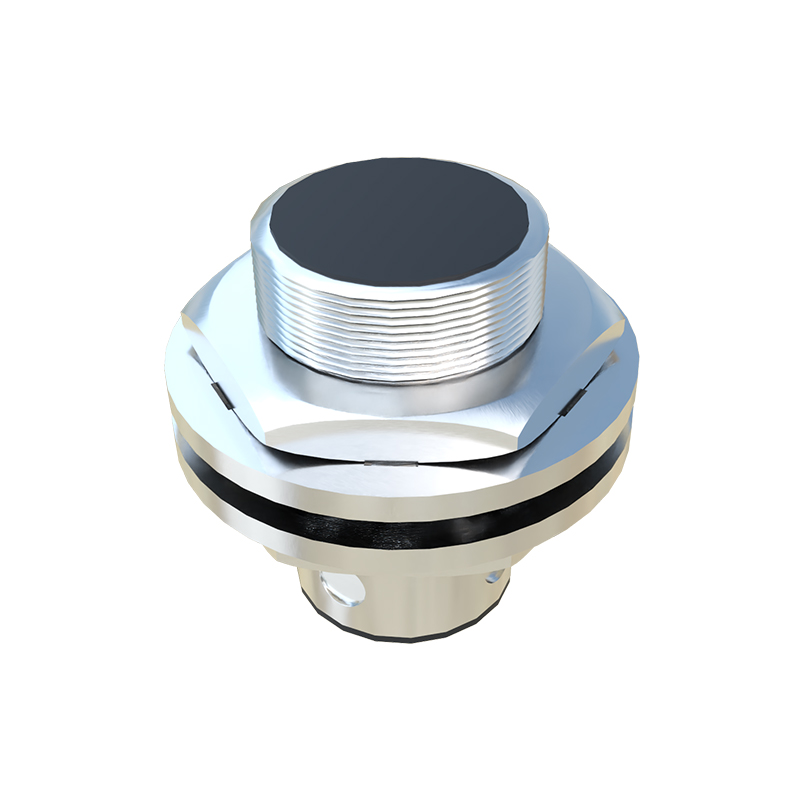
Key design considerations for ten-level IR proximity sensors include:
1. Optical Design: The lens geometry for the emitter and receiver dictates the sensing beam pattern (spot size) and range. A narrow beam allows for longer range and precise detection, while a wide beam is better for general presence detection.
2. Object Characteristics: The sensor's response is highly dependent on the object's reflectivity, color, and surface texture. A highly reflective white object will return a much stronger signal than a dark, absorptive one at the same distance. Calibration often involves a standard reference material (like white matte paper).
3. Environmental Factors: While modulation mitigates ambient light, extreme conditions can still affect performance. Dust, fog, or oil on the lens can attenuate the signal. The sensor housing must provide adequate ingress protection (IP rating) for its operating environment.
4. Electrical Interface: The output can be in various forms: a multi-bit digital output representing the level (e.g., 4-bit binary), an analog voltage corresponding to the level, or a serial communication protocol like I2C or UART for direct interfacing with a host controller.
The applications for ten-level IR proximity sensors are extensive. In robotics, they are used for precise obstacle detection and ranging for navigation and manipulation. On assembly lines, they can differentiate between objects at slightly different conveyor heights or count objects while providing a crude size estimation. In interactive kiosks or consumer electronics, they enable multi-stage touchless controls (e.g., gesture recognition with varying hand proximity). They are also employed in liquid level sensing, paper thickness detection in printers, and as sophisticated safety curtains where the detection level can be linked to machine slowdown or stop commands.
In conclusion, the ten-level infrared proximity sensor represents a significant advancement over basic binary sensors by providing granular, quantized proximity data. Its operation, based on modulated IR light emission and sophisticated signal quantization, offers engineers a robust tool for applications requiring more nuanced information than mere presence detection. Understanding its principles—from optical physics to signal processing—is essential for effectively integrating this versatile component into modern