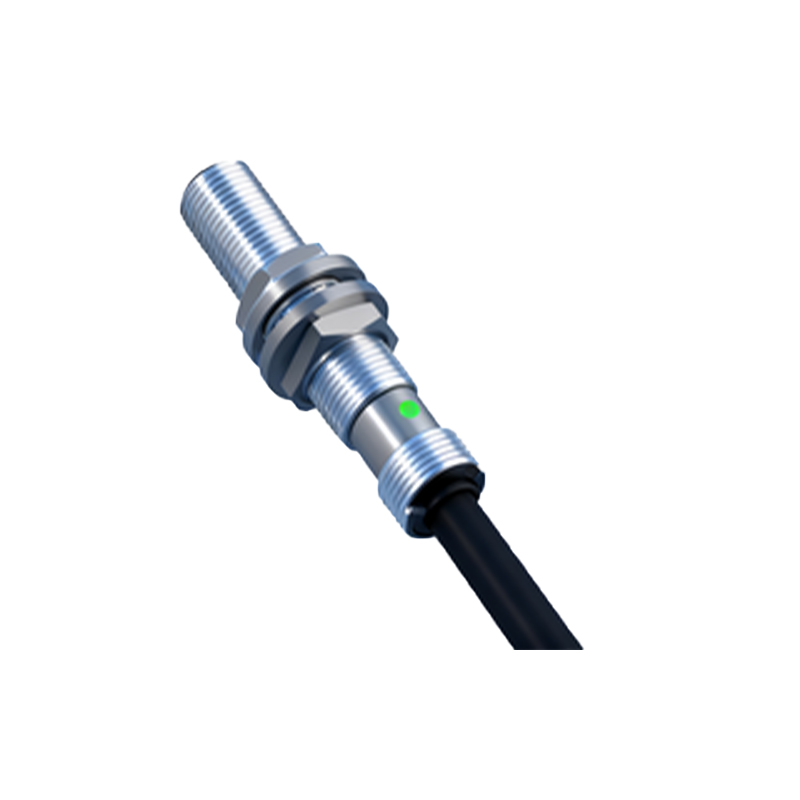
In the diverse landscape of industrial automation, proximity sensors are indispensable for object detection, positioning, and counting. Among the various types, inductive proximity sensors stand out for their robustness and contactless operation. However, a common challenge arises when an application requires the detection of ferrous metals—like iron or steel—while explicitly ignoring non-ferrous metals such as aluminum, copper, or brass. Standard inductive sensors, which react to any conductive metal, fall short in such scenarios. This necessitates the use of specialized sensors designed to be selective. This article delves into the technology, operating principles, and key applications of proximity sensors that detect only ferrous metals, ignoring aluminum and copper.
The fundamental operating principle of a standard inductive proximity sensor involves an oscillator circuit generating a high-frequency electromagnetic field from a coil in the sensing face. When any metallic object enters this field, eddy currents are induced on the object's surface. The sensor detects the energy loss from these eddy currents, triggering a switching output. The issue is that all conductive metals, to varying degrees, generate eddy currents. Aluminum and copper, being excellent conductors, often generate strong signals, making them easily detectable by standard units.
Sensors designed to sense only ferrous metals overcome this limitation through a distinct physical principle: the detection of magnetic properties rather than just conductivity. These are often referred to as "ferrous metal only" or "all-metal" sensors in a misleading way; a more accurate term is sensors based on the "magnetic field distortion" or "variable reluctance" principle. Their core component is not just a coil for generating eddy currents but a permanent magnet or a specific coil configuration that creates a static or low-frequency magnetic field.
Ferrous metals are ferromagnetic, meaning they have high magnetic permeability. When a piece of iron or steel enters the magnetic field of such a sensor, it causes a significant distortion and concentration of the magnetic flux lines. This change in the magnetic field is detected by a built-in element, often a reed switch, a Hall-effect sensor, or a magneto-resistive element, which then activates the output circuit. Crucially, non-ferrous metals like aluminum and copper are non-magnetic (paramagnetic or diamagnetic). Their magnetic permeability is very close to that of air (vacuum). Therefore, they cause negligible distortion to the magnetic field, remaining effectively invisible to the sensor.
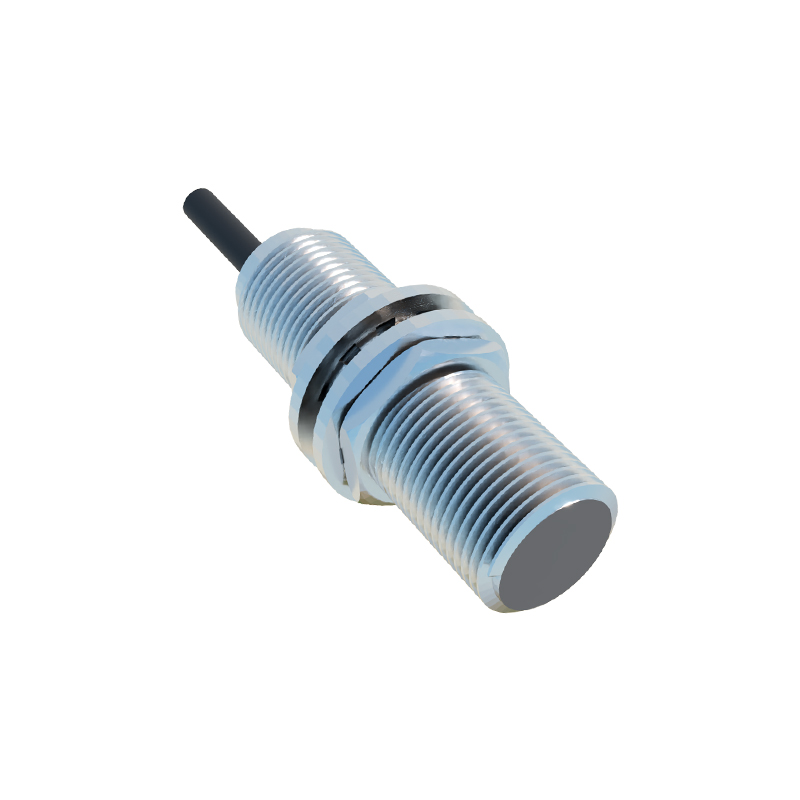
This selectivity offers critical advantages. First, it eliminates false triggers in environments where both ferrous and non-ferrous metals are present, such as in mixed-material sorting lines or machining centers handling different workpieces. Second, it allows for reliable detection of steel parts even when they are plated with a thin layer of non-ferrous metal like chrome or zinc. Third, the sensing distance for a given ferrous target is typically more stable and less affected by temperature variations compared to the eddy-current method.
However, engineers must consider important specifications. The rated operating distance (Sn) is defined for a standard mild steel target (usually Fe360). This sensing distance will be substantially reduced for other ferrous metals like stainless steel (particularly austenitic grades which are less magnetic) and is virtually zero for aluminum and copper. The sensor's housing must also be carefully selected; a stainless steel housing is common, but the sensing face must be made of a non-ferrous material (like brass or plastic) to avoid self-interference with the magnetic field.
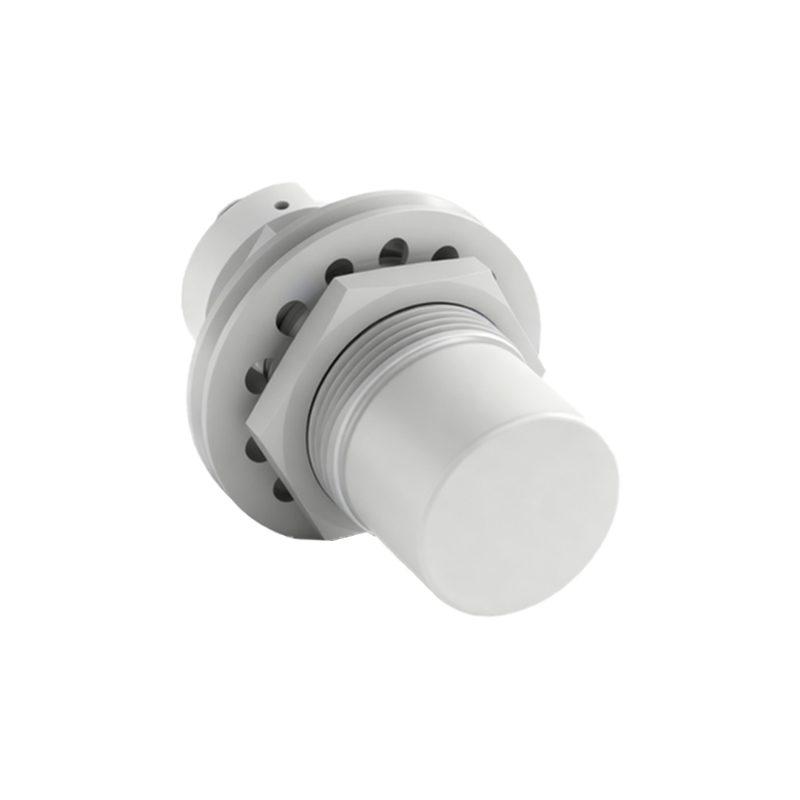
Key application areas are widespread. In the automotive industry, these sensors verify the presence of steel engine blocks or chassis components on assembly lines, ignoring aluminum brackets or copper wires. In metal fabrication, they count steel sheets or blanks, ensuring process integrity even if aluminum debris is nearby. In security, they are used in access control systems to detect the steel in keys or tools. In recycling plants, they are crucial components of eddy-current separators, but here they are used in the control systems to monitor ferrous components of the machinery itself, not the non-ferrous stream.
When selecting and installing these sensors, best practices include: consulting the manufacturer's data sheets for precise sensing curves for different materials; ensuring the target size meets the minimum requirements for reliable switching; considering the mounting style (flush or non-flush) as it affects the magnetic field shape; and accounting for the presence of other strong magnetic fields in the vicinity which could interfere with operation.
In conclusion, while standard inductive sensors are versatile, the need for material-specific detection is paramount in complex industrial settings. Proximity sensors that selectively detect ferrous metals by leveraging magnetic field distortion provide a reliable, maintenance-free solution. Their ability to ignore conductive but non-magnetic materials like aluminum and copper enhances system precision, reduces downtime from false positives, and enables automation designs that would otherwise be impractical. As material diversity in manufacturing grows, the strategic deployment of these specialized sensors will continue to be a