In the realm of industrial automation and smart systems, the demand for accurate, reliable, and fast-responding detection technology is paramount. Speed proximity sensors stand at the forefront of this technological evolution, serving as critical components that bridge the gap between mechanical motion and electronic control. Unlike standard proximity sensors that merely detect presence or absence, speed proximity sensors are engineered to measure the velocity or rotational speed of a target object with exceptional precision. This capability is indispensable across a myriad of applications, from high-speed manufacturing lines and robotic assembly to automotive safety systems and aerospace engineering.
The core operating principle of most speed proximity sensors is based on electromagnetic induction or eddy current technology. A typical inductive speed sensor generates an oscillating electromagnetic field from its active face. When a conductive target, such as a gear tooth or a key on a rotating shaft, moves into this field, it induces eddy currents within the target. This interaction causes a measurable change in the sensor's oscillation amplitude or frequency. By monitoring the frequency of these changes as targets pass by—for instance, the teeth of a gear—the sensor's associated electronics can calculate the rotational speed or linear velocity with high accuracy. Advanced versions utilize magnetoresistive or Hall-effect principles to detect the movement of ferromagnetic targets, offering robustness in harsh environments.
The integration of these sensors into modern control systems unlocks significant operational advantages. In automotive applications, speed proximity sensors are vital for anti-lock braking systems (ABS) and traction control. They monitor wheel speed in real-time, providing data that allows the vehicle's computer to modulate brake pressure instantaneously, preventing wheel lock-up and maintaining steering control during emergency stops. Similarly, in industrial settings, they ensure synchronization on conveyor belts, monitor the RPM of motors and turbines to prevent overspeed conditions, and facilitate precise positioning in CNC machinery. This real-time velocity feedback is crucial for predictive maintenance, allowing engineers to identify unusual vibrations or speed deviations that signal impending equipment failure, thereby minimizing downtime and repair costs.
Selecting the appropriate speed proximity sensor requires careful consideration of several technical parameters. The sensing range, or the distance at which the sensor can reliably detect the target, must be compatible with the application's mechanical layout. Response frequency is another critical factor; it defines how quickly the sensor can detect successive targets, which directly limits the maximum speed it can measure. For high-speed applications like monitoring turbine blades, sensors with response frequencies in the kilohertz range are essential. Environmental resilience is equally important. Many industrial environments expose sensors to extreme temperatures, moisture, oil, coolant, and particulate contamination. Therefore, sensors housed in stainless steel or nickel-plated brass bodies with ingress protection (IP) ratings of IP67 or higher are often specified to ensure long-term reliability.
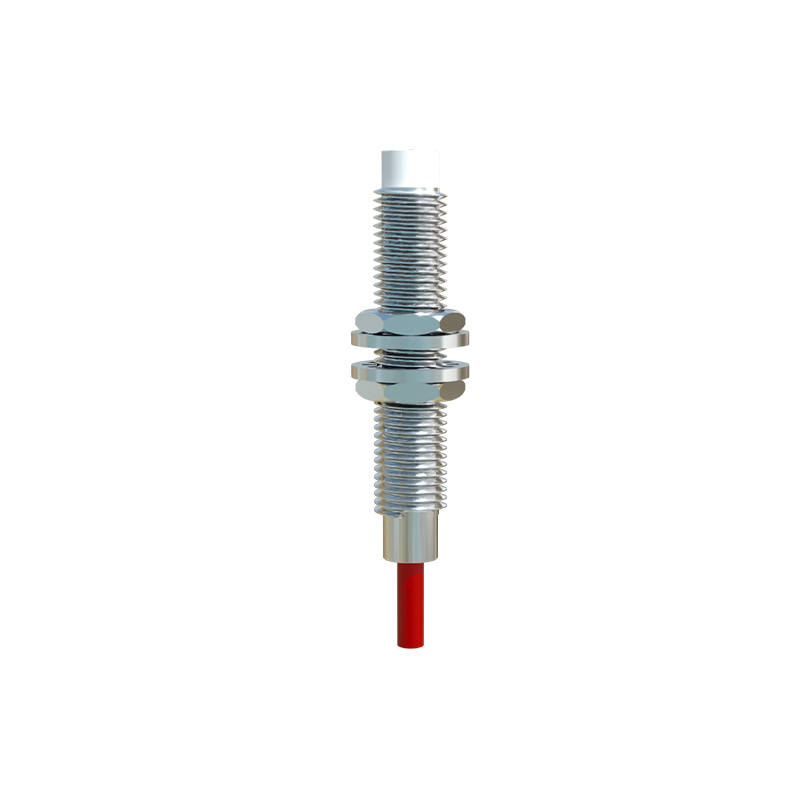
Furthermore, the output signal type defines how the sensor integrates with a Programmable Logic Controller (PLC) or data acquisition system. Common outputs include analog voltage or current signals (e.g., 0-10V, 4-20mA), which provide a continuous speed reading, and digital signals like NPN/PNP transistor switches or pulse trains. A pulse output, where the frequency of the pulses is directly proportional to speed, is particularly common for tachometer applications. The choice between shielded and unshielded sensor designs also matters. Shielded sensors have a more focused electromagnetic field, allowing for flush mounting in metal, while unshielded models offer a longer sensing range but require non-metallic surroundings.
The future trajectory of speed proximity sensing is intertwined with the rise of Industry 4.0 and the Industrial Internet of Things (IIoT). Next-generation sensors are becoming smarter, incorporating onboard microprocessors for self-diagnostics, condition monitoring, and digital communication via protocols like IO-Link. This connectivity allows for remote configuration, parameter adjustment, and the streaming of rich diagnostic data to central control systems, enabling a more proactive and data-driven approach to plant management. As automation systems grow more complex and demands for efficiency and safety intensify, the role of the speed proximity sensor will only expand, evolving from a simple detection device into an intelligent node within a networked ecosystem of smart machines.