In the rapidly evolving field of industrial automation and precision measurement, laser sensors have become indispensable tools. A key aspect of working with these devices is understanding their common abbreviations and acronyms, which are frequently used in technical documentation, datasheets, and professional communication. This knowledge is crucial for engineers, technicians, and procurement specialists to ensure correct specification, integration, and maintenance.
One of the most fundamental abbreviations is LS, standing simply for Laser Sensor. This is a broad category encompassing various types. More specific are LD for Laser Diode, the core light-emitting component, and PD for Photodiode or Photo Detector, which receives the reflected light. The combination and configuration of these elements define the sensor's operating principle.
Common operational mode abbreviations include TOF for Time-of-Flight. TOF laser sensors measure the time it takes for a laser pulse to travel to a target and back, calculating distance with high accuracy over long ranges. They are widely used in logistics, robotics, and level monitoring. Another prevalent type is the Triangulation sensor, often abbreviated in context rather than as a standalone acronym. These sensors use geometric triangulation between the laser source, the reflected point on the target, and the receiving sensor (like a Position Sensitive Device, PSD, or a CCD/CMOS array) to determine distance or profile with exceptional precision at shorter ranges, ideal for displacement and thickness measurement.
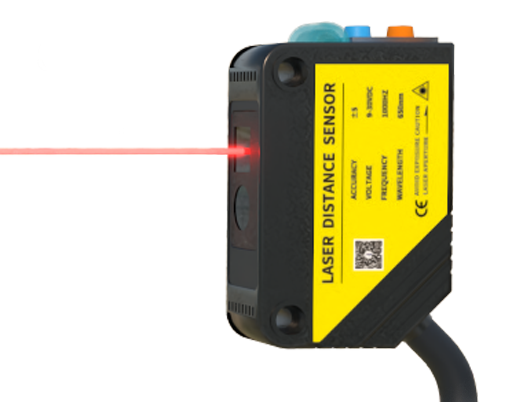
The output and functional characteristics are also described through abbreviations. A and D are critical here, representing Analog Output (e.g., 0-10V, 4-20mA) and Digital Output (e.g., switching signals, serial data), respectively. Many sensors feature IO-Link, a point-to-point serial communication protocol for bidirectional data exchange with controllers, enabling advanced parameter setting and diagnostics. For safety-rated devices, you will encounter PL (Performance Level) as per ISO 13849, and categories like Cat. for Category.
Environmental protection ratings are denoted by IP (Ingress Protection) codes, such as IP67, indicating dust-tight and waterproof capabilities. NEMA ratings are also used in some regions. Electrical protection standards include ESD for Electrostatic Discharge immunity and EMC for Electromagnetic Compatibility.
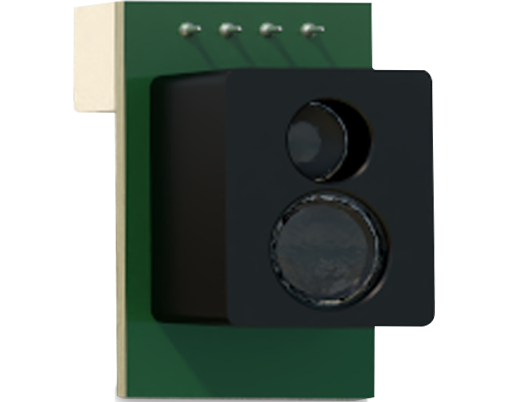
Advanced features bring their own set of abbreviations. CMOS (Complementary Metal-Oxide-Semiconductor) and CCD (Charge-Coupled Device) refer to the types of imaging chips used in vision-based laser sensors. PSD (Position Sensitive Device) is an analog optical detector used in compact triangulation sensors. FOV stands for Field of View, describing the angular cone of detection. For devices that scan a laser line, Laser Line Generator or Profile Sensor are common terms, with the scanning method sometimes abbreviated if it uses a MEMS (Micro-Electro-Mechanical Systems) mirror.

Understanding these abbreviations is not merely an academic exercise. It directly impacts system design. Specifying a TOF sensor versus a Triangulation sensor depends on the required range, accuracy, and target surface. Knowing that a device has IO-Link capability informs control architecture decisions. Recognizing IP67 ensures the sensor will survive in a washdown environment. Misinterpretation can lead to costly errors, incorrect installations, and system downtime.
In conclusion, the lexicon of laser sensor abbreviations forms a concise technical language essential for professionals in electrical engineering, automation, and manufacturing. Mastery of terms like TOF, PSD, IO-Link, and IP codes enables precise communication, informed selection, and optimal implementation of these critical sensing components, driving efficiency and innovation in modern industrial applications. Always refer to the manufacturer's datasheet for the definitive meaning of any abbreviation in a specific product context.