In the realm of industrial safety and environmental monitoring, the evolution of gas detection technologies has been pivotal in mitigating risks associated with hazardous substances. Among these, methane—a highly flammable and potent greenhouse gas—poses significant challenges across sectors such as oil and gas, mining, wastewater treatment, and energy production. Traditional point sensors and catalytic bead detectors have long served as frontline tools, yet their limitations in range, response time, and susceptibility to poisoning have driven the adoption of more advanced solutions. Enter laser remote methane detection sensors, a cutting-edge innovation leveraging tunable diode laser absorption spectroscopy (TDLAS) to revolutionize gas monitoring.
Laser remote methane sensors operate on the principle of infrared absorption spectroscopy. Methane molecules exhibit specific absorption lines in the near-infrared spectrum, typically around 1.65 micrometers. The sensor emits a narrowly tuned laser beam directed toward the target area. As the beam traverses the atmosphere, methane molecules absorb light at their characteristic wavelengths, attenuating the beam's intensity. A detector measures the attenuated signal, and through sophisticated algorithms, the system calculates methane concentration based on absorption strength, often employing wavelength modulation techniques to enhance sensitivity and reduce interference from other gases or environmental factors like dust and humidity.
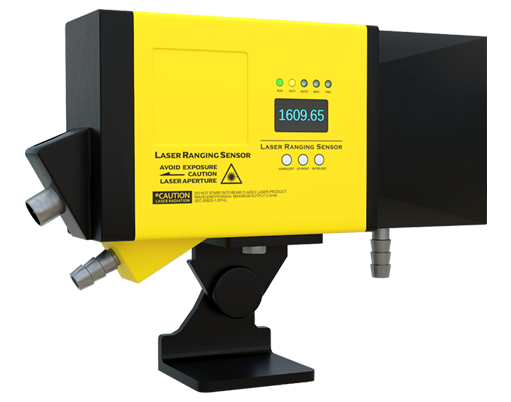
The advantages of this technology are manifold. First, it enables non-contact, remote sensing over distances ranging from a few meters to several hundred meters, allowing for safe monitoring of hard-to-reach or hazardous zones without physical intrusion. This is particularly valuable in offshore platforms, pipeline networks, and confined spaces where human access is risky. Second, laser sensors offer rapid response times—often in milliseconds—providing real-time data crucial for leak detection and emergency response. Unlike catalytic sensors, they are immune to poisoning by silicones or lead compounds, ensuring long-term reliability and reduced maintenance. Additionally, their high selectivity minimizes false alarms from non-target gases, enhancing operational efficiency.

In practical applications, these sensors are deployed in diverse scenarios. In the oil and gas industry, they are integrated into continuous monitoring systems along pipelines and storage facilities to detect leaks early, preventing costly downtime and environmental incidents. For example, airborne or drone-mounted laser sensors can survey vast areas quickly, identifying plume sources with pinpoint accuracy. In mining operations, they monitor methane buildup in coal seams, mitigating explosion risks. Municipalities use them to inspect landfill emissions or underground utility leaks, while research institutions employ them for atmospheric studies and climate change tracking.
Recent advancements have further bolstered their capabilities. Miniaturization and cost reductions have made portable, handheld laser detectors accessible for field inspections. Integration with IoT platforms allows for wireless data transmission and cloud analytics, enabling predictive maintenance and centralized dashboard monitoring. Enhanced algorithms now compensate for atmospheric turbulence and varying pressure conditions, improving accuracy in dynamic environments. Some models even incorporate open-path configurations for area monitoring, creating virtual perimeters around sensitive sites.
Despite their prowess, challenges remain. High initial costs compared to conventional sensors can be a barrier for small-scale operations, though total cost of ownership often favors laser systems due to lower upkeep. Environmental extremes—such as heavy rain or fog—can scatter laser beams, requiring complementary technologies for all-weather reliability. Calibration and expertise in interpretation are also necessary to maximize effectiveness.
Looking ahead, the future of laser remote methane detection is bright. Ongoing research focuses on multi-gas detection using broadband lasers, expanding applicability to compounds like ethane or carbon dioxide. Advances in quantum cascade lasers may push detection limits to parts-per-trillion levels, while AI-driven analytics could automate leak classification and source attribution. As global regulations tighten on methane emissions—exemplified by initiatives like the UN's International Methane Emissions Observatory—the demand for precise, scalable monitoring tools will only grow.
In conclusion, laser remote methane sensors represent a paradigm shift in gas detection, blending physics, engineering, and digital innovation to safeguard lives, assets, and the environment. Their ability to deliver accurate, real-time insights from a distance makes them indispensable in modern industrial ecosystems, paving the way for smarter, safer operations worldwide. As technology continues to evolve, these sensors will undoubtedly play a central role in achieving sustainability and safety goals across industries.