Proximity sensors, particularly inductive-type sensors, are widely employed in industrial automation for non-contact detection of metallic objects. These devices operate on the principle of electromagnetic induction, where an oscillator generates a high-frequency electromagnetic field at the active surface of the sensor. When a metallic target enters this field, eddy currents are induced within the target, causing a measurable change in the sensor's oscillation amplitude or frequency. This change is detected by the sensor's internal circuitry, which subsequently triggers a switching action in the output stage.
In a typical application for light control, such as in automated warehouses or secure access corridors, the sensor's output is wired to control a lighting circuit. The common configuration involves connecting the sensor's normally open (NO) output in series with the coil of a control relay or directly to a solid-state switching device. When no target is present, the sensor output remains in its default state, keeping the control circuit energized and the lights ON. As a metallic object—like a forklift, pallet jack, or door panel—approaches the sensing range, the sensor activates. This activation changes the output state, which interrupts the power to the lighting control circuit, thereby turning the lights OFF. This "light-off" operation upon approach is often specified for energy-saving initiatives or safety signaling, indicating that an automated vehicle or process is active in the zone.
The selection of the correct sensor is critical. Key parameters include the sensing distance, which must be calibrated to the specific application to avoid false triggers from background metal or premature activation. The sensor must be rated for the electrical load of the lighting circuit; heavy-duty lighting loads often require an intermediary relay. Environmental factors like temperature extremes, humidity, and the presence of dust or cutting fluids can influence sensor performance and housing material choice (e.g., stainless steel or PBT plastic).
Installation and wiring require adherence to electrical standards. The sensor must be securely mounted, with careful attention to the sensing field's orientation relative to the expected path of the target. Shielded or unshielded models offer different field shapes; shielded sensors can be flush-mounted in metal, while unshielded types provide longer ranges but require non-metallic surroundings. The power supply (typically 10-30V DC or 20-250V AC) and output type (PNP/NPN sourcing/sinking) must match the control system's architecture. Incorrect wiring can lead to sensor damage or erratic operation.
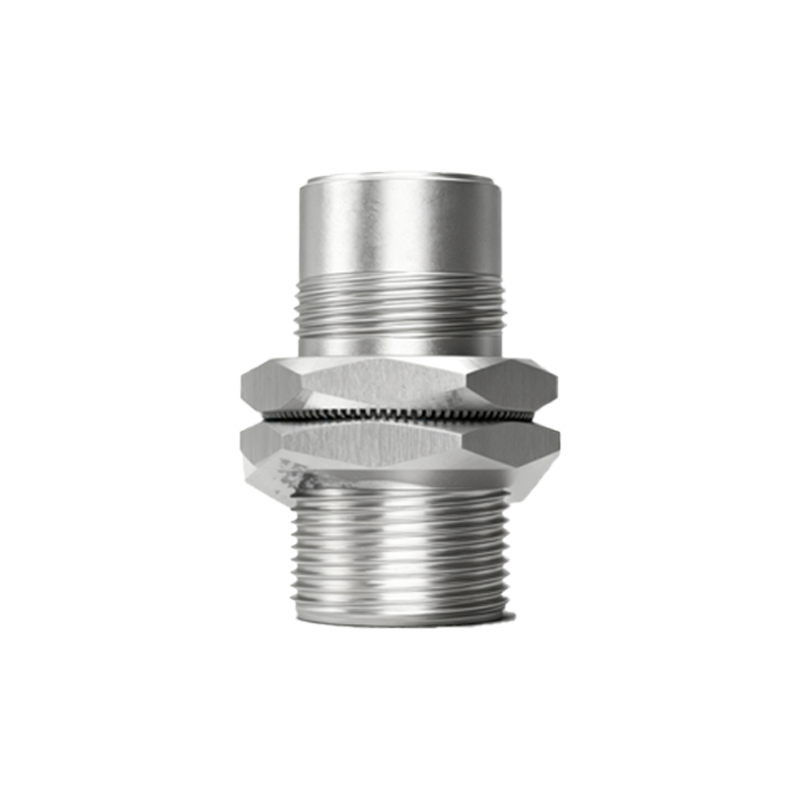
Diagnosing issues in such a system involves a methodical approach. If the light fails to turn OFF upon approach, possible causes include an insufficient target size or material (inductive sensors detect ferrous metals best), a target outside the effective sensing range, misalignment, accumulated debris on the sensor face, or a failed output component. Using a multimeter to check for a voltage change at the output terminals when a target is presented is a standard troubleshooting step. Regular maintenance, including cleaning and verifying the sensing distance, ensures long-term reliability.
This proximity-based control strategy enhances operational efficiency and safety. By automatically extinguishing lights when equipment is near, it reduces energy consumption and can serve as a visual alert for personnel. Integrating these sensors into a broader PLC-controlled network allows for more complex logic, such as delayed reactivation or zone-based lighting schemes, further optimizing industrial environments.