Infrared (IR) proximity sensors are a cornerstone of modern industrial automation, offering non-contact detection of objects with high reliability and precision. Their operation hinges on the fundamental principles of infrared light emission, reflection, and reception. This article delves into the core technology, operational modes, and key considerations for deploying these versatile sensors in demanding industrial environments.
At the heart of an IR proximity sensor lies an infrared emitter, typically a light-emitting diode (LED) that produces light in the infrared spectrum, usually in the near-infrared range (wavelengths from 850 nm to 950 nm). This light is invisible to the human eye. Positioned adjacent to the emitter is a photodetector, such as a phototransistor or photodiode, which is specifically tuned to be sensitive to the same infrared wavelength. The sensor's control circuitry modulates the emitted IR light at a specific frequency, a critical design feature that helps the sensor distinguish its own signal from ambient infrared noise, such as sunlight or heat from machinery.
The principle of operation is elegantly simple yet highly effective. The sensor functions by evaluating the intensity of infrared light that returns to its photodetector. There are two primary operational modes: diffuse (reflective) and through-beam. In the more common diffuse mode, the sensor houses both the emitter and detector in a single unit. The emitter projects a beam of modulated infrared light. When an object enters the sensing field, it reflects a portion of this light back towards the sensor. The photodetector receives this reflected signal. The sensor's internal electronics then process this signal, comparing the received modulated light against the ambient IR levels. When the reflected signal strength exceeds a predefined threshold, the sensor's output state changes, indicating the presence of an object.
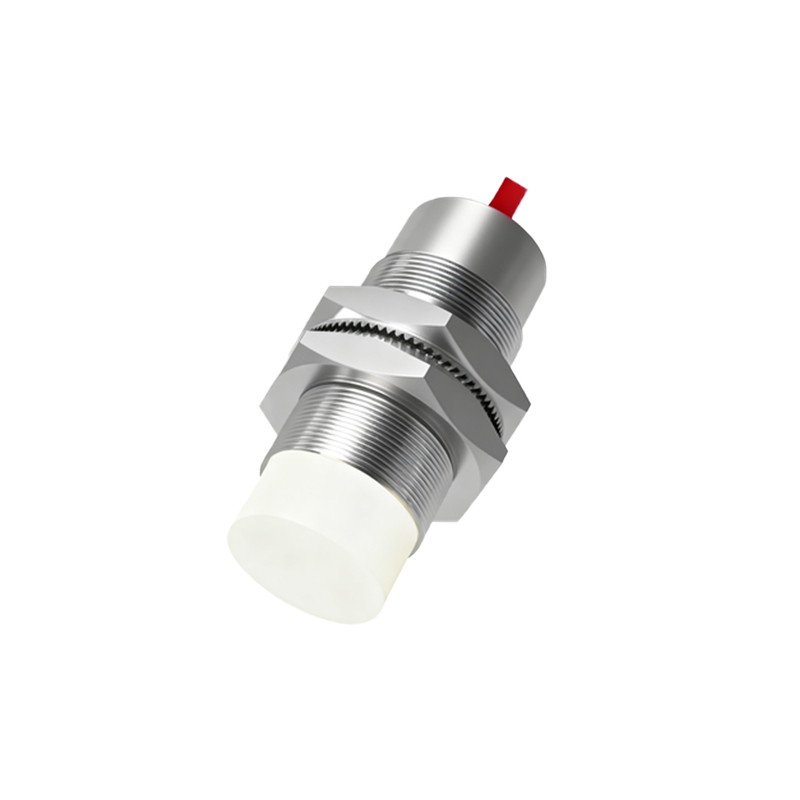
The through-beam (or opposed) mode employs two separate units: a dedicated emitter and a dedicated detector placed opposite each other. Detection occurs when the object interrupts the continuous infrared beam traveling from the emitter to the receiver. This configuration generally allows for longer sensing distances and higher precision but requires careful alignment and installation of two components.
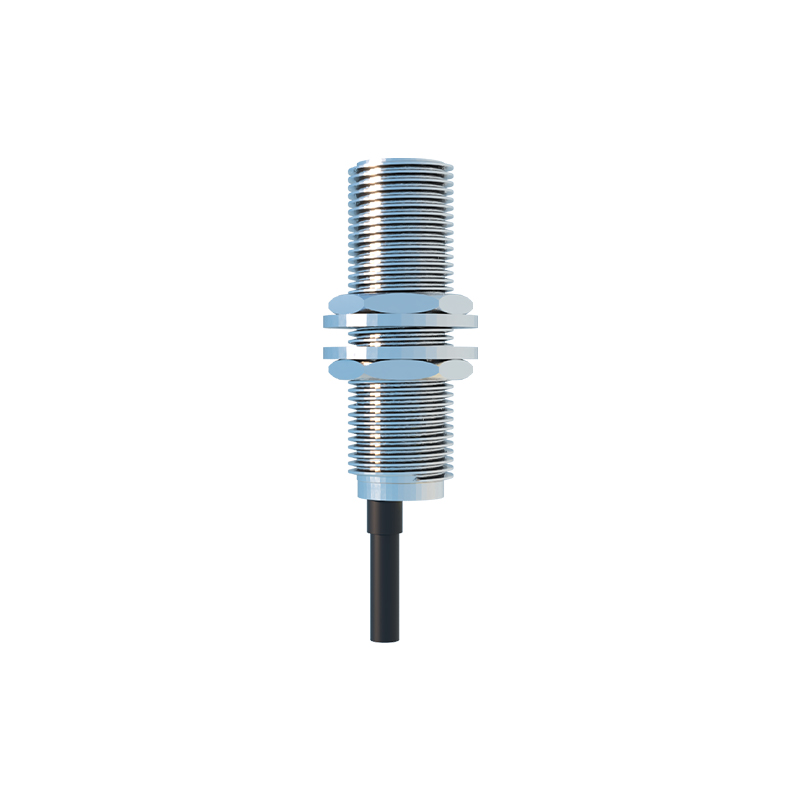
Several key factors influence the performance and selection of an IR proximity sensor for industrial applications. Sensing range is a primary specification, determined by the power of the IR emitter, the sensitivity of the detector, and the reflectivity of the target material. Dark, matte, or absorbent surfaces reflect less IR light than bright, shiny surfaces, which can significantly reduce the effective sensing range. Environmental conditions are paramount. Dust, steam, oil mist, or other particulates in the air can scatter or absorb the infrared beam, leading to false triggers or reduced range. Many industrial-grade sensors feature robust housings (often IP67 or higher) and are designed with optical filters to mitigate the effects of ambient light interference.
Another critical consideration is the sensor's response time and switching frequency. High-speed automation lines require sensors with very fast response times to accurately detect rapidly moving objects. Furthermore, the minimum detectable object size is related to the sensor's optical design and the beam pattern. Some sensors offer focused, narrow beams for precise detection, while others provide wider beams for broader area coverage.
Modern advancements have enhanced the capabilities of IR proximity sensors. Background suppression technology, for instance, allows a sensor to ignore objects beyond a certain set distance, focusing only on a defined "window" of operation. This is invaluable for applications like detecting objects on a conveyor belt while ignoring the belt structure itself or more distant machinery. Digital sensors with programmable parameters via IO-Link or other industrial communication protocols offer increased flexibility, allowing for on-the-fly adjustment of sensing range, output delay, and teaching functions directly from a controller.
In practice, IR proximity sensors are ubiquitous. They are used for object counting on assembly lines, detecting the presence of products in packaging machinery, controlling loop tension in web processing, ensuring correct positioning in robotic pick-and-place systems, and as safety presence detectors in access control. Their non-contact nature eliminates mechanical wear, and their solid-state design ensures long operational life.
In conclusion, the infrared proximity sensor is a sophisticated device built on a clear physical principle. Its effectiveness stems from the precise modulation and detection of infrared light. Successful implementation in industry requires a thorough understanding of not just the principle, but also the target object properties, the operating environment, and the specific application requirements. By carefully matching the sensor's specifications—such as sensing range, beam type, housing, and output characteristics—to the task at hand, engineers can achieve reliable, maintenance-free detection that is essential for efficient and safe automated processes.