Inductive two-wire proximity sensors are fundamental components in modern industrial automation, offering a reliable and cost-effective solution for non-contact object detection. Unlike their three-wire counterparts, these sensors simplify wiring by combining the power supply and output signal into just two wires, directly interfacing with programmable logic controllers (PLCs) and other control systems. Their operation is based on the principle of electromagnetic induction. An internal oscillator generates a high-frequency electromagnetic field at the active face of the sensor. When a metallic target (typically ferrous metals like steel or iron, and to a lesser extent non-ferrous metals like aluminum or copper) enters this field, eddy currents are induced in the target. This causes a change in the oscillation amplitude, which is detected by a threshold circuit. This change triggers the sensor's solid-state switching output.
The defining characteristic of the two-wire design is its series connection within the control circuit. One wire connects to the positive DC supply voltage, and the other to the load (e.g., a PLC input). The sensor itself acts as a variable impedance. In its normal state (no target present), a small leakage or standby current flows to power the sensor's internal electronics. When a target is detected, the impedance changes, allowing a significantly higher output current to flow, thus signaling the "ON" state to the controller. This design eliminates the need for a separate power wire and a separate signal wire, reducing installation time, material costs, and potential wiring errors. It is crucial to note that two-wire sensors require a minimum holding current to function, and they exhibit a residual voltage drop (typically 2-5V) across their terminals when in the "ON" state, which must be considered during system design to ensure compatibility with the controller's input specifications.
Key advantages of inductive two-wire proximity sensors include simplified installation, reduced space requirements in control cabinets due to less wiring, and inherent short-circuit and overload protection. They are also often polarity-protected, preventing damage from incorrect DC connection. Common industry applications are vast, ranging from basic presence detection on conveyor lines and part counting in assembly machines to position verification of cylinders in pneumatic systems and end-of-travel limit sensing. Their robust, typically nickel-plated brass or stainless-steel housings and epoxy-potted electronics make them highly resistant to vibration, moisture, and industrial contaminants like oil and coolant, ensuring longevity in harsh environments.
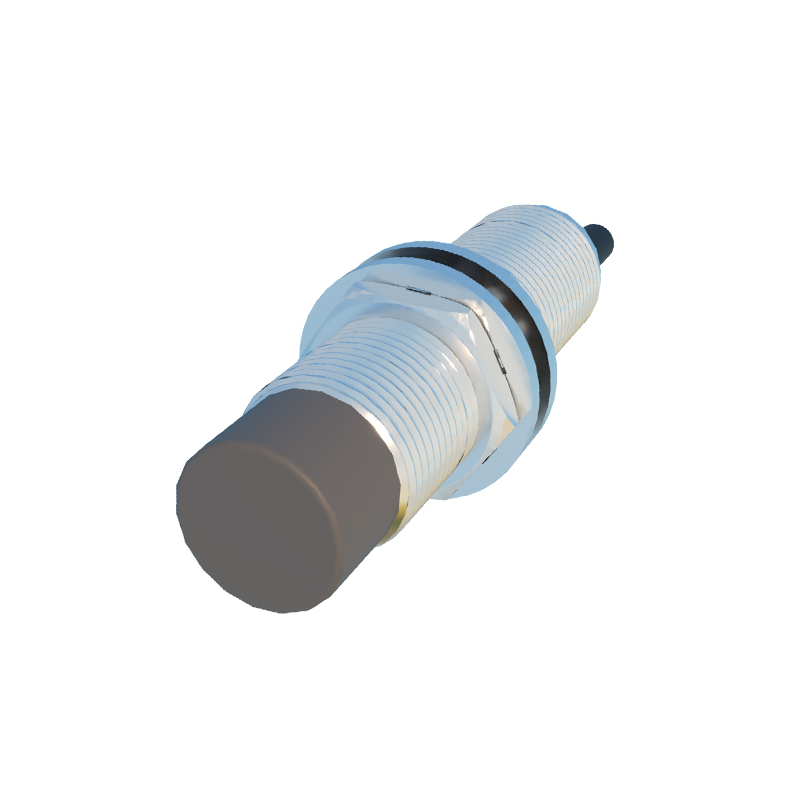
When selecting a two-wire inductive sensor, several critical parameters must be evaluated. Sensing distance, or the nominal range at which a standard target can be reliably detected, is primary. It is important to derate this distance for non-ferrous targets. The operating voltage range (e.g., 10-30V DC) must match the available supply. The output type is typically NPN (sinking) or PNP (sourcing), which must correspond to the PLC input module type. The current rating must be sufficient to drive the connected load while ensuring the minimum holding current is met. Other factors include switching frequency for high-speed applications, housing style (cylindrical, rectangular, or ring-shaped), and environmental ratings such as IP67 or IP69K for washdown or outdoor use. Proper installation is also key; maintaining the recommended lateral and axial spacing between multiple sensors prevents mutual interference of their electromagnetic fields.
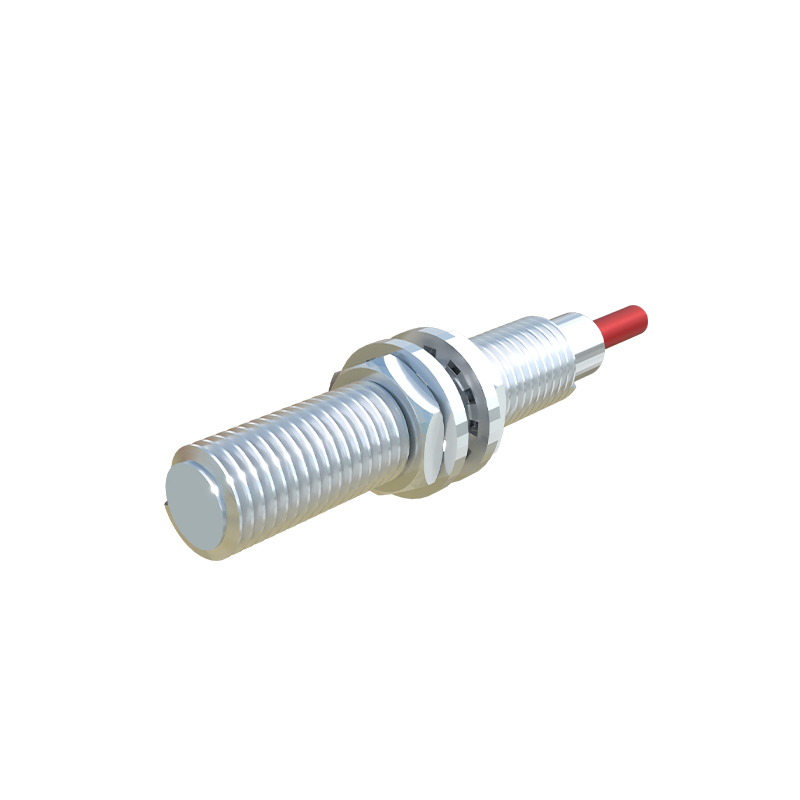
In summary, inductive two-wire proximity sensors represent an elegant and efficient sensing technology. Their simplicity, durability, and direct compatibility with standard control voltages make them a ubiquitous choice for engineers designing automated machinery and processes. A thorough understanding of their operating principle, electrical characteristics, and selection criteria is essential for implementing robust and reliable detection solutions that enhance productivity and system safety across countless industrial sectors.