In the intricate world of industrial automation, precision, reliability, and durability are non-negotiable. Among the myriad of components that form the backbone of modern manufacturing and processing lines, proximity sensors stand out as critical elements for non-contact object detection. The PRL12-4DP2 inductive proximity sensor exemplifies the engineering excellence required to meet the rigorous demands of contemporary industrial environments. This article provides a comprehensive technical analysis of the PRL12-4DP2, exploring its design, functionality, key specifications, and ideal applications.
The PRL12-4DP2 is a cylindrical, inductive proximity sensor designed to detect metallic objects without physical contact. Its core operating principle is based on electromagnetic induction. The sensor generates a high-frequency oscillating electromagnetic field from its active face. When a metallic target enters this detection field, eddy currents are induced within the target. This causes a measurable change in the oscillation amplitude within the sensor's internal LC circuit. This change is processed by the onboard electronics, triggering a switching action at the output. The "DP2" in its designation typically indicates a dual digital output (often PNP, normally open and normally closed configurations), providing versatile wiring and control logic options for complex automation tasks.
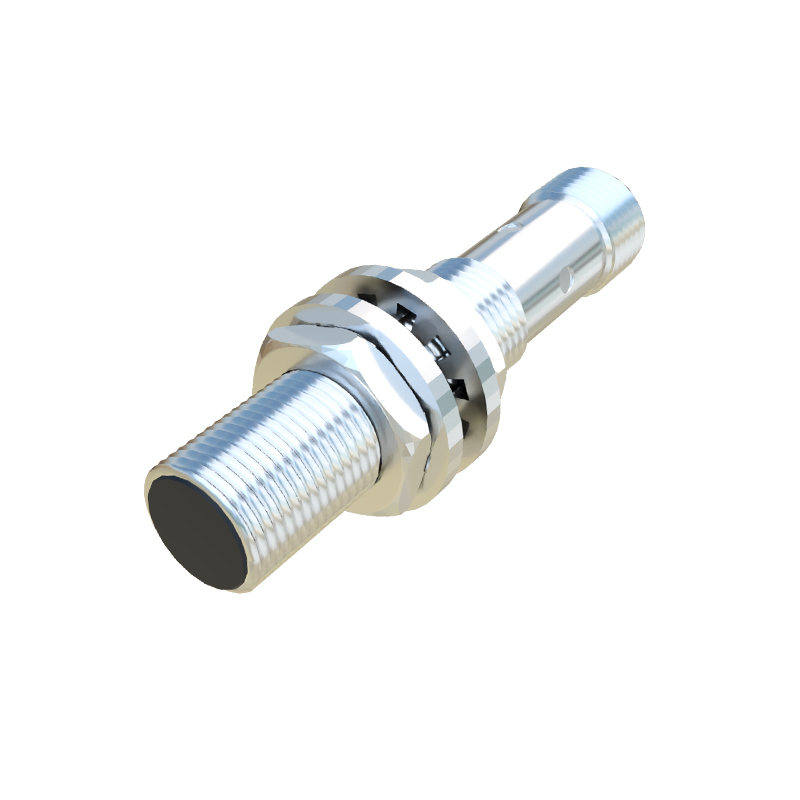
Constructed with a robust nickel-plated brass housing, the PRL12-4DP2 is built to withstand harsh conditions. Its IP67 ingress protection rating guarantees reliable operation in environments with significant dust exposure and temporary immersion in water, making it suitable for washdown areas in food and beverage or pharmaceutical applications. The sensor is typically rated for an operating voltage range of 10-30V DC, aligning with standard industrial control voltage levels.
One of its paramount features is its sensing performance. With a nominal sensing distance (Sn) of 4mm, it offers a precise and consistent detection range. A critical performance metric for any proximity sensor is its repeat accuracy, and the PRL12-4DP2 delivers high precision in positioning tasks. Furthermore, it incorporates built-in protection against common electrical hazards, including short-circuit protection, reverse polarity protection, and overload protection. These features significantly enhance system longevity and reduce downtime by safeguarding both the sensor and the connected controller from wiring errors or fault conditions.
The output configuration is a key strength. The dual independent PNP transistor outputs allow for flexible integration into Programmable Logic Controller (PLC) input modules or other control systems. This duality enables a single sensor to provide two distinct signals—for instance, one for "part present" and another for system status monitoring—optimizing cabinet space and reducing installation complexity. The switching frequency, often in the range of several hundred Hertz, allows for the detection of rapidly moving objects on high-speed production lines, such as in packaging or automotive assembly.
When selecting and applying the PRL12-4DP2, several technical considerations are essential. The sensing distance can be influenced by the target material; ferrous metals like mild steel provide the full nominal range, while non-ferrous metals like aluminum or brass result in a reduced effective sensing distance, a factor that must be accounted for during system design. The sensor's temperature operating range, typically from -25°C to +70°C, ensures functionality in both cold storage and hot industrial settings. Proper mounting is also crucial; flush mounting (embedding the sensor in a metal bracket) is possible, but non-flush mounting offers a slightly increased sensing range.
Typical applications for the PRL12-4DP2 are vast across industrial sectors. It is ideally deployed for:
Position Verification: Confirming the presence or absence of a metal part in a fixture, machining center, or robotic gripper.
End-of-Travel Detection: Acting as a limit switch for cylinders or linear actuators in pneumatic systems.
Counting and Sorting: Detecting metal objects on conveyor belts for inventory control or sorting operations.
Speed Monitoring: Sensing gear teeth or bolts on rotating shafts to calculate rotational speed.
Machine Safety: Used as part of interlock systems to confirm guard doors are closed before machine initiation.
In conclusion, the PRL12-4DP2 inductive proximity sensor is a testament to focused industrial design. Its robust construction, precise and reliable sensing capabilities, dual-output flexibility, and comprehensive electrical protections make it a superior choice for engineers and system integrators. By understanding its technical parameters and operational principles, automation professionals can effectively deploy the PRL12-4DP2 to enhance the efficiency, reliability, and intelligence of their control systems, ensuring seamless operation in the demanding landscape of Industry 4.0.