In the realm of industrial automation and control systems, proximity sensors are indispensable components. Understanding their nomenclature is crucial for accurate selection, specification, and integration. This article provides a detailed breakdown of a standard proximity sensor nameplate or part number diagram, explaining each segment to empower engineers and procurement specialists.
A typical proximity sensor part number is not a random string of characters; it is a structured code that conveys critical information about the sensor's type, form factor, sensing characteristics, electrical specifications, and connection method. Decoding this is the first step to ensuring compatibility with your application.
Let's deconstruct a hypothetical but representative part number: PRX-18M30-BZ-C2-PNP.
Segment 1: Series or Family (PRX)
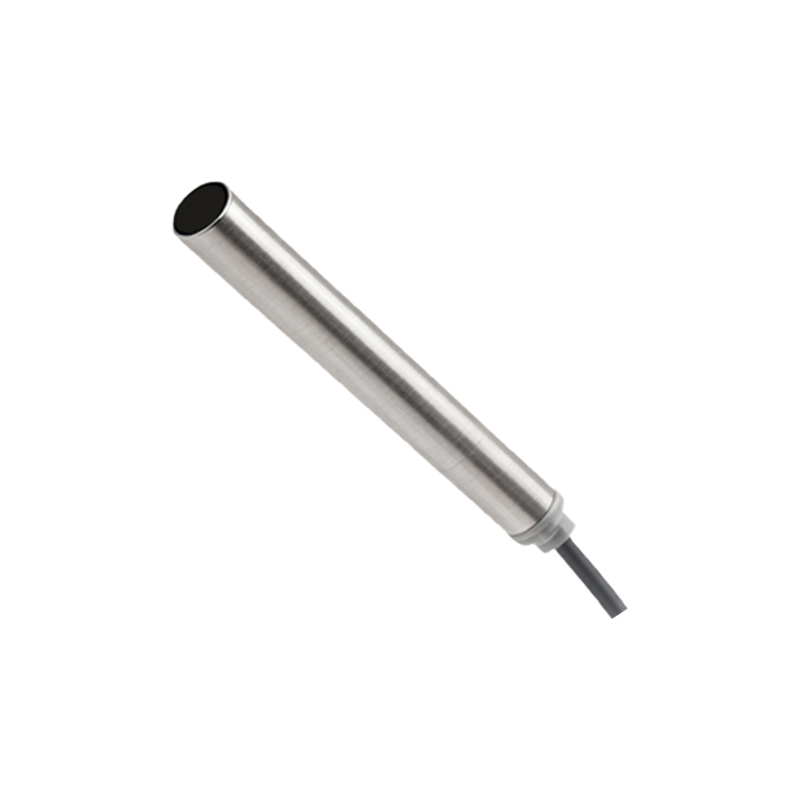
This prefix identifies the product family or series. "PRX" commonly denotes "Proximity." Different manufacturers use their own codes (e.g., E2E, XS, BI). This tells you the basic technology platform.
Segment 2: Housing Size & Shape (18M)
This segment defines the physical dimensions. Here, '18' often refers to an 18mm diameter cylindrical barrel. 'M' may indicate a metallic (stainless steel) housing. Alternatives could be 'P' for plastic, '30' for 30mm diameter, or 'F' for a rectangular flat-pack shape. This is vital for mechanical mounting.
Segment 3: Sensing Distance (30)
The nominal sensing distance, a key functional parameter. '30' typically means 30mm for this size. This is the rated operating distance where the sensor reliably detects a standard target. It is not the maximum possible distance. Always consult datasheets for exact values and reduction factors for different materials.
Segment 4: Electrical Output Type (BZ)
This denotes the output switching configuration. 'BZ' is a common code for a 3-wire DC sensor with an NPN normally-open (NO) output. Other frequent codes include:
DZ / PNP: 3-wire DC, PNP, normally-open.
BY / NPN-NC: 3-wire DC, NPN, normally-closed.
DY / PNP-NC: 3-wire DC, PNP, normally-closed.
A2 / AC 2-wire: 2-wire alternating current sensor.
Understanding NPN (sinking) vs. PNP (sourcing) is critical for interface with PLCs and controllers.
Segment 5: Connection Method (C2)
This specifies how the sensor connects to the electrical system. 'C2' often represents a 2-meter integral PVC cable. Alternatives include:
P: Quick-disconnect (M12, M8, etc.) connector, often with a pin count (e.g., P4 for 4-pin).
T: Terminal housing for direct wire connection.
C5: A 5-meter cable.
Segment 6: Additional Features / Voltage (PNP)
Sometimes, a final suffix reiterates a major feature or specifies voltage range. Here, 'PNP' might be repeated for clarity. It could also be 'DC10-30V' or codes for special functionalities like:
SH: Shielded (flush mountable) face.
NS: Non-shielded (non-flush mountable), offering longer range.
IO-Link: Digital communication capability.
HT: High-temperature variant.
Key Considerations Beyond the Part Number:
1. Sensing Technology: The part number may imply but not always explicitly state the technology. Inductive (for metals), capacitive (for liquids, plastics), ultrasonic, and photoelectric are main types. The series code often hints at this.
2. Target Material: Inductive sensors are tuned for different metals (steel, aluminum, copper). The rated sensing distance is usually for mild steel; for aluminum or brass, a correction factor (0.3-0.5) applies.
3. Output State (NO/NC): The choice between Normally Open and Normally Closed affects safety and control logic design, especially for fail-safe applications.
4. Environmental Ratings: Look for IP (Ingress Protection) ratings like IP67 or IP69K for dust and water resistance, and temperature ratings for harsh environments.
Practical Application: When replacing a sensor, match the entire part number. For a new design, use the nomenclature as a checklist: Determine required size, sensing distance, output type (NPN